Muutke küpsiste eelistusi

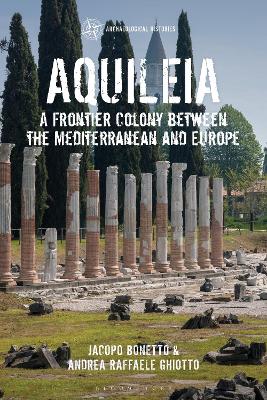
Aquileia: A Frontier Colony between the Mediterranean and Europe [Pehme köide]

(University of Padua, Italy), (University of Padua, Italy)
  • Formaat: Paperback / softback, 192 pages, kõrgus x laius x paksus: 236x154x10 mm, kaal: 336 g, 40 bw illus
  • Sari: Archaeological Histories
  • Ilmumisaeg: 14-May-2026
  • Kirjastus: Bloomsbury Academic
  • ISBN-10: 1350440930
  • ISBN-13: 9781350440937
Teised raamatud teemal:
  • Pehme köide
  • Hind: 22,49 €*
  • * hind on lõplik, st. muud allahindlused enam ei rakendu
  • Tavahind: 29,99 €
  • Säästad 25%
  • See raamat ei ole veel ilmunud. Raamatu kohalejõudmiseks kulub orienteeruvalt 3-4 nädalat peale raamatu väljaandmist.
  • Kogus:
  • Lisa ostukorvi
  • Tasuta tarne
  • Tellimisaeg 2-4 nädalat
  • Lisa soovinimekirja
  • Formaat: Paperback / softback, 192 pages, kõrgus x laius x paksus: 236x154x10 mm, kaal: 336 g, 40 bw illus
  • Sari: Archaeological Histories
  • Ilmumisaeg: 14-May-2026
  • Kirjastus: Bloomsbury Academic
  • ISBN-10: 1350440930
  • ISBN-13: 9781350440937
Teised raamatud teemal:
Aquileia is the largest archaeological site in Northern Italy, which once stood at the geo-political crossroad of cultural exchanges between Italy, the central-eastern Mediterranean and continental Europe. This book explores its beginnings as a Latin frontier colony which, over time, became a flourishing commercial centre of a cosmopolitan nature. By the end of the Imperial Age, it once again became the gateway to Italy, reaffirming its strategic and military role at the time of the barbarian invasions and the spread of Christianity.

The archaeological discoveries and results of scientific research made over the last thirtyyears offer the reader an accessible and engaging history of the site that has existed from the 8th century BCE to the present day. The concluding chapters are dedicated to the rediscovery of the ancient city, its political use during Fascism and the modern investments that transformed Aquileia into one of the major archaeological tourism centres in Italy.

Arvustused

This is a welcome survey of the significance of the city, drawing on recent archaeological research, both into the buildings, finds and fabric of the city, and into its natural environment. The book covers the whole range of its history from prehistory up to the Middle Ages, especially its place in the story of the Roman Empire and its collapse in the fifth century CE. It also documents the spectacular rediscovery of the largely unknown ancient city during 20th-century investigations and subsequent display of the famous early Christian mosaics. * Anthony King, Emeritus Professor of Roman Archaeology, University of Winchester, UK * This book presents for the first time the most recent and most complete data on the history, archaeological areas and museums of Aquileia, in a clear and understandable way, even for non-specialists, but with solid scientific foundations. The authors have been working for many years in the Roman city and have therefore managed to paint a vivid and comprehensive picture that Aquileia deserves and which has been lacking until now. * Marina Rubinich, Associate Professor of Classical Archaeology, University of Udine, Italy *

Muu info

First volume in English to study the history and impact of the archaeological site, from its time as a Latin frontier colony to its political use under Fascism.
List of Illustrations
List of Abbreviations
Acknowledgements

Introduction

1. The Landscape of Aquileia: Between the Adriatic Sea, the Lagoons and the
Alps
2. Aquileia before Aquileia: The Indigenous Emporium
3. The Foundation of the Latin Colony in 181 BCE: Livy's Story and the Birth
of the Roman City
4. The City and Its Territory: The Centuriations, the Amphora Canal and the
Roads
5. Aquileia in the Imperial Age: Public Architectures and Trades
6. Living and Dying in Aquileia: Domus, Necropolis, Artistic Production
7. Attila and the Huns: The Taking of Aquileia and the Urban Transformations
between the Ancient Age and the Middle Ages
8. Christian Aquileia: The Episcopal Complex and the Patriarchate
9. The Rediscovery of the Ancient City between the Eighteenth and Twentieth
Centuries

Appendix: The Archaeological Areas and Museums of Aquileia

Notes
Bibliography
Index
Jacopo Bonetto is Full Professor of Classical Archaeology at the Department of Cultural Heritage of the University of Padua, Italy.

Andrea Raffaele Ghiotto is Associate Professor of Classical Archaeology at the Department of Cultural Heritage of the University of Padua, Italy.