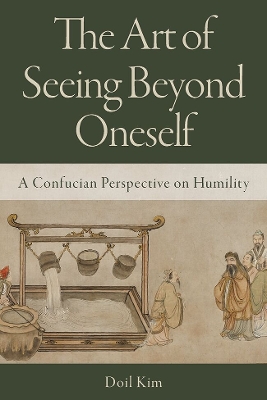
"This book offers a philosophical reconstruction of Confucian humility, a virtue deeply rooted in East Asian traditions yet often overlooked or conflated with Western and contemporary notions of modesty and humility. It bridges classical textual analysiswith insights from cultural psychology and comparative philosophy to clarify its distinctive nature and broader ethical significance. In contemporary discourse, self-lowering is often mistaken for self-effacement or undue self-sacrifice. Confucian humility, conceived as a distinctive mode of self-lowering, presents a different vision: it cultivates a form of personhood that resists self-centered impulses and fosters genuine attention to others, enabling deeper connection across relationships, communities, and the broader world. Far from being a relic of the past, Confucian humility offers a timely response to the rise of extreme individualism, egoism, and the ethos of isolated survival, shaped by relentless competition and the imperative of self-commodification in contemporary society"-- Provided by publisher.
In an age of relentless competition, self-branding, and growing social isolation, we face a pressing question: how can we stop seeing only ourselves and start seeing others? How can we build genuine relationships and communities without losing our sense of self? The Art of Seeing Beyond Oneself explores these questions through the lens of Confucian humility, which offers an alternative to the pervasive culture of excessive self-centeredness found across societies. Rather than calling for self-denial, it shows how we can begin by respecting others and, in doing so, find our proper place in a shared life.
In an age of relentless competition, self-branding, and growing social isolation, we face a pressing question: how can we stop seeing only ourselves and start seeing others? How can we build genuine relationships and communities without losing our sense of self? The Art of Seeing Beyond Oneself explores these questions through the lens of Confucian humility, which offers an alternative to the pervasive culture of excessive self-centeredness found across societies.
Rather than calling for self-denial, it shows how we can begin by respecting others and in doing so, find our proper place in a shared life--it presents humility as a practice for restoring connection in a fragmented world. Doil Kim offers a philosophical reconstruction of Confucian humility, bridging classical textual analysis with insights from cultural psychology and comparative philosophy to clarify its distinctive nature and broader ethical significance. Confucian humility, conceived as a distinctive mode of self-lowering, presents a different vision: it cultivates a form of personhood that resists self-centered impulses and fosters genuine attention to others, enabling deeper connection across relationships, communities, and the broader world.
Far from being a relic of the past, Confucian humility offers a timely response to the rise of extreme individualism, egoism, and the ethos of isolated survival, shaped by relentless competition and the imperative of self-commodification in contemporary society. It is not mere self-regulation but an active art of ethical living, helping individuals resist both withdrawal into the self and the drive to dominate others, and enabling them to position themselves more appropriately within a broader relational and sociopolitical context. When appeals to reason and empathy fall short, Confucian humility may illuminate a more enduring and sustainable path toward coexistence.