Muutke küpsiste eelistusi

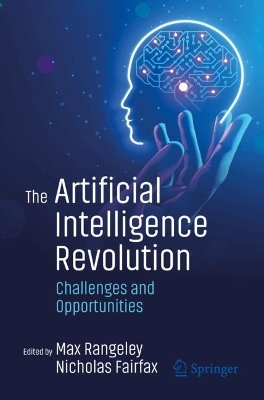
Artificial Intelligence Revolution: Challenges and Opportunities [Pehme köide]

Edited by , Edited by
  • Formaat: Paperback / softback, 799 pages, kõrgus x laius: 235x155 mm, 23 Illustrations, color; 3 Illustrations, black and white
  • Ilmumisaeg: 01-Jun-2026
  • Kirjastus: Springer Nature Switzerland AG
  • ISBN-10: 3032118131
  • ISBN-13: 9783032118134
Teised raamatud teemal:
  • Pehme köide
  • Hind: 21,07 €*
  • * hind on lõplik, st. muud allahindlused enam ei rakendu
  • Tavahind: 24,79 €
  • Säästad 15%
  • See raamat ei ole veel ilmunud. Raamatu kohalejõudmiseks kulub orienteeruvalt 3-4 nädalat peale raamatu väljaandmist.
  • Kogus:
  • Lisa ostukorvi
  • Tasuta tarne
  • Tellimisaeg 2-4 nädalat
  • Lisa soovinimekirja
  • Formaat: Paperback / softback, 799 pages, kõrgus x laius: 235x155 mm, 23 Illustrations, color; 3 Illustrations, black and white
  • Ilmumisaeg: 01-Jun-2026
  • Kirjastus: Springer Nature Switzerland AG
  • ISBN-10: 3032118131
  • ISBN-13: 9783032118134
Teised raamatud teemal:
This book reveals why artificial intelligence (AI) is poised to reshape society, the global economy, and national security more profoundly than any other emerging technology. With a foreword from a Nobel laureate, it brings exceptional authority to a subject of global importance. Drawing on insights from political leaders, senior policymakers, investors, AI engineers, military strategists, and leading think-tank analysts, the volume moves beyond theory to offer a clear-eyed view of AIs real-world implications. It covers essential themes, from the economics of AI and geopolitical competition to defense applications, robotics, and the transformation of human society. For readers seeking to understand how AI will redefine our world in the years aheadand how we can navigate the opportunities and risksthis is an authoritative and indispensable resource.


Chapter 7 is available open access under a Creative Commons Attribution 4.0 International License via link.springer.com.
Part I. Safety & Risk.
Chapter
1. Behavioral red lines as a safety
framework for intolerable levels of risk (Stuart Russell).
Chapter
2. AI and
Existential Risks (Connor Leahy).
Chapter
3. The Most Dangerous Fiction: The
Rhetoric and Reality of the AI Race (Sean O hEigeartaigh).
Chapter
4.
Chinas AI Safety Ecosystem and Implications for International AI Governance
(Brian Tse).
Chapter
5. Rethinking the Redlines Against AI Existential Risks
(Yi Zeng).- Part II. Approaches to Regulation.
Chapter
6. The European AI
Act (Axel Voss MEP).
Chapter
7. From Turing to Tomorrow: The UK's Approach
to AI Regulation (Oliver Ritchie).
Chapter
8. US Artificial Intelligence
Regulation (Lee Tiedrich).
Chapter
9. Safeguarding Human Agency and Liberty
in the Age of AI - A call for Multilateralism (Archana Gulati).
Max Rangeley runs an economics think tank and has served on the boards of other think tanks in London and Brussels. He has put an emphasis on AI policy, including organising and moderating the artificial intelligence roundtable discussions in the European Parliament. 


Nicholas Fairfax is a lawyer who has worked in shipping for forty years. He has had a lifelong interest in AI and where it might take the world. He is an Elected Member of the House of Lords and was a member of the House of Lords Select Committee on AI in Weapons Systems in 2023.