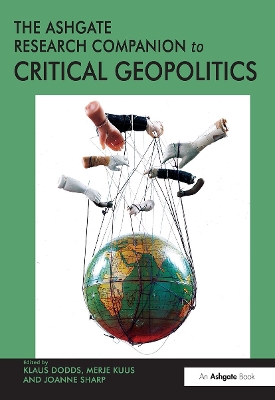
Since the late 1980s, critical geopolitics has gone from being a radical critical perspective on the disciplines of political geography and international relations theory to becoming a recognised area of research in its own right. Influenced by poststructuralist concerns with the politics of representation, critical geopolitics considers the ways in which the use of particular discourses shape political practices. Initially critical geopolitics analysed the practical geopolitical language of the elites and intellectuals of statecraft. Subsequent iterations have considered the role that popular representations of the international political world play. As critical geopolitics has become a more established part of political geography it has attracted ever more critique: from feminists for its apparent blindness to the embodied effects of geopolitical praxis and from those who have been uncomfortable about its textual focus, while others have challenged critical geopolitics to address alternative, resistant forms of geopolitical practice. Again, critical geopolitics has been reworked to incorporate these challenges and the latest iterations have encompassed normative agendas, non-representational theory, emotional geographies and affect. It is against the vibrant backdrop of this intellectual development of critical geopolitics as a subdiscipline that this Companion is set. Bringing together leading researchers associated with the different forms of critical geopolitics, this volume produces an overview of its achievements, limitations, and areas of new and potential future development. The Companion is designed to serve as a key resource for an interdisciplinary group of scholars and practitioners interested in the spatiality of politics.
Bringing together leading researchers associated with the different forms of critical geopolitics, this volume produces an overview of its achievements, limitations, and areas of new and potential future development. The Companion is designed to serve as a key resource for an interdisciplinary group of scholars and practitioners interested in the s
Arvustused
This is an essential book at a crucial moment for the sub-discipline and the world, as both face questions of what comes next. The organization of the book provides emerging and established researchers with the literature to ground their work in the seminal literature of critical geopolitics and provides valuable signposts to current omissions and pressing questions. The emphasis on different agents of geopolitical change and the sites of their activity will help academics frame questions and research design. Colin Flint, University of Illinois at Urbana-Champaign, USA '... the collection certainly gives a thorough investigation of the past, present, and future needs of a vibrant critical geopolitics, making it a useful resource for students and professors alike.' Tijdschrift voor Economische en Sociale Geografie
Contents: Foreword: arguing about geopolitics, Gerard Toal / GearĆ³id Ć
Tuathail: Introduction: geopolitics and its critics, Klaus Dodds, Merje Kuus
and Joanne Sharp; Part I Foundations: The origins of critical geopolitics,
John Agnew; Realism and geopolitics, Simon Dalby; Text, discourse, affect and
things, Martin MĆ¼ller; Geopolitics and visual culture, Rachel Hughes;
Heteronormativity, Linda Peake; Sovereignty, Fiona McConnell; Radical
geopolitics, Julian Mercille; Neo-liberalism, Simon Springer; Reappraising
geopolitical traditions, James D. Sidaway, Virginie Mamadouh and Marcus
Power; Violence and peace, Nick Megoran. Part II Sites: Borders, Anssi Paasi;
The state, Sami Moisio; Militarization, Matthew Farish; Media, Paul C. Adams;
Resources, Phillippe Le Billon; Environment, Shannon OLear; The global
South, Chi Yuan Woon; Intimacy and the everyday, Deborah Cowen and Brett
Story; Spaces of terror, Ulrich Oslender. Part III Agents: Non-governmental
organisations, Alex Jeffrey; International organizations, Veit Bachmann;
Indigenous geopolitics, Chris Gibson; Journalists, Alasdair Pinkerton;
Artists, Alan Ingram; Evangelicals, Jason Dittmer; Intellectuals of
statecraft, Matthew Coleman; Women, Jennifer L. Fluri; Activists, Kye Askins;
Index.
Klaus Dodds, Royal Holloway University, UK, Merje Kuus, University of British Columbia, Canada and Joanne Sharp, University of Glasgow, UK.