Muutke küpsiste eelistusi

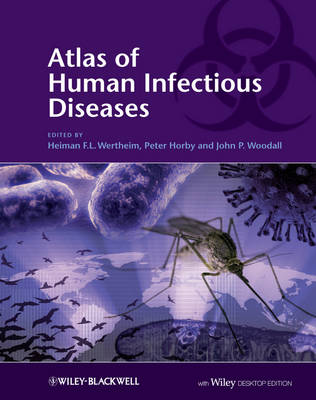
Atlas of Human Infectious Diseases: Includes Desktop Edition [Kõva köide]

Edited by , Edited by , Edited by
  • Formaat: Hardback, 306 pages, kõrgus x laius x paksus: 280x224x19 mm, kaal: 1110 g, ill
  • Ilmumisaeg: 21-Feb-2012
  • Kirjastus: Wiley-Blackwell (an imprint of John Wiley & Sons Ltd)
  • ISBN-10: 140518440X
  • ISBN-13: 9781405184403
Teised raamatud teemal:
  • Kõva köide
  • Hind: 136,83 €*
  • * saadame teile pakkumise kasutatud raamatule, mille hind võib erineda kodulehel olevast hinnast
  • See raamat on trükist otsas, kuid me saadame teile pakkumise kasutatud raamatule.
  • Kogus:
  • Lisa ostukorvi
  • Tasuta tarne
  • Lisa soovinimekirja
  • Raamatukogudele
  • Formaat: Hardback, 306 pages, kõrgus x laius x paksus: 280x224x19 mm, kaal: 1110 g, ill
  • Ilmumisaeg: 21-Feb-2012
  • Kirjastus: Wiley-Blackwell (an imprint of John Wiley & Sons Ltd)
  • ISBN-10: 140518440X
  • ISBN-13: 9781405184403
Teised raamatud teemal:
The Atlas of Human Infectious Diseases provides a much needed practical and visual overview of the current distribution and determinants of major infectious diseases of humans. The comprehensive full-color maps show at a glance the areas with reported infections and outbreaks, and are accompanied by a concise summary of key information on the infectious agent and its clinical and epidemiological characteristics. Since infectious diseases are dynamic, the maps are presented in the context of a changing world, and how these changes are influencing the geographical distribution on human infections.

This unique atlas:

  • Contains more than 145 high quality full-color maps covering all major human infectious diseases
  • Provides key information on the illustrated infectious diseases
  • Has been compiled and reviewed by an editorial board of infectious disease experts from around the world

The result is a concise atlas with a consistent format throughout, where material essential for understanding the global spatial distribution of infectious diseases has been thoughtfully assembled by international experts. Atlas of Human Infectious Diseases is an essential tool for infectious disease specialists, medical microbiologists, virologists, travel medicine specialists, and public health professionals.

The Atlas of Human Infectious Diseases is accompanied by a FREE enhanced Wiley Desktop Edition - an interactive digital version of the book with downloadable images and text, highlighting and note-taking facilities, book-marking, cross-referencing, in-text searching, and linking to references and glossary terms.

Arvustused

I would definitely recommend the book to anyone interested in, or working within the field of infectious diseases and public health, as an invaluable asset to their collection. (The Bulletin of The Royal College of Pathologists, 1 July 2013) If you re interested in infectious diseases and you like maps, you ll love leafing through the Atlas of Human Infectious Diseases. It shows the global distribution of more than 110 diseases, from well-known scourges such as malaria and cholera to oddballs like strongyloidiasis and O nyong nyong virus disease. Maps have been available for many diseases, but, Wertheim notes, it s often unclear who made them or what data were used - and they frequently contain errors. Wertheim (a clinical microbiologist working in Hanoi for the Wellcome Trust and Oxford University) didn t want an electronic atlas but a book you can draw inspiration from as you read it on the couch. The editors took five years to prepare the maps, sifting through data from countless papers, field reports, and other sources. Each map was reviewed by two experts for its particular disease. The atlas also charts underlying factors such as water and sanitation, international travel, and urbanization. Infectious diseases are nothing if not dynamic, and freely accessible updates will appear on a forthcoming companion website. Meanwhile, Wertheim hopes that the gaps in the maps will inspire researchers to collect more data on where pathogens occur. For many diseases, Africa is epidemiology s terra incognita as painfully large gray areas in the atlas testify. (Martin Enserink, Science,Vol. 336, June 2012) From its title and external appearance, Atlas of Human Infectious Disease could be mistaken for a cytology or histology text. Once open, a geography book appears, and quickly enough, its pages reveal an essential visual almanac for anyone whose work confronts, or whose interests include, infectious diseases. This book shows the pictures we often seek but have difficulty finding: those that answer the question, Where? For a less common disease, where has it been reported? For a more common one, where is it not controlled? Part atlas and part disease manual, this work reflects an intensive effort by 120 contributors and reviewers, assuring the user of a broad, collective expertise. Oxford tropical disease researchers Heiman F.L. Wertheim and Peter Horby and ProMED mail co-founder John P. Woodall are the lead editors. The book provides taxonomic consistency with widely available sources such as the Control of Communicable Diseases Manual, and scientific articles specific to each topic were used extensively. The first 40 of its 273 pages offer mapping of factors that influence disease transmission, clinical penetrance, and control. This portion could easily stand alone as a reference for a broad range of readers interested in any of numerous topics, from urbanization to climate to the global use of antibiotics and vaccines. The bulk of the book is a compendium of 2-page, clinical epidemiologic summaries of human infections, each having the same leftpage map and right-page text layout. An equal-area world map is the usual template for incidence and endemicity displays, whereas regional maps and insets are used as needed; however, no section or entry on geographically diverse, health care associated bacterial infections is included. The entries do include selected opportunistic infections, but apart from agents of general public health importance such as bloodborne viruses, health care associated infections are not given particular attention. On the other hand, doing so could easily have doubled the volume of the book. Overlays on the maps are simple and usually contrast well with the core scheme to readily show relationships. For example, the outlining of vector distributions does not interfere with the use of solid colors to map disease occurrence. Where overlays would not work as well, the page includes one or more parallel maps, which may show inverse relationships such as immunization coverage versus disease incidence. The book indirectly begs for better surveillance by depicting large gray areas marked No Data; even the most developed countries often fail to escape this distinction. In fact, the type of passive reporting that supplied map data for some diseases leaves one wondering: is it no data or no disease ? Clever adjustments for reporting bias were made in some cases, though the nature of source data too often prohibits any valid attempt. Likewise, dependence on political borders to outline geographic distribution usually prohibits depiction of spatial density. When a disease has worldwide distribution, that fact is not usually evident in the map, which instead focuses on high-risk areas. This method is appropriate and reinforces the need to use the map and text pages together. Purchasers are provided a code to download the book in a digital format. Downloading is a fast and easy process, as is using the electronic version of the book itself. A single click on any topic or figure in the navigation pane takes the reader directly to the page desired. The resolution is excellent, and one can either scroll or page up and down through each entry. The Atlas clearly sets a new standard as a geographic medicine reference and is certain to become an indispensable tool for epidemiologists and infectious diseases specialists. The editors hope it will also encourage the reporting of infectious diseases worldwide, which may well become its most important role. (Bruno P. Petruccelli, Retired, Medical Corps, US Army) This is an excellent resource if one is looking for maps with verifiable sources of the distribution of infectious diseases and their drivers. (Doody s, 7 September 2012)

Editors viii
Contributors and Reviewers ix
Foreword xv
Preface xvii
User's Guide xix
Abbreviations xxi
The World xxii
Section 1 Infectious Disease Drivers
1(40)
1 Emerging Infectious Diseases
3(2)
2 Population
5(2)
3 Urbanization
7(2)
4 Global Connectivity
9(2)
5 Human Development
11(2)
6 Global Peace Index
13(2)
7 Life Expectancy and Child Mortality
15(2)
8 Water and Sanitation
17(2)
9 Undernutrition
19(2)
10 Climate
21(2)
11 Forest Cover Change
23(2)
12 Natural Disasters
25(2)
13 Antibiotic Use
27(2)
14 Inherited Blood Disorders and Duffy Antigen
29(2)
15 Immunization Coverage - DTP3
31(2)
16 Aedes aegypti and Aedes albopictus
33(2)
17 Malaria Vectors
35(2)
18 Livestock Density
37(2)
19 Bird Migration
39(2)
Section 2 Bacterial Infections
41(70)
20 Anthrax
43(2)
21 Bartonellosis, Bartonella bacilliformis
45(2)
22 Bartonellosis, Bartonella quintana
47(2)
23 Botulism
49(2)
24 Brucellosis
51(2)
25 Buruli Ulcer
53(2)
26 Cholera
55(2)
27 Diphtheria
57(2)
28 Donovanosis
59(2)
29 Ehrlichioses
61(2)
30 Endemic Treponematosis
63(2)
31 Haemophilus influenzae Type b
65(2)
32 Leprosy
67(2)
33 Leptospirosis
69(2)
34 Listeriosis
71(2)
35 Lyme Disease
73(2)
36 Melioidosis
75(2)
37 Meningococcal Meningitis
77(2)
38 Noma
79(2)
39 Pertussis
81(2)
40 Plague
83(2)
41 Pneumococcal Disease
85(2)
42 Q Fever
87(2)
43 Rat Bite Fever
89(2)
44 Relapsing Fever
91(2)
45 Rickettsioses, Tick-borne, New World
93(2)
46 Rickettsioses, Tick-borne, Old World
95(2)
47 Scrub Typhus
97(2)
48 Streptococcus suis
99(2)
49 Tetanus
101(2)
50 Trachoma
103(2)
51 Tuberculosis
105(2)
52 Tularemia
107(2)
53 Typhoid Fever
109(2)
Section 3 Fungal Infections
111(14)
54 Blastomycosis
113(2)
55 Coccidioidomycosis
115(2)
56 Histoplasmosis
117(2)
57 Mycetoma
119(2)
58 Paracoccidioidomycosis
121(2)
59 Penicilliosis
123(2)
Section 4 Parasitic Infections
125(62)
60 Amebiasis, Entamoeba histolytica
127(2)
61 Anisakidosis
129(2)
62 Babesiosis
131(2)
63 Capillariasis, Intestinal
133(2)
64 Clonorchiasis
135(2)
65 Cysticercosis
137(2)
66 Diphyllobothriasis
139(2)
67 Dracunculiasis
141(2)
68 Echinococcosis, Echinococcus multilocularis
143(2)
69 Eosinophilic Meningitis, Angiostrongylus cantonensis
145(2)
70 Fascioliasis
147(2)
71 Fasciolopsiasis
149(2)
72 Filariasis
151(2)
73 Hookworm
153(2)
74 Leishmaniasis, Cutaneous and Mucosal, New World
155(2)
75 Leishmaniasis, Cutaneous and Mucosal, Old World
157(2)
76 Leishmaniasis, Visceral
159(2)
77 Loiasis
161(2)
78 Malaria, Plasmodium falciparum
163(2)
79 Malaria, Plasmodium knowlesi
165(2)
80 Malaria, Plasmodium ovale
167(2)
81 Malaria, Plasmodium vivax
169(2)
82 Onchocerciasis
171(2)
83 Opisthorchiasis
173(2)
84 Paragonimiasis
175(2)
85 Schistosomiasis, Africa & Americas
177(2)
86 Schistosomiasis, Asia
179(2)
87 Strongyloidiasis
181(2)
88 Trypanosomiasis, African
183(2)
89 Trypanosomiasis, American
185(2)
Section 5 Viral Infections
187(88)
90 Avian influenza (A/H5N1)
189(2)
91 Barmah Forest & Ross River Virus Disease
191(2)
92 Bunyamwera Viral Fever
193(2)
93 Bunyavirus Group C Disease
195(2)
94 California Group Virus Disease
197(2)
95 Chikungunya Fever
199(2)
96 Colorado Tick Fever
201(2)
97 Crimean-Congo Hemorrhagic Fever
203(2)
98 Dengue
205(2)
99 Eastern Equine Encephalitis
207(2)
100 Ebola and Marburg Virus Disease
209(2)
101 Hantaviral Disease, New World
211(2)
102 Hantaviral Disease, Old World
213(2)
103 Hendra and Nipah Virus
215(2)
104 Hepatitis A
217(2)
105 Hepatitis B
219(2)
106 Hepatitis C
221(2)
107 Hepatitis E
223(2)
108 Human Immunodeficiency Virus
225(2)
109 Human T-Lymphotropic Virus 1
227(2)
110 Japanese Encephalitis
229(2)
111 Lassa Fever
231(2)
112 Mayaro Fever
233(2)
113 Measles
235(2)
114 Monkeypox
237(2)
115 Mumps
239(2)
116 O'nyong-nyong Virus Disease
241(2)
117 Oropouche Virus Disease
243(2)
118 Poliomyelitis
245(2)
119 Rabies
247(2)
120 Rift Valley Fever
249(2)
121 Rotaviral Enteritis
251(2)
122 Rubella
253(2)
123 Severe Acute Respiratory Syndrome
255(2)
124 Sindbis Fever
257(2)
125 Tacaribe Complex Virus Disease
259(2)
126 Tick-borne Encephalitis
261(2)
127 Variant Creutzfeldt-Jakob Disease
263(2)
128 Venezuelan Equine Encephalitis
265(2)
129 Western Equine Encephalitis
267(2)
130 West Nile Fever
269(2)
131 Yellow Fever
271(2)
132 Zika Fever
273(2)
Index 275
Heiman F.L. Wertheim, MD, PhD Wellcome Trust Major Overseas Program, Oxford University Clinical Research Unit, National Hospital of Tropical Diseases, Hanoi, Vietnam; Centre for Tropical Medicine, Nuffield Department of Clinical Medicine, Oxford University, Oxford, UK Peter Horby, MBBS, FFPH Wellcome Trust Major Overseas Program, Oxford University Clinical Research Unit, National Hospital of Tropical Diseases, Hanoi, Vietnam; Centre for Tropical Medicine, Nuffield Department of Clinical Medicine, Oxford University, Oxford, UK John P. Woodall, MA, PhD ProMED-mail co-founder and Associate Editor; Institute of Medical Biochemistry, Centre for Health Sciences, Federal University of Rio de Janeiro, Brazil (retired)