Muutke küpsiste eelistusi

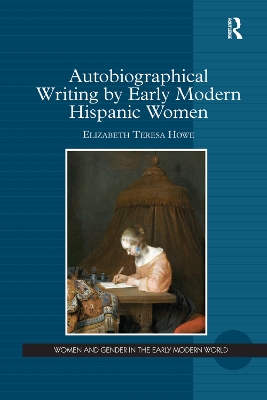
Autobiographical Writing by Early Modern Hispanic Women [Pehme köide]

  • Formaat: Paperback / softback, 320 pages, kõrgus x laius: 234x156 mm, kaal: 590 g
  • Ilmumisaeg: 10-Jun-2019
  • Kirjastus: Routledge
  • ISBN-10: 1138379999
  • ISBN-13: 9781138379992
  • Pehme köide
  • Hind: 55,90 €*
  • * hind on lõplik, st. muud allahindlused enam ei rakendu
  • Tavahind: 74,54 €
  • Säästad 25%
  • Raamatu kohalejõudmiseks kirjastusest kulub orienteeruvalt 3-4 nädalat
  • Kogus:
  • Lisa ostukorvi
  • Tasuta tarne
  • Tellimisaeg 2-4 nädalat
  • Lisa soovinimekirja
  • Raamatukogudele
  • Formaat: Paperback / softback, 320 pages, kõrgus x laius: 234x156 mm, kaal: 590 g
  • Ilmumisaeg: 10-Jun-2019
  • Kirjastus: Routledge
  • ISBN-10: 1138379999
  • ISBN-13: 9781138379992
Womens life writing in general has too often been ignored, dismissed, or relegated to a separate category in those few studies of the genre that include it. The present work addresses these issues and offers a countervailing argument that focuses on the contributions of women writers to the study of autobiography in Spanish during the early modern period. There are, indeed, examples of autobiographical writing by women in Spain and its New World empire, evident as early as the fourteenth-century Memorias penned by Doña Leonor López de Cordóba and continuing through the seventeenth-century Cartas of Sor Juana Inés de la Cruz. What sets these accounts apart, the author shows, are the variety of forms adopted by each woman to tell her life and the circumstances in which she adapts her narrative to satisfy the presence of male critics-whether ecclesiastic or political, actual or imagined-who would dismiss or even alter her life story. Analyzing how each of these women viewed her life and, conversely, how their contemporaries-both male and female-received and sometimes edited her account, Howe reveals the tension in the texts between telling a life and telling a lie.

Arvustused

'Autobiographical Writing by Early Modern Hispanic Women represents an excellent synthesis of theoretical work on autobiography as genre, and brings together previous studies on female life-writing Spain and the New World with new insights.' Alison P. Weber, University of Virginia, USA

1 Telling Li(v)es: Women and Autobiography

2 Court and Convent: Leonor López de Córdoba and Sor Teresa de Cartagena

3 Carmelite and Cloister: Santa Teresa de Jesús

4 In the Footsteps of Santa Teresa: Carmelite Nuns and the Reform(er)

5 Soldier in New Spain: Catalina de Erauso

6 Defending Her Life: Sor Juana Inés de la Cruz

Conclusion

Appendix: Confessors, Directors, and Editors of Santa Teresa
Elizabeth Teresa Howe is Professor of Spanish at Tufts University, USA. Her other books include Education and Women in the Early Modern Hispanic World (2008) and The Visionary Life of Madre Ana de San Agustín (2004).