Muutke küpsiste eelistusi

Balkan Muslims and the Middle East: The Influence of the Arab World on the Islamic Revival [Kõva köide]

(Executive Producer, Aljazeera Balkans)
  • Formaat: Hardback, 248 pages, kõrgus x laius x paksus: 236x156x20 mm, kaal: 260 g
  • Ilmumisaeg: 11-Dec-2025
  • Kirjastus: I.B. Tauris
  • ISBN-10: 0755646843
  • ISBN-13: 9780755646845
Teised raamatud teemal:
  • Kõva köide
  • Hind: 88,31 €*
  • * hind on lõplik, st. muud allahindlused enam ei rakendu
  • Tavahind: 117,75 €
  • Säästad 25%
  • Raamatu kohalejõudmiseks kirjastusest kulub orienteeruvalt 3-4 nädalat
  • Kogus:
  • Lisa ostukorvi
  • Tasuta tarne
  • Tellimisaeg 2-4 nädalat
  • Lisa soovinimekirja
  • Formaat: Hardback, 248 pages, kõrgus x laius x paksus: 236x156x20 mm, kaal: 260 g
  • Ilmumisaeg: 11-Dec-2025
  • Kirjastus: I.B. Tauris
  • ISBN-10: 0755646843
  • ISBN-13: 9780755646845
Teised raamatud teemal:
Examines how contact between Balkan Muslims and the Middle East sparked an Islamic Revival.

The current revival of Islam among Balkan Muslims did not simply start when war broke out in Bosnia in 1992. It is part of a much longer history of contact with the Middle East.

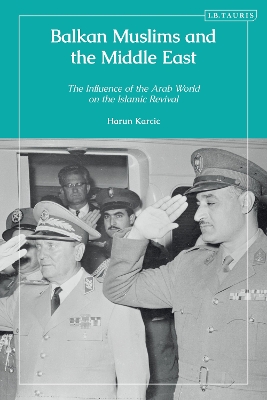
This book is the first to examine the evolving relationship between the Balkans and the Middle East covering three phases: the establishment of communist Yugoslavia in 1946, the period of its violent collapse, and during its uneasy post-war and post-Yugoslav independence. Haruc Karcic identifies how official links with the Middle East sparked an Islamic revival. Particularly significant were the large-scale student exchanges between Yugoslavia and the Middle East, and Yugoslavia's export of its military and technological knowledge to the Middle East. The book reveals that Yugoslavia realized it could use its Muslim population as 'gate openers' in winning lucrative business deals in the Arab world. Furthermore, the visibility and increasing number of Yugoslav Muslims in the Middle East were used for their Arabic skills to lobby for support when the war broke out.

The book uncovers how Balkan Muslims have survived and adapted to their turbulent history and what contact with Muslim-majority states meant to them. It is based on empirical research and primary sources including interviews, the archives of the Islamic Community in Bosnia and Herzegovina as well as the Communist Party of Yugoslavia, and articles and reports published in the journals 'Glasnik' and 'Takvim', and the newspapers 'Preporod' and 'Oslobodjenje'.

Arvustused

An impressive work on global Muslim solidarity in the Balkans across different political regimes. Karcics pioneering work provides not only new insights into religiously informed ties across states but also offers a globalized account of the region and its transcontinental entanglements with other parts of the (Muslim) world. Harun Karcics Balkan Muslims and the Middle East brilliantly reveals the ongoing resonance of cross-regional solidarities forged during and immediately following the Cold War. A must read for scholars and students of both international history and foreign affairs seeking to understand the new global order taking shape before our eyes. * Peter Mandaville, Dr, George Mason University, United States of America * Harun Karcics work is a paradigmatic study of the shifting (geo)political orientations of Muslim communities in the Western Balkans. It offers a long-needed remedy to decades of essentialist and Orientalist accounts of the politics in the regions Muslim-majority societies. And owing to Karcics use of a vast array of primary source documents from the region, no significant future scholarship on Muslim politics and identity in the Western Balkans or Southeastern Europe will be possible without reference to his contributions in this volume. * Jasmin Mujanovic, Dr, New Lines Institute for Strategy and Policy, USA * "Karcics work is deeply researched and packed with forgotten historical details about Balkan Muslim communities. He skilfully explains big topics like Titos ties to Nasser, but also elucidates finer points, such as how Muslims in Yugoslavia interacted with the wider Arab world during the Cold War. This book is invaluable to scholars, journalists and diplomats interested in learning more about the history of Bosniak Muslims; from late Ottoman times and the breakdown of Yugoslavia, to contemporary Irans ties to Muslim communities here" * Sean Matthews, Journalist, Middle East Eye, Greece *

Muu info

Examines how contact between Balkan Muslims and the Middle East sparked an Islamic Revival.

Introduction
1. Balkan Muslims after the Ottoman Retreat
2. Islam under Communism
3. Tito's Arab Friends
4. Collapse of Communism, War and Genocide
5. Arab Mujahedeen, Islamic Charities and Scholarships
6. Islamic Soft Power: Turkish, Saudi and Iranian Influence
7. Wrestling back 'Bosnian Islam'
Conclusion

Harun Karcic is a journalist, political analyst, and commentator specializing in the Balkans, foreign influence operations, and Islamic affairs. For over 15 years, he has reported on geopolitics, religion, and security for Al Jazeera and other international outlets. Karcic has authored numerous policy papers and opinion pieces for think tanks and global media. He is currently Vice Chairman of the Sarajevo Security Conference.