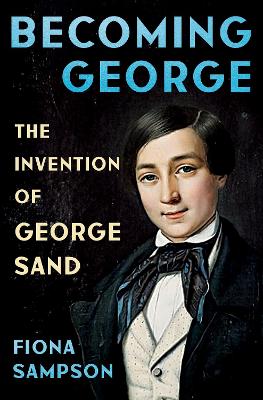
By the age of thirty, the young woman who was born Aurore Dupin in 1804 in a Paris garret had become the internationally renowned George Sand. In English, her novels were outselling even Victor Hugo. Her enormous and radical corpus would grow to include seventy novels, travel writing, plays, autobiography, and political writing. But despite this prodigious talent, Sand was simultaneously a figure of scandal. Cigar-smoking, cross-dressing, and promiscuous, she seemed to break all the rules society set for women.
Was her iconoclasm simply an act of courage, a declaration of absolute autonomy? Or did her sexual and emotional relationships with the leading figures of her dayfrom Fryderyk Chopin to Gustave Flaubert, and Alfred de Musset to Eugčne Delacroixform part of her dialogue with the world around her: a dialogue thats intrinsic to writing itself? To what extent do we invent ourselves? And what can we learn, from Sands life and art, about how writers in particular invent themselves, and are reinvented by the society around them?
This year marks the 150th anniversary of Sands death, and Becoming George is a fitting celebration of her literary geniusas well as the first new biography in nearly twenty-five years. Award-winning poet and biographer Fiona Sampson rehabilitates an artistic and intellectual giant who still speaks to us today. Brilliantly prescientabout ecology, politics, society, genderGeorge Sand was truly a figure ahead of her time.