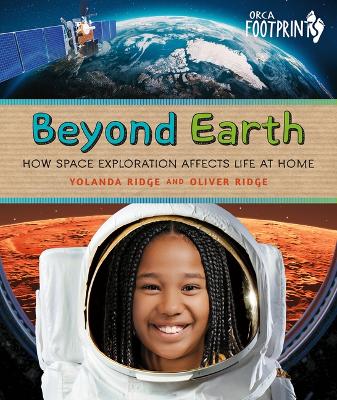
Did you know that space exploration is good for life here on Earth?
Living in space has led to many breakthroughs that can improve our lives. Research done on the International Space Station has led to new discoveries that have saved lives on Earth. Satellites in space let us communicate easily on our phones and power the GPS devices we use. And space exploration has even helped us learn how to purify water more easily and harness solar power, so we can take care of Earth's ecosystems and resources.
Still, space exploration requires a lot of resources like money and fuel. Can we justify using fossil fuels to fly rockets during a climate crisis? And how do we make sure we’re not messing up the rest of the solar system? Is exploring the cosmos really worth the cost? To answer those questions, Beyond Earth dives into space exploration and its impact. Because it's not about finding planet B, it’s about preserving planet A—and using space exploration to get us there.
Key Selling Points
- This STEM title examines space exploration today, how it benefits information and communication systems here on Earth, what it has taught us about human health and how space exploration can help solve issues such as the effects of climate change and declining resources on the planet.
- As the Artemis program prepares to send humans back to the moon and eventually to Mars, this topic is extremely topical.
- It deals with themes including the climate crisis; greenhouse gases emissions; alternative energy sources; health care and medical solutions; technology and innovation and food security.
- Each chapter features profiles of astronauts of the past, present and future such as Yuri Gagarin, Sally Ride, Chris Hadfield, the Artemis Crew and space tourists.
- This book is written by a mother-son team. Yolanda Ridge is an award-winning nonfiction writer with a specialty in science. She has two books in the Orca Footprints series. Oliver Ridge is studying astrophysics and is a Schulich Leader scholar at the University of Western Ontario.
Part of the nonfiction Orca Footprints series for middle-grade readers and illustrated with color photographs throughout, this book discusses space exploration and how it affects life on Earth.