Muutke küpsiste eelistusi

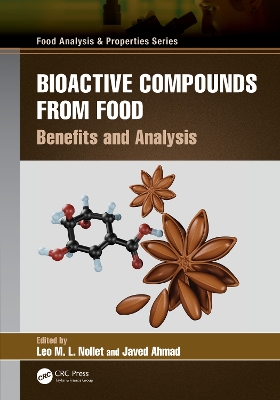
Bioactive Compounds from Food: Benefits and Analysis [Pehme köide]

Edited by (University College Ghent), Edited by (College of Pharmacy Najran University Najran, Saudi Arabia)
  • Formaat: Paperback / softback, 292 pages, kõrgus x laius: 254x178 mm, 24 Tables, black and white; 39 Line drawings, black and white; 39 Illustrations, black and white
  • Sari: Food Analysis & Properties
  • Ilmumisaeg: 22-Jun-2026
  • Kirjastus: CRC Press
  • ISBN-10: 1032478586
  • ISBN-13: 9781032478586
  • Pehme köide
  • Hind: 72,10 €*
  • * hind on lõplik, st. muud allahindlused enam ei rakendu
  • Tavahind: 96,14 €
  • Säästad 25%
  • See raamat ei ole veel ilmunud. Raamatu kohalejõudmiseks kulub orienteeruvalt 3-4 nädalat peale raamatu väljaandmist.
  • Kogus:
  • Lisa ostukorvi
  • Tasuta tarne
  • Tellimisaeg 2-4 nädalat
  • Lisa soovinimekirja
  • Formaat: Paperback / softback, 292 pages, kõrgus x laius: 254x178 mm, 24 Tables, black and white; 39 Line drawings, black and white; 39 Illustrations, black and white
  • Sari: Food Analysis & Properties
  • Ilmumisaeg: 22-Jun-2026
  • Kirjastus: CRC Press
  • ISBN-10: 1032478586
  • ISBN-13: 9781032478586
A bioactive compound is a type of chemical found in small amounts in plants and certain foods (such as fruits, vegetables, nuts, oils, and whole grains). Bioactive compounds have actions in the body that may promote good health. They are widely explored and investigated for their role in the prevention and treatment of various diseases, including cancer, cardiovascular disorders, and neurodegenerative disorders; thus, they are categorized as nutraceuticals. Examples of such bioactive compounds from food include lycopene, resveratrol, lignan, tannins, and indoles. Accordingly, the methods that are utilized to analyze these compounds for their identification, detection, and characterization are of great interest.

In Bioactive Compounds from Food: Benefits and Analysis, spectrophotometric, fluorometric, chromatographic, enzymatic, and electrophoretic methods that are utilized to analyze the different bioactive compounds of food are comprehensively discussed. In addition, the merits and limitations of the existing methods of analysis for bioactive compounds from food are also highlighted. Further, the benefits of these bioactive compounds on human health as anti-oxidative, anti-cancer, anti-diabetic, anti-inflammatory, anti-infective, anti-hyperlipidemic, and anti-hypertensive agents are also discussed with detailed insight and critical analysis of the contemporary research carried out in this domain.

Key Features:


Explores the world of bioactive compounds in foods Discusses recent analysis techniques for bioactive compounds Includes a summary of the health benefits of bioactive compounds Provides different analysis methods involved in the identification and quantification of food bioactive compounds

This book provides in-depth information and a comprehensive discussion on the human health benefits of food bioactive compounds and the different methods of analysis involved in the identification and quantification of food bioactive compounds.
Section 1: Food Bioactive Compounds Overview and Analytical Techniques
1. Food Bioactive Compounds An Overview and Health Benefits. Extraction,
Isolation, and Identification Techniques for Food Bioactive Compounds
Basics and Application Overview. Section 2: Classes of Food Bioactive
Compounds and its Characterization
3. Terpenes and Terpenoids Present in
Essential Oils: Chemical Composition and Potential Applications in Food
Preservation and Agriculture
4. Phytosterols
5. Flavonoids and Polyphenols
6.
Carotenoids
7. Glucosinolates
8. Glycosides, alkaloids, and glycoalkaloids
9.
Capsaicinoids: Source, Active Compounds and Importance
10. Curcuminoids
11.
Polyunsaturated fatty acids (PUFA): Eicosapentaenoic acid (EPA) and
Docosahexaenoic acid (DHA)
12. Polysaccharides and Dietary Fibres
13.
Nucleosides and Nucleotides as Classes of Bioactive Food Compounds
14.
Bioactive Peptides
15. Vitamines Section 3: Advanced Analysis Techniques
16.
Food Bioactive Compounds: Pharmacology and Advancement in Analysis
Leo M. L. Nollet earned an MS (1973) and PhD (1978) in biology from the Katholieke Universiteit Leuven, Belgium. He is an editor and associate editor of numerous books. He is an editor and associate editor of numerous books. He edited for M. Dekker, New Yorknow CRC Press of Taylor & Francis Publishing Groupthe first, second, and third editions of Food Analysis by HPLC and Handbook of Food Analysis.

Dr. Javed Ahmad (ORCID iD: 0000-0002-7025-751X) is an Associate Professor at College of Pharmacy, Najran University, Saudi Arabia. He received his Doctorate degree in pharmaceutical sciences from School of Pharmaceutical Education and Research, Jamia Hamdard, New Delhi (India). He is a recipient of CSIR-Senior Research Fellowship and International Travel Award from Department of Science & Technology, Govt. of India during his Ph.D. After his Ph.D, he joined NIPER Raebareli, an autonomous institute of Department of Pharmaceuticals, Govt. of India as a faculty position. He has published more than 125 high quality research and review articles in peer-reviewed journals of international repute