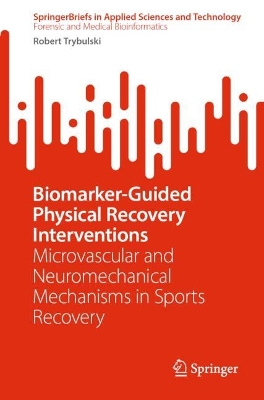
This book presents a mechanistic analysis of physical recovery interventions interpreted through measurable biological responses. Rather than focusing on training programming, it examines how thermal, mechanical, and needling-based modalities influence skeletal muscle recovery through microvascular regulation, neuromechanical tissue behavior, and pain modulation. This book develops a biomarker-guided framework for designing recovery protocols based on doseresponse logic (temperature x pressure x time x mechanical load). It emphasizes endpoint selection, reproducibility, and clinical translation, integrating experimental findings with medical application.
Recovery as a Biological Process.- Microvascular Regulation in Skeletal
Muscle Recovery.- Neuromechanical Biomarkers.- Thermal Interventions: Cold
and Heat.- Mechanical Interventions: Compression, Massage, and Lymphatic
Drainage.- Needling-Based and Neuromodulatory Interventions.- Multimodal
Protocols.- Designing Clinical Protocols.- Translational Applications.
Dr. Robert Trybulski is a physiotherapist, combat sports coach, and academic researcher based in Poland. His scientific work focuses on the biological and physiological mechanisms of post-exercise recovery, with particular emphasis on microvascular regulation, neuromechanical muscle properties (tone, stiffness, elasticity), and pain modulation following high-intensity loading. His research integrates controlled experimental models with clinical practice, examining dose-dependent recovery interventions based on physical and manual stimuli, including compression, heatcold therapy, contrast protocols, massage, lymphatic drainage, and dry needling. A central theme of his work is translating measurable physiological signalsmicrocirculatory parameters, autonomic markers, and neuromechanical indicesinto reproducible, biologically grounded intervention protocols applicable in medicine and high-performance sport.