Muutke küpsiste eelistusi

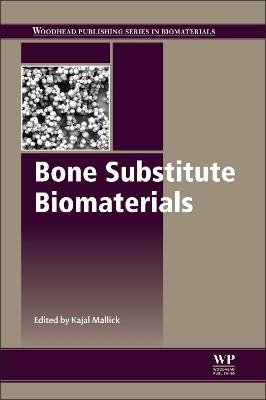
Bone Substitute Biomaterials [Kõva köide]

Edited by (Formerly associate professor of the Warrick Manufacturing Group at Warwick University, UK)
  • Formaat: Hardback, 352 pages, kõrgus x laius: 234x156 mm, kaal: 680 g
  • Sari: Woodhead Publishing Series in Biomaterials
  • Ilmumisaeg: 06-Aug-2014
  • Kirjastus: Woodhead Publishing Ltd
  • ISBN-10: 0857094971
  • ISBN-13: 9780857094971
Teised raamatud teemal:
  • Kõva köide
  • Hind: 163,24 €*
  • * hind on lõplik, st. muud allahindlused enam ei rakendu
  • Tavahind: 217,65 €
  • Säästad 25%
  • Raamatu kohalejõudmiseks kirjastusest kulub orienteeruvalt 3-4 nädalat
  • Kogus:
  • Lisa ostukorvi
  • Tasuta tarne
  • Tellimisaeg 2-4 nädalat
  • Lisa soovinimekirja
  • Formaat: Hardback, 352 pages, kõrgus x laius: 234x156 mm, kaal: 680 g
  • Sari: Woodhead Publishing Series in Biomaterials
  • Ilmumisaeg: 06-Aug-2014
  • Kirjastus: Woodhead Publishing Ltd
  • ISBN-10: 0857094971
  • ISBN-13: 9780857094971
Teised raamatud teemal:
Mallick presents this review for biomedical researchers and engineers on materials used to replace bone. Part one introduces the desired properties of substitute biomaterials, including the ability to drive mineralization or be resorbed into tissue, and the bone mechanics with which materials must interact. Part two discusses several classes of materials used as scaffolds and implants, including ceramics, titanium-based foams, and multifunctional materials. Finally part three addresses the use of biological and pseudo-biological materials to augment natural repair and regeneration processes, including cartilage grafts, chitosan, synthetic polymers, and whole or extracted marine organisms. Annotation ©2015 Ringgold, Inc., Portland, OR (protoview.com)

Bone substitute biomaterials are fundamental to the biomedical sector, and have recently benefitted from extensive research and technological advances aimed at minimizing failure rates and reducing the need for further surgery. This book reviews these developments, with a particular focus on the desirable properties for bone substitute materials and their potential to encourage bone repair and regeneration.

Part I covers the principles of bone substitute biomaterials for medical applications. One chapter reviews the quantification of bone mechanics at the whole-bone, micro-scale, and non-scale levels, while others discuss biomineralization, osteoductivization, materials to fill bone defects, and bioresorbable materials. Part II focuses on biomaterials as scaffolds and implants, including multi-functional scaffolds, bioceramics, and titanium-based foams. Finally, Part III reviews further materials with the potential to encourage bone repair and regeneration, including cartilage grafts, chitosan, inorganic polymer composites, and marine organisms.

  • Provides a detailed and accurate overview of the bone substitute biomaterials, a fundamental part of the biomaterials and biomedical sector
  • Provides readers with the principles of bone substitute biomaterials
  • Reviews biomaterials for bone regeneration

Muu info

A vital guide to these cutting-edge materials and their use in bone defect repair, scaffolds and implants, and regeneration
Forward
Preface
Part 1 Properties of bone substitute biomaterials in medicine
1 Bone substitutes based on biomineralization
2 Experimental quantification of bone mechanics
3 Osteoinductivization of dental implants and bone-defect-filling materials
4 Bioresorbable bone graft substitutes

Part 2 Biomaterial substitute scaffolds and implants for bone repair
5 Multi-functional scaffolds for bone regeneration
6 3D bioceramic foams for bone tissue engineering
7 Titanium and NiTi foams for bone replacement
8 Bioceramics for skeletal bone regeneration

Part 3 Biomaterials for bone repair and regeneration
9 Cartilage grafts for bone repair and regeneration
10 Chitosan for bone repair and regeneration
11 Inorganic polymer composites for bone regeneration and repair
12 Marine organisms for bone repair and regeneration
Professor Kajal Mallick was formerly associate professor of the Warwick Manufacturing Group at Warwick University, where he headed the Tissue Engineering and Ceramic Processing research group (TiECep). He has authored many papers on biomaterials in leading international journals.