Muutke küpsiste eelistusi

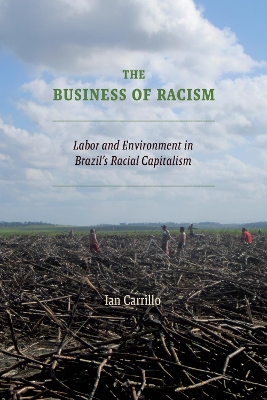
Business of Racism: Labor and Environment in Brazil's Racial Capitalism [Kõva köide]

  • Formaat: Hardback, 272 pages, kõrgus x laius: 229x152 mm, kaal: 572 g, 4 illustrations
  • Ilmumisaeg: 19-May-2026
  • Kirjastus: Duke University Press
  • ISBN-10: 1478029706
  • ISBN-13: 9781478029700
  • Kõva köide
  • Hind: 99,45 €*
  • * hind on lõplik, st. muud allahindlused enam ei rakendu
  • Tavahind: 132,60 €
  • Säästad 25%
  • See raamat ei ole veel ilmunud. Raamatu kohalejõudmiseks kulub orienteeruvalt 3-4 nädalat peale raamatu väljaandmist.
  • Kogus:
  • Lisa ostukorvi
  • Tasuta tarne
  • Tellimisaeg 2-4 nädalat
  • Lisa soovinimekirja
  • Formaat: Hardback, 272 pages, kõrgus x laius: 229x152 mm, kaal: 572 g, 4 illustrations
  • Ilmumisaeg: 19-May-2026
  • Kirjastus: Duke University Press
  • ISBN-10: 1478029706
  • ISBN-13: 9781478029700
In The Business of Racism, Ian Carrillo draws from his extensive ethnographic fieldwork in Brazil’s agribusiness sector to show how racial capitalism is promulgated and maintained through politics and business.

In The Business of Racism, Ian Carrillo employs a case study from Brazil’s sugarcane industry to show how racial capitalism is promulgated and maintained through politics and business. As Carrillo recounts, in the mid-2000s, Brazil embarked on a state-led project to improve environmental and labor conditions in sugarcane production. He describes how, seeing increased government regulation of their worksite as a threat to their power, the elites of Brazil’s sugar-ethanol industry repurposed long-standing racial ideologies to undermine progressive institutions and elevate their own leaders. Carrillo’s extensive ethnographic fieldwork in mills and plantations, as well as interviews with federal labor regulators and sugar-ethanol industry elites in Brazil, weaves together an account of how Brazil’s labor and environmental regulations are forged through racial and class struggles at worksites and within the state. The Business of Racism contributes to ongoing sociological debates about race, development, and the environment while highlighting future pathways for achieving racial justice, labor equality, and climate sustainability.
Acknowledgments ix
Introduction 1
1. Slave Labor and the Remaking of the Racial State in the Amazon 29
2. Reforming the Business of Racism in Sugarcane 59
3. Racialized Modernity, Interest Convergence, and São Paulo Elites 95
4. Racialized Organizations, Crises of Legitimacy, and Northeastern Elites
125
5. Regulators and Repertoires of Revaluation 151
6. The Patrimonial Backlash 181
Conclusion 209
Appendix: Methods 225
References 229
Index 253
Ian Carrillo is Assistant Professor of Sociology at the University of Oklahoma.