Muutke küpsiste eelistusi

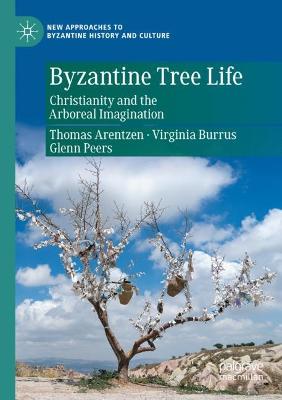
Byzantine Tree Life: Christianity and the Arboreal Imagination 2021 ed. [Pehme köide]

  • Formaat: Paperback / softback, 190 pages, kõrgus x laius: 210x148 mm, kaal: 278 g, 12 Illustrations, color; 6 Illustrations, black and white, 1 Paperback / softback
  • Sari: New Approaches to Byzantine History and Culture
  • Ilmumisaeg: 13-Jul-2022
  • Kirjastus: Springer Nature Switzerland AG
  • ISBN-10: 3030759040
  • ISBN-13: 9783030759049
Teised raamatud teemal:
  • Pehme köide
  • Hind: 108,52 €*
  • * hind on lõplik, st. muud allahindlused enam ei rakendu
  • Tavahind: 144,69 €
  • Säästad 25%
  • Raamatu kohalejõudmiseks kirjastusest kulub orienteeruvalt 3-4 nädalat
  • Kogus:
  • Lisa ostukorvi
  • Tasuta tarne
  • Tellimisaeg 2-4 nädalat
  • Lisa soovinimekirja
  • Formaat: Paperback / softback, 190 pages, kõrgus x laius: 210x148 mm, kaal: 278 g, 12 Illustrations, color; 6 Illustrations, black and white, 1 Paperback / softback
  • Sari: New Approaches to Byzantine History and Culture
  • Ilmumisaeg: 13-Jul-2022
  • Kirjastus: Springer Nature Switzerland AG
  • ISBN-10: 3030759040
  • ISBN-13: 9783030759049
Teised raamatud teemal:
This book examines the many ways Byzantines lived with their trees. It takes seriously theological and hagiographic tree engagement as expressions of that culture’s deep involvement—and even fascination—with the arboreal. These pages tap into the current attention paid to plants in a wide range of scholarship, an attention that involves the philosophy of plant life as well as scientific discoveries of how communicative trees may be, and how they defend themselves. Considering writings on and images of trees from Late Antiquity and medieval Byzantium sympathetically, the book argues for an arboreal imagination at the root of human aspirations to know and draw close to the divine.

Arvustused

Byzantine Tree Life comprises three essays framed by a substantive introduction and conclusion. the book itself is a conversation between three colleagues, and we the readers are invited to join. We can join first, surely, by looking again and a new at the trees that accompany our days, frame our lives, and appear copiously, indeed instructively, in the cultural remains of our Byzantine friends. (Susan Ashbrook Harvey, Journal of Orthodox Christian Studies, Vol. 6 (1), 2023)

1. Introduction.- 2. Writing on Trees.- 3. In the Beginning, Trees.- 4.
Becoming-Tree.- 5. Three Leaves: A Theopoetic Epilogue.
Thomas Arentzen is Researcher in Greek Philology at Uppsala University and Reader in Church History at Lund University, Sweden.

Virginia Burrus is Bishop W. Earl Ledden Distinguished Professor of Religion at Syracuse University, USA.  

Glenn Peers is Professor in the Department of Art and Music Histories at Syracuse University, USA.