Muutke küpsiste eelistusi

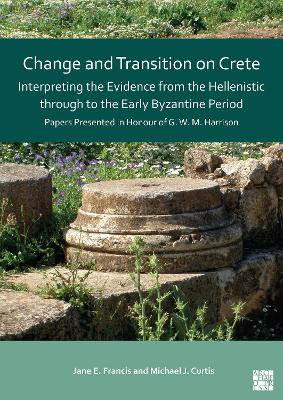
Change and Transition on Crete: Interpreting the Evidence from the Hellenistic through to the Early Byzantine Period: Papers Presented in Honour of G. W. M. Harrison [Pehme köide]

Edited by , Edited by
  • Formaat: Paperback / softback, 226 pages, kõrgus x laius x paksus: 290x205x10 mm, kaal: 1320 g, 133 figures, 5 tables (colour throughout)
  • Ilmumisaeg: 09-Feb-2023
  • Kirjastus: Archaeopress Archaeology
  • ISBN-10: 180327056X
  • ISBN-13: 9781803270562
Teised raamatud teemal:
  • Formaat: Paperback / softback, 226 pages, kõrgus x laius x paksus: 290x205x10 mm, kaal: 1320 g, 133 figures, 5 tables (colour throughout)
  • Ilmumisaeg: 09-Feb-2023
  • Kirjastus: Archaeopress Archaeology
  • ISBN-10: 180327056X
  • ISBN-13: 9781803270562
Teised raamatud teemal:
Change and Transition on Crete: Interpreting the Evidence from the Hellenistic through to the Early Byzantine Period is presented in honour of G.W.M. Harrison, whose academic contributions have enriched our perspective of Roman Crete and has inspired others to take on the challenge of this subject area.


The study of Hellenistic and Roman Crete is, in many respects, still in its infancy. Whilst there is still much that we do not know about life on the island during these times, the past 40 years have seen a marked advancement of research and investigation into these periods at an ever-increasing pace, with the result that today we have a far better understanding and clearer perspective of the era.


The theme of this volume, which was inspired by the 1st International Conference of the Colloquium on Roman Crete in 2016, is change and transition, a topic that challenges some of the earlier approaches to Hellenistic and Roman Crete, and which presents a different perspective on historical events and archaeological evidence. After an opening discussion, the papers explore aspects of change and transition in social and material archaeological contexts, with contributions on social organisation, economy and trade, health and diet, and the maritime landscape. In discussing change and transition for the Hellenistic and Roman periods, this volume also raises questions about existing interpretations of the archaeological evidence and the current chronological framework.

Arvustused

The first research on Roman and Late Antique Crete, long neglected in favor of the Minoan period, was undertaken in the 1970s by Ian Sanders. Since then, Roman Crete has become an integral part of the new historiographical trends in Classical Studies, thanks to the work of several researchers, many of whom have contributed to the volume under review. George Harrisons 1993 monograph, The Romans in Crete, is also a major contribution, though sometimes overlooked. The present volume, dedicated to him, does justice to the work of a scholar who has also devoted a great deal of time to Greek and Latin literature. François Chevrollier (2023): Bryn Mawr Classical Review

Acknowledgements iii
About the Authors iv
Abstracts vii
1 Foreword: G. W. M. Harrison and the Study of Roman Crete
1(2)
Jane E. Francis
2 Introduction
3(8)
Michael J. Curtis
3 The Export of Whetstones from Hellenistic Crete
11(15)
Nicholas Victor Sekunda
4 La derniere ligne droite dans la rivalite" acharnee et seculaire entre Phaistos et Gortyne
26(12)
Adam Pahichowski
5 Onomasticon and Social Identity on the Cretan Coins in the Late-Hellenistic and Roman Periods: A Case Study
38(20)
Vassiliki E. Stefanaki
6 Tαφoικαι TαφικεσΠραακτικεσστo AρΧαιo Pυτιo
58(21)
Kayyioz Gkalankz
Xristina Papadakz
Kleantzs Sidzropioulos
7 Did Rome Really Change Anything? Settlement Patterns of Far Eastern Crete in the Hellenistic and Roman Periods
79(23)
Nadia Coutsinas
8 Beside the Sea: Unravelling the Maritime Landscape of Hellenistic and Roman Crete
102(21)
Michael J. Curtis
9 Becoming Roman: The Cretan Evidence of Augustan Stamps on Italian Sigillata
123(10)
Martha W. Baldwin Bowsky
10 Origanum dictamnus (Dittany of Crete): Testaments, Uses, and Trade of a Sacred Plant in Antiquity
133(14)
Anna Kouremenos
11 The Fabrics of Roman to Early Byzantine Cretan Amphorae from the Sphakia Survey
147(21)
Jane Francis
Eleni Nodarou
Jennifer Moody
12 Health, Diet and Lifeways at Knossos during the Hellenistic, Roman and Late-Antique Periods
168(13)
Anna Moles
13 Hazard, Risk, Vulnerability and the AD 365 Earthquake on Crete
181(19)
Scott Callimore
14 Afterword
200(3)
Jane E. Francis
List of Scholarship on Crete by George W. M. Harrison 203(2)
Index 205
Jane E. Francis holds a PhD in Classical Archaeology from Bryn Mawr College and is Associate Professor in the Department of Classics, Modern Languages and Linguistics at Concordia University in Montreal. Her research focuses on the Roman period on Crete, including ceramics, fabric analysis, sculpture, Cretan caves, ancient beekeeping and landscape archaeology. She is one of the co-authors of the Sphakia Survey Project final publication.


Michael J. Curtis is a professional landscape and coastal archaeologist and a Tutor in Archaeology and Ancient History for Northamptonshire Adult Learning Service. He holds a BA in Archaeology from the University of Southampton and an MA in Archaeology from the University of Nottingham. He is an Honorary Fellow in the School of Archaeology and Ancient History at the University of Leicester, where he is studying the Roman Imperial Ports and Harbours of Crete. He is the lead member in a Greek-led project researching and surveying the Roman harbour at Ierapetra, in eastern Crete, and within the UK is currently engaged in research into the Catuvellauni, a late Iron Age and Roman tribe in south-eastern Britain.