Muutke küpsiste eelistusi

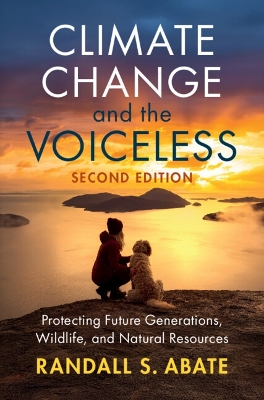
Climate Change and the Voiceless: Protecting Future Generations, Wildlife, and Natural Resources 2nd Revised edition [Kõva köide]

  • Formaat: Hardback, 362 pages, Worked examples or Exercises
  • Ilmumisaeg: 31-May-2026
  • Kirjastus: Cambridge University Press
  • ISBN-10: 1009777629
  • ISBN-13: 9781009777629
  • Kõva köide
  • Hind: 118,69 €*
  • * hind on lõplik, st. muud allahindlused enam ei rakendu
  • Tavahind: 158,25 €
  • Säästad 25%
  • See raamat ei ole veel ilmunud. Raamatu kohalejõudmiseks kulub orienteeruvalt 3-4 nädalat peale raamatu väljaandmist.
  • Kogus:
  • Lisa ostukorvi
  • Tasuta tarne
  • Tellimisaeg 2-4 nädalat
  • Lisa soovinimekirja
  • Formaat: Hardback, 362 pages, Worked examples or Exercises
  • Ilmumisaeg: 31-May-2026
  • Kirjastus: Cambridge University Press
  • ISBN-10: 1009777629
  • ISBN-13: 9781009777629
Future generations, wildlife, and natural resources collectively referred to as 'the voiceless' in this work are the most vulnerable and least equipped populations to protect themselves from the impacts of global climate change. In this new edition of Climate Change and the Voiceless, Randall S. Abate provides comprehensive analysis of recent landmark strategic litigation to protect vulnerable communities, significant updates on legislative and judicial developments on rights of nature, and a detailed summary of the most important climate change advisory opinions and their implications for the protection of voiceless communities. As in the original work, he identies the common vulnerabilities of the voiceless in the Anthropocene era and demonstrates how the law can evolve to protect their interests more effectively. This work should be read by anyone interested in how the law can be employed to mitigate the effects of climate change on those who stand to lose the most.

Arvustused

'This book provides a compelling and robust review of the progress that has (and hasn't) been made in considering 'the voiceless future generations, wildlife, and natural resources in climate change law and policy. Whatever the reader thinks about personhood for other species and the Rights of Nature movement in general, this second edition provides an up-to-date and comprehensive international overview of how those tools are being deployed in an era of climate change. For readers in the United States in particular, the book offers an intriguing, hopeful, and sometimes surprising introduction to what has become possible, legally, in other parts of the world.' Robin Kundis Craig, Robert A. Schroeder Distinguished Professor, University of Kansas School of Law 'The second edition of Climate Change and the Voiceless deepens Randy Abate's vital work for the voiceless victims of the climate emergency: wildlife, future generations, Nature, and vulnerable communities. Combining rigorous legal analysis with moral clarity, it bridges law, ethics, and empathy to show that real climate justice starts with reframing what is at stake. Think of it as a user's manual for ethical climate governance.' James R. May, Richard S. Righter Distinguished Professor of Law, Washburn University School of Law 'This book provides a powerful and compelling assessment of the role of law in safeguarding the rights of vulnerable and often marginalized communities. By clarifying the rights-based and nature-focused legal frameworks required to protect voiceless communities, Randall Abate's timely and insightful effort fills a significant gap in an understudied area. For scholars, practitioners, and students interested in natural resources, energy, and environmental law and policy fields, this book is a must-read.' Damilola S. Olawuyi, Independent Expert, United Nations Working Group on Business and Human Rights, Professor and UNESCO Chair on Environmental Law and Sustainable Development, Hamad Bin Khalifa University

Muu info

Abate identifies the common vulnerabilities of 'the voiceless' and outlines how the law can evolve to effectively protect their interests.
1. An anthropogenic problem that requires an ecocentric solution;
2.
Climate change litigation in domestic courts and human rights commissions;
3.
Protection of future generations;
4. Legal personhood for wildlife: US and
foreign domestic judicial developments
5. Rights of nature: US and foreign
domestic perspectives;
6. Proposal for enhanced stewardship and rights-based
protections for the voiceless, Index.
Randall S. Abate has taught domestic and international environmental law courses at six US law schools and one university over the course of three decades. He also has delivered lectures on environmental and animal law in more than twenty countries on six continents. He has published six books and forty articles and book chapters on environmental and animal law topics.