Muutke küpsiste eelistusi

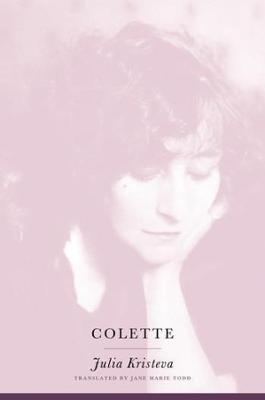
Colette [Pehme köide]

  • Pehme köide
  • Hind: 34,80 €*
  • * hind on lõplik, st. muud allahindlused enam ei rakendu
  • Tavahind: 43,50 €
  • Säästad 20%
  • Raamatu kohalejõudmiseks kirjastusest kulub orienteeruvalt 3-4 nädalat
  • Kogus:
  • Lisa ostukorvi
  • Tasuta tarne
  • Tellimisaeg 2-4 nädalat
  • Lisa soovinimekirja
Published on the fiftieth anniversary of her death, this intellectual biography of Colette-the final volume of Julia Kristeva's trilogy "Female Genius"-will be considered a major breakthrough in understanding one of the great creative minds of the twentieth century. Colette (1873-1954) was a prolific novelist who celebrated sexual pleasure and invented a language for it at a time when women writers were inhibited about dealing with the topic. Female sexuality in a male-dominated world and the joys and pains of love served as her main themes, and her novels-Cheri, La Chatte, and Gigi, among them-blurred the boundaries between fact and fiction long before autobiographical novels became commonplace. She married three times, had male and female lovers, and for a time supported herself as a mime, dancing semi-nude in music halls throughout France. When she died, she received the first state funeral the French Republic had ever given a woman. Colette's writing was inspired by entertainers, courtesans, an aristocratic Parisian lesbian subculture, and fin de siecle gay aesthetes. She admired those who lived on the sexual edge and was accused of moral corruption in intellectual matters-she published in pro-Vichy, anti-Semitic journals during the Occupation, even as she fought to keep her Jewish third husband from deportation. Kristeva deftly examines Colette's controversial life and work and considers two of her most important influences, Honore de Balzac and Marcel Proust. In a multifaceted approach, Kristeva considers Colette's use of metaphor, the characters in her novels, and the development of her writing within the context of her life. Paying particular attention to the language the French writer used to "say the unsayable and name the unnameable," Kristeva offers an elegant and sophisticated critique of Colette's psychological conflicts, particularly her sexual relationships and how these conflicts are both recorded in and resolved through the act of writing. Appealing to Freudian and Lacanian concepts such as the Oedipus complex, perversion, the symbolic, and melancholy, Kristeva opens Colette's oeuvre to psychoanalytic interpretation. The impression that remains is of a woman intent on experiencing the world's pleasures-its jouissance-in a melding with the world's flesh.

Arvustused

This scholarly biography, published to coincide with the 50th anniversary of Colette's death, is not a scandal sheet but a psychoanalysis of Colette in which Kristeva uses psycholinguistics to explore the author's work and life... Recommended for academic libraries. Library Journal Persuasive and entertaining. As an account of how Colette's writing works through vivid and sexualized metaphor, it's quite superb... Kristeva and Colette are a brilliant coupling. The Times (London) part psychoanalysis, part apologia--all based in love. -- Julia Balen Women's Review of Books A major study on a figure who remains one of France's most underrated writers. -- Julien Bisson France Today This is a wonderful book by one of the finest minds of our time. -- Michael Payne Daily Item

Muu info

The third book in Kristeva's trilogy on female genius,Colette interlaces commentary on the life and work of this notorious French novelist who made it possible for women to write erotic literature. The result is an elegant and sophisticated critique filled with psychoanalytic insight.
Acknowledgment ix
Why Colette? She Invented an Alphabet
1(16)
Life or Works?
17(57)
From Saint-Sauveur to Willy: An Initiation
25(14)
Vagabondage and Social Success: Missy, Sidi, Bel-Gazou
39(9)
From Mother-Son Incest to the Consecration of the Mother: Bertrand de Jouvenel and Sido
48(7)
A Continual Rebirth
55(2)
Two Sides: Money and Writing
57(5)
The Idol Cornered by History
62(12)
Writing: Tendrils of the Vine
74(49)
The ``Large-Limbed'' Need to Write
74(11)
Tendrils of the Vine in Seven Movements
85(10)
Metaphors? No, Metamorphoses
95(5)
Two Narrative Registers
100(6)
The Imaginary as the Right to Lie
106(4)
The Solitude of Music and of Crime
110(13)
Who is Sido?
123(32)
A Slow Apparition
123(4)
The Child and the Enchantments: Melanie Klein and Colette
127(6)
The Incestual Mother with ``One of [ Her] Children''
133(7)
What a Character!
140(15)
Depression, Perversion, Sublimation
155(39)
Freud's Way: Pere-version or Mere-version
155(4)
Idealization: Latency and the Superego
159(5)
Genitality or Neoreality?
164(4)
Succeeding Where the Pervert Exhausts Himself
168(4)
Psychopathia Sexualis and Melancholy According to Colette
172(12)
Pain, or Colette the Father
184(10)
The Metamorphic Body: Plants, Beasts, and Monsters
194(47)
``. . . My Old Subtle Senses''
194(15)
``O Geraniums, O Foxglove . . .''
209(4)
The Animal, or an Unused Love
213(11)
``. . . If `Mme Colette' Is Not a Monster, She Is Nothing'' (Jean Cocteau)
224(14)
From the Death Drive to Decapitation
238(3)
Men and Women, Pure and Impure
241(81)
A New Mystic?
241(5)
Love Expresses Itself Only in Metaphors . . .
246(2)
. . . Or, How to Wrest Oneself Away from Love
248(6)
From the Woman-Object to Objectless Love
254(6)
A Queen of Bisexuality
260(7)
Precocious Maturity, or Delicacy According to Mitsou and Gigi
267(7)
``. . . Those Men that Other Men Call Great''
274(9)
The Femine Ideal Includes Its Negative
283(4)
Mother and Child
287(7)
The War Between the Sexes
294(3)
``Those Pleasures Thoughtlessly Called Physical . . .''
297(13)
The Infantile Revisited from the Direction of the Impure
310(5)
Which Couple? Or, the Triumph of the Imaginary
315(7)
A Little Politics all the Same
322(36)
An Antifeminist
323(3)
The Occupation, or the Politics of the Gourmand Ostrich
326(15)
Living the Image: From Illustration . . .
341(7)
. . . To Cinema: In Praise of the Imaginary
348(10)
Still Writing, Between Balzac and Proust
358(45)
``Balzac, Difficult? He? My Cradle, My Forest, My Journey?''
358(10)
Proust? ``As in Balzac, I'm Awash in It . . . It's Delicious . . .''
368(11)
Memory and Worthiness
379(12)
``Because Writing Leads Only to Writing''
391(12)
Is There a Feminine Genius?
403(26)
Simone de Beauvoir: ``Situation'' and ``Individual Opportunities''
404(4)
The Two-Faced Oedipus
408(11)
Intersections
419(10)
Notes 429(54)
Bibliography 483(4)
Index 487


Julia Kristeva is professor of linguistics at the University of Paris VII. A world-renowned psychoanalyst and literary theorist, she is the author of many books, including Hannah Arendtand Melanie Klein (both published by Columbia). Jane Marie Todd is a translator living in Portland, Oregon. She has published some thirty translations, including Catherine Clement and Julia Kristeva's The Feminine and the Sacred (Columbia).