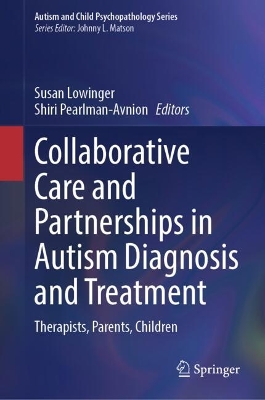
This book examines strategies for strengthening collaborations and improving sometimes problematic relationships between therapists, parents, and autistic children. It emphasizes the importance of therapists involving parents in their childs interventions and details ways in which therapists can train parents to practice the same cognitive, emotional, and behavioral skills their child needs to develop and improve. In addition, the book describes how primary care providers can empower parents to become collaborative partners, giving them tools and strategies to move forward with their concerns and weigh different options in seeking help. Chapters focus on critical therapeutic moments that encourage children to discover who they are, develop their own willpower as well as connect past, present and future events to become more socially connected.
Key areas of coverage include:
Describing the ways in which culture and gender may affect diagnosis and treatment of autistic children. Exploring intervention strategies that ensure the best possible outcomes for autistic children. Examining therapeutic issues that span the difficult period of receiving a diagnosis through early childhood, youth, and adulthood. Leveraging the elements of connection between parents and their autistic children to ensure therapeutic success.
Collaborative Care and Partnerships in Autism Diagnosis and Treatment is an invaluable resource for clinicians, therapists, and other professionals as well as researchers, professors, and graduate students in clinical child and school psychology, developmental psychology, child and adolescent psychiatry, clinical social work, special education, speech-language therapy, and all related disciplines.
Part
1. Autism Diagnosis and Self-Discovery.
Chapter
1. Autistic
Peoples Perspective on Self-Discovery and Self-Understanding.
Chapter
2. A
Protocol for Self-Advocacy for Individuals with Autism Spectrum Disorders.-
Chapter
3. Parental Experiences of Receiving and Coming to Terms with Their
Child s Autism Spectrum Diagnosis.- Part
2. Culture and Gender in Autism
Diagnosis and Treatment.
Chapter
4. Navigating Parental Disclosure for Girls
and Women: Perspectives from Parents and Autistic Individuals.
Chapter
5.
Differences in Eating Patterns Between Boys and Girls and Between Young
Children and Adolescents Diagnosed with Autism.
Chapter
6. Parents, Autistic
Children, and Communication About Sexuality.
Chapter
7. Choosing an
Educational Setting by Parents in Religious Communities.- Part
3. Effective
Collaboration: Parents, Teachers, and Therapists.
Chapter
8. Inclusion in a
Regular Classroom: Advisory Guidelines from an ASD Student.
Chapter
9.
Effective Collaboration Between Therapists and Parents of Children with
High-Functioning ASD: The Need for Parental Intervention.
Chapter
10.
Parental Involvement, Parent-Teacher Relationships, and Development of
Children with Autism Spectrum Disorder.
Chapter
11. Parental Stress and
Coping with Children on the Autism Spectrum: Changes in the Focus of
Interest.- Part
4. Moments of Meeting Between Parents and Children.
Chapter
12. Shared Experiences, Intentions, and Memories of Parents and Children:
Past, Present and Future.
Chapter
13. Development of Identity from the
Combined Perspectives of a Boy, His Parents, and Their Psychologist:
Connected Vessels.
Chapter
14. The Power to Choose, the Dynamics of the
Development of Will: Meeting of Volitions.
Susan Lowinger, Ph.D., is a developmental and clinical psychologist who worked for many years as the chief psychologist in developmental clinics. She lectured in the Education Department at Bar Ilan University and was head of its adjunct clinic for Children with Autism Spectrum Disorders. In this capacity, Dr. Lowinger oversaw yearly conferences for educators, clinicians, parents, and researchers to expand their means of working with children on the spectrum. In addition, she ran a weekly lecture series for the parents and clinicians who worked in the clinic. In her private practice, Dr. Lowinger works with autistic individuals and their families. In recent years, she has edited six books about the diagnosis and treatment of autism. The sixth book, Autism in Adulthood, which she co-edited with Dr. Shiri Pealrman-Avnion (2019, Springer Nature), addresses the many facets of autism in adulthood, including diagnosis, employment, residential issues, romantic relationships and sexuality.
Shiri Pearlman-Avnion, Ph.D., is an educational psychologist and lecturer at Tel-Hai Academic College, specializing in autism spectrum disorder, metacognition, theory of mind and social cognition. Her work has been instrumental in advancing the understanding of cognitive and social development among individuals with autism, particularly in the areas of language use, social interaction, and the impact of metacognitive skills on learning outcomes. Dr. Pearlman-Avnion held a postdoctoral fellowship at the National Alliance for Autism Research (NAAR), Boston University Medical School, from 2002 to 2005. In addition to her academic role, Dr. Pearlman-Avnion runs a private clinic that focuses on therapy and diagnostics for children, adolescents, and adults with autism. She co-edited the book, Autism in Adulthood (2019, Springer Nature), exploring the unique challenges faced by adults on the autism spectrum and bridging theoretical insights with practical approaches.