Muutke küpsiste eelistusi

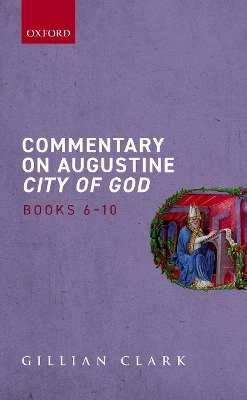
Commentary on Augustine City of God, Books 6-10 [Kõva köide]

(Professor Emerita of Ancient History and Senior Research Fellow, University of Bristol)
  • Formaat: Hardback, 272 pages, kõrgus x laius x paksus: 223x143x20 mm, kaal: 436 g
  • Ilmumisaeg: 07-Dec-2023
  • Kirjastus: Oxford University Press
  • ISBN-10: 0198870086
  • ISBN-13: 9780198870081
  • Kõva köide
  • Hind: 105,00 €*
  • * hind on lõplik, st. muud allahindlused enam ei rakendu
  • Tavahind: 131,25 €
  • Säästad 20%
  • Raamatu kohalejõudmiseks kirjastusest kulub orienteeruvalt 3-4 nädalat
  • Kogus:
  • Lisa ostukorvi
  • Tasuta tarne
  • Tellimisaeg 2-4 nädalat
  • Lisa soovinimekirja
  • Formaat: Hardback, 272 pages, kõrgus x laius x paksus: 223x143x20 mm, kaal: 436 g
  • Ilmumisaeg: 07-Dec-2023
  • Kirjastus: Oxford University Press
  • ISBN-10: 0198870086
  • ISBN-13: 9780198870081
City of God, composed in the early fifth century, is one of the great classics of western culture. Augustine was a teacher of rhetoric before he was bishop of Hippo on the coast of North Africa. In Books 6-10 he used all his skill to argue against those who think that many gods should be worshipped for blessings in the life to come.

This is the second volume in a series of commentaries on Augustine's City of God (De civitate Dei). Books 6-10 are Augustine's answer to those who think that many gods should be worshipped for blessings in the life to come. In Books 1-5 he had replied to those who thought many gods should be worshipped for blessings in this mortal life; he expected this next task to be more challenging, because he must engage with outstanding philosophers who have much in common with Christians. In Books 6-10, he makes the task manageable by selecting very short extracts, all in Latin, from his target authors: on interpretations of Roman myth and cult (books 6-7) the learned Varro, Divine Matters, and Seneca On Superstition; on daimones (Books 8-9) Apuleius, On the God of Socrates, and Asclepius, ascribed to Hermes Trismegistus; on Platonist philosophy (Book 10) translated quotations from Plotinus and Porphyry.

Augustine aims to show that the many gods are deceptive demons who want worship for themselves and cannot mediate between mortals and the immortal divine. Especially in Book 10, he contrasts these demons with the good angels who want us to be blessed as they are by worshipping the true God, and with the true mediator Jesus Christ who in his incarnation united humanity with God. Platonist philosophers, Augustine argues, despise the body and aspire to reach the divine by superior intellect; for ordinary people they offer only theurgy, which is dangerous magic. But Christian faith is accessible to all. The coming of Christ and the Church is revealed by the true God in divinely inspired scripture, and Christian worship unites the believer with the self-offering of Christ. Augustine is now ready to move to the second part of City of God, on the origin, course and due ends of the two cities--the city of God and the earthly city--which are intertwined in this world.

Arvustused

C.'s well-researched and insightful commentary on Books 6-10 of City of God is a very welcome addition to Augustine scholarship. It is well produced, free of obvious errors and easy to use. Books 6-10 in particular are exceptionally challenging to readers who lack a strong background in the traditions of Graeco-Roman philosophy; yet they are crucial for understanding the ways in which Augustine's exposure to Platonism shaped his understanding of Christianity not only before his conversion but throughout his time as a Christian bishop and intellectual. C.'s volume goes a long way towards making these important books more legible to Augustine's readers. * Jennifer Ebbeler, The Classical Review *

References and how to find themIntroduction to Books 6-10Book 6- Introduction to Book 6- CommentaryBook 7- Introduction to Book 7- CommentaryBook 8- Introduction to Book 8- CommentaryBook 9- Introduction to Book 9- CommentaryBook 10- Introduction to Book 10- CommentaryBibliography
Gillian Clark (MA, D.Phil, Oxon) is an alumna and former JRF of Somerville College, Oxford. Her research field is late antiquity and early Christian studies. She taught classics and early church history for several universities before moving from a senior lectureship at Liverpool to the chair of Ancient History at Bristol, where she is now Professor Emerita and Senior Research Fellow. She co-edits Oxford Early Christian Studies and Oxford Early Christian Texts (Oxford University Press) and Translated Texts for Historians 300-800 (Liverpool University Press). She is a Fellow of the British Academy.