Muutke küpsiste eelistusi

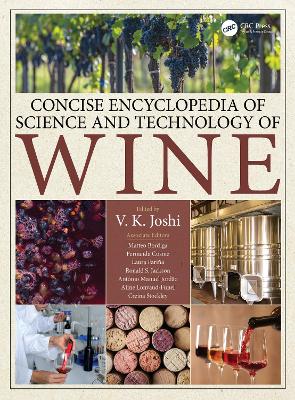
Concise Encyclopedia of Science and Technology of Wine [Kõva köide]

Edited by
  • Formaat: Hardback, 686 pages, kõrgus x laius: 280x210 mm, kaal: 2320 g, 150 Tables, black and white; 133 Illustrations, color; 158 Illustrations, black and white
  • Ilmumisaeg: 22-Jul-2021
  • Kirjastus: CRC Press
  • ISBN-10: 1138092754
  • ISBN-13: 9781138092754
Teised raamatud teemal:
  • Kõva köide
  • Hind: 397,12 €*
  • * hind on lõplik, st. muud allahindlused enam ei rakendu
  • Tavahind: 529,50 €
  • Säästad 25%
  • Raamatu kohalejõudmiseks kirjastusest kulub orienteeruvalt 3-4 nädalat
  • Kogus:
  • Lisa ostukorvi
  • Tasuta tarne
  • Tellimisaeg 2-4 nädalat
  • Lisa soovinimekirja
  • Formaat: Hardback, 686 pages, kõrgus x laius: 280x210 mm, kaal: 2320 g, 150 Tables, black and white; 133 Illustrations, color; 158 Illustrations, black and white
  • Ilmumisaeg: 22-Jul-2021
  • Kirjastus: CRC Press
  • ISBN-10: 1138092754
  • ISBN-13: 9781138092754
Teised raamatud teemal:
"This book reveals state-of-the-art technology of wine making, describing various wine regions of the world and different cultivars used in wine making. It examines microbiology, biochemistry, and engineering in the context of wine production. The sensory qualities of wine and brandy are explored, and the composition, nutritive and therapeutic values, and toxicity are summarized. Selected references at the end of each chapter provide ample opportunity for additional study"--

When asking the question what is wine? there are various ways to answer. Wine is extolled as a food, a social lubricant, an antimicrobial and antioxidant and a product of immense economic significance. But there is more to it than that. When did humans first start producing wine and what are its different varieties? Are wines nutritious or have any therapeutic values—do they have any role in health or are they simply intoxicating beverages? How are their qualities determined or marketed and how are these associated with tourism? Concise Encyclopedia of Science and Technology of Wine attempts to answer all these questions and more.

This book reveals state-of-the-art technology of wine making, describing various wine regions of the world and different cultivars used in wine making. It examines microbiology, biochemistry, and engineering in the context of wine production. The sensory qualities of wine and brandy are explored, and the composition, nutritive and therapeutic values, and toxicity are summarized. Selected references at the end of each chapter provide ample opportunity for additional study.

Key Features:

  • Elaborates on the recent trends of control and modeling of wine and the techniques used in the production of different wines and brandies
  • Focuses on the application of biotechnology, especially genetic engineering of yeast, bioreactor technological concepts, enzymology, microbiology, killer yeast, stuck and sluggish fermentation, etc.
  • Illustrates the biochemical basis of wine production including malolactic fermentation
    • Examines marketing, tourism and the present status of the wine industry
  • Concise Encyclopedia of Science and Technology of Wine

    contains the most comprehensive, yet still succinct, collection of information on the science and technology of wine making. With 45 chapters contributed by leading experts in their fields, it is an indispensable treatise offering extensive details of the processes of wine making. The book is an incomparable resource for oenologists, food scientists, biotechnologists, postharvest technologists, biochemists, fermentation technologists, nutritionists, chemical engineers, microbiologists, toxicologists, organic chemists, and the undergraduate and postgraduate students of these disciplines.

    Preface xi
    Editors xv
    Contributors xix
    UNIT 1 Introduction, Role, Composition and Therapeutic Values
    Chapter 1 Wine and Brandy: An Overview
    3(26)
    V.K. Joshi
    Matteo Bordiga
    Chapter 2 Categories and Main Characteristics of Wines, Wine-Products and Wine Spirits
    29(16)
    Stylianos D. Karagiannis
    Chapter 3 Wine: Composition and Nutritive Value
    45(14)
    S.K. Soni
    S.S. Marwaha
    R. Soni
    Urvashi Swami
    U. Marwaha
    Chapter 4 Aromatic Composition of Wine
    59(12)
    Laura Farina
    Francisco Carrau
    Sergio Moser
    Eduardo Dellacassa
    Eduardo Boido
    Chapter 5 Wine: Therapeutic Potential
    71(18)
    Creina Stockley
    Arina O. Antoce
    Rena I. Kosti
    Chapter 6 Wine Consumption: Toxicological Aspects
    89(14)
    Fdbio Bernardo
    Paulo Herbert
    Arminda Alves
    UNIT 2 Viticulture for the Winemaker
    Chapter 7 Winemaking: Fruit Cultivars
    103(14)
    K. Kumar
    R. Kaur
    Shilpa
    Chapter 8 Genetic Engineering in Grapes
    117(8)
    R. Kaur
    K. Kumar
    D.R. Sharma
    Shilpa
    Chapter 9 Grape Maturation
    125(20)
    Antonio Manuel Jordao
    Fernanda Cosme
    Chapter 10 Wine Quality: Varietal Influence
    145(8)
    Vishal S. Rana
    Neerja S. Rana
    Sunny Sharma
    Chapter 11 Diseases of Grapes
    153(12)
    Vivienne Gepp
    Chapter 12 Wine Production and Botrytis
    165(16)
    N.S. Thakur
    Satish K. Sharma
    Abhimanyu Thakur
    Chapter 13 Vineyard Mechanization
    181(16)
    Matteo Bordiga
    UNIT 3 Microbiology and Biochemistry of Wine Production
    Chapter 14 Wine Microbiology
    197(20)
    V.K. Joshi
    Karina Medina
    Valentina Martin
    Laura Farina
    Chapter 15 Wine Production: Role of Non-Saccharomyces Yeast
    217(14)
    V.K. Joshi
    Cintia Lacerda Ramos
    Rosane Freitas Schwan
    Chapter 16 Understanding Wine Yeasts
    231(10)
    L. Rebordinos
    M.E. Rodriguez
    G. Cordero-Bueso
    J.M. Cantoral
    Chapter 17 Biochemical Facets of Winemaking
    241(14)
    Neerja S. Rana
    Vishal S. Rana
    Bhawna Dipta
    Chapter 18 Malolactic Fermentation in Winemaking
    255(14)
    Eveline Bartowsky
    Chapter 19 Genetic Engineering of Microorganisms in Winemaking
    269(18)
    S.K. Soni
    R. Soni
    UNIT 4 Factors Affecting Winemaking, Control and Improvement
    Chapter 20 Winemaking and Killer Yeasts
    287(10)
    Giuseppe Comi
    Luca Cocolin
    Chapter 21 Winemaking Problem: Stuck and Sluggish Fermentation
    297(16)
    Gines Navarro
    Simon Navarro
    Chapter 22 Enzymes in Enology
    313(14)
    Michikatsu Sato
    L. Veeranjaneya Reddy
    V.K. Joshi
    Chapter 23 Winemaking: Control and Modeling
    327(16)
    M. Remedios Marin-Arroyo
    Arturo Esnoz
    Antonio Lopez-Gomez
    Cesar Elosua Aguado
    UNIT 5 Process of Winemaking
    Chapter 24 Winemaking: Fermentation Operations Machinery and Equipment
    343(14)
    Wamik Azmi
    Kriti Kanwar
    Alka Rani
    Chapter 25 Preparation of Grape Must for Wine Production
    357(10)
    Devina Vaidya
    Manoj Vaidya
    Swati Sharma
    Nilakshi Chauhan
    Chapter 26 Culture of Wine Yeast and Bacteria
    367(8)
    Tek Chand Bhalla
    Navdeep Thakur
    Savitri Kapoor
    Chapter 27 Bioreactors in Wine Fermentation
    375(14)
    R.S. Singh
    Chapter 28 Wines and Brandies: Maturation Aspects
    389(14)
    Shashi Bhushan
    Ajay Rana
    Somesh Sharma
    Chapter 29 Chemical and Microbiological Stabilization of Wines
    403(12)
    Nivedita Sharma
    Bhanu Neopaney
    Poonam Sharma
    Chapter 30 Packaging Technology of Wines
    415(8)
    S.S. Marwaha
    S.K. Soni
    U. Marwaha
    Chapter 31 Technology of Waste Management in Wineries and Distilleries
    423(20)
    Chetan Joshi
    UNIT 6 Technology for Production of Wine and Brandy
    Chapter 32 Production of Table Wines
    443(12)
    Ronald S. Jackson
    Chapter 33 Fortified Wines: Production Technology
    455(16)
    Vandana Bali
    Parmjit S. Panesar
    V.K. Joshi
    Somesh Sharma
    Chapter 34 Sparkling Wine Production
    471(16)
    Philippe Jeandet
    Yann Vasserot
    Gerard Liger-Belair
    Chapter 35 Production of Cider and Perry
    487(14)
    V.A. Joshi
    Laura Farina
    Somesh Sharma
    Naveen Kumar
    Chapter 36 Technology of Reduced-Alcohol Wine Production
    501(12)
    Leigh M. Schmidtke
    Rocco Longo
    Chapter 37 Production Technology of Fruit Wines
    513(18)
    V.K. Joshi
    Laura Farina
    Ghanshyam Abrol
    Chapter 38 Technology of Brandy Production
    531(22)
    Anju K. Dhiman
    Surekha Attri
    Preethi Ramachandran
    UNIT 7 Methods of Quality Evaluation
    Chapter 39 Techniques of Quality Analysis in Wine and Brandy
    553(18)
    B.W. Zoecklein
    B.H. Gump
    Chapter 40 Sensory Evaluation of Wines and Brandies: General Concepts and Practices
    571(22)
    V.K. Joshi
    Antdnio Manuel Jordao
    Fernanda Cosme
    Chapter 41 Microbial Spoilage of Wine
    593(12)
    Aline Lonvaud-Funel
    UNIT 8 Wine Industry
    Chapter 42 International Market of Organic Wine
    605(10)
    Daniela Callegaro-de-Menezes
    Antonio D. Padula
    Carlos A.M. Callegaro
    Chapter 43 Global Wine Tourism: Current Trends and Future Strategies
    615(18)
    Zoltan Szakal
    Chapter 44 Innovations in Wine Production
    633(16)
    Ronald S. Jackson
    Chapter 45 The Wine Industry: An Overview of Threats, Opportunities, Innovations and Trends
    649(14)
    Julie Kellershohn
    Inge Russell
    Index 663
    Professor V.K. Joshi, MSc, PhD, is an eminent scientist and a teacher with more than 35 years research experience in fruit fermentation technology, fermented foods, food toxicology, biocolor, quality assurance, and waste utilization. He is the former head of the Department of Postharvest Technology and currently the head of Department of Food Science and Technology, at the same university. He has made a very significant contribution to development of technology of non-grape fruit wines, apple pomace utilization, lactic acid and indigenous fermented foods. A recipient of several awards for research and teaching, he has guided several postgraduate students, authored or edited more than 10 books and more than 300 research, reviews, book chapters and popular articles besides presenting several lead papers in conferences and seminars.