Muutke küpsiste eelistusi

Concrete Buildings in Seismic Regions [Pehme köide]

(Penelis Consulting Engineers SA, Greece), (Penelis Consulting Engineers SA, Greece)
  • Formaat: Paperback / softback, 876 pages, kõrgus x laius: 254x178 mm, kaal: 453 g, 96 Tables, black and white; 611 Illustrations, black and white
  • Ilmumisaeg: 16-May-2017
  • Kirjastus: CRC Press
  • ISBN-10: 1138073512
  • ISBN-13: 9781138073517
  • Pehme köide
  • Hind: 73,11 €*
  • * hind on lõplik, st. muud allahindlused enam ei rakendu
  • Tavahind: 97,49 €
  • Säästad 25%
  • Raamatu kohalejõudmiseks kirjastusest kulub orienteeruvalt 3-4 nädalat
  • Kogus:
  • Lisa ostukorvi
  • Tasuta tarne
  • Tellimisaeg 2-4 nädalat
  • Lisa soovinimekirja
  • Formaat: Paperback / softback, 876 pages, kõrgus x laius: 254x178 mm, kaal: 453 g, 96 Tables, black and white; 611 Illustrations, black and white
  • Ilmumisaeg: 16-May-2017
  • Kirjastus: CRC Press
  • ISBN-10: 1138073512
  • ISBN-13: 9781138073517
Bearing in mind that reinforced concrete is a key component in a majority of built environment structures, Concrete Buildings in Seismic Regions combines the scientific knowledge of earthquake engineering with a focus on the design of reinforced concrete buildings in seismic regions. This book addresses practical design issues, providing an integrated, comprehensible, and clear presentation that is suitable for design practice.

It combines current approaches to seismic analysis and design, with a particular focus on reinforced concrete structures, and includes:


an overview of structural dynamics analysis and design of new R/C buildings in seismic regions post-earthquake damage evaluation, pre earthquake assessment of buildings and retrofitting procedures seismic risk management of R/C buildings within urban nuclei extended numerical example applications


Concrete Buildings in Seismic Regions determines guidelines for the proper structural system for many types of buildings, explores recent developments, and covers the last two decades of analysis, design, and earthquake engineering. Divided into three parts, the book specifically addresses seismic demand issues and the basic issues of structural dynamics, considers the "capacity" of structural systems to withstand seismic effects in terms of strength and deformation, and highlights existing R/C buildings under seismic action. All of the book material has been adjusted to fit a modern seismic code and offers in-depth knowledge of the background upon which the code rules are based. It complies with the last edition of European Codes of Practice for R/C buildings in seismic regions, and includes references to the American Standards in effect for seismic design.

Arvustused

"This book is arguably the most comprehensive and accessible book on the subject. It pulls together the wide range of tools and procedures for a complete treatment of structural earthquake engineering, from building components, to regional impact assessment, including foundations. The book will be invaluable for practicing engineers, students, researchers, and emergency managers." Amr S. Elnashai, FREng, Head of Civil and Environmental Engineering Department, University of Illinois at Urbana-Champaign

"This is a comprehensive and excellent book covering all aspects of seismic design and seismic assessment including post-earthquake retrofitting and repair. The latest analysis and design concepts are explained with a focus on RC structures, and it is highly recommended." Jean-Pierre Rammant, Nemetschek Scia nv

"I do not believe that you could find a more extended and well organized text that addresses the state of the practice of seismic design of concrete buildings." Michele Calvi, President, European Centre for Training and Research in Earthquake Engineering "This book is arguably the most comprehensive and accessible book on the subject. It pulls together the wide range of tools and procedures for a complete treatment of structural earthquake engineering, from building components, to regional impact assessment, including foundations. The book will be invaluable for practicing engineers, students, researchers, and emergency managers." Amr S. Elnashai, FREng, Head of Civil and Environmental Engineering Department, University of Illinois at Urbana-Champaign

"This is a comprehensive and excellent book covering all aspects of seismic design and seismic assessment including post-earthquake retrofitting and repair. The latest analysis and design concepts are explained with a focus on RC structures, and it is highly recommended." Jean-Pierre Rammant, Nemetschek Scia nv

"I do not believe that you could find a more extended and well organized text that addresses the state of the practice of seismic design of concrete buildings." Michele Calvi, President, European Centre for Training and Research in Earthquake Engineering

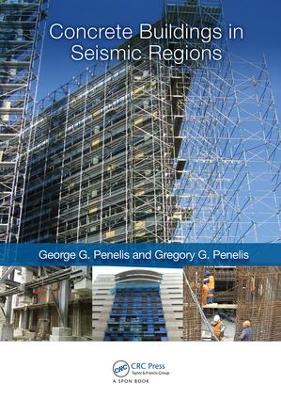
Introduction. An overview of structural dynamics. Design principles
seismic actions performance requirements compliance criteria.
Configuration of earthquake-resistant R/C structural systems: Structural
behaviour. Analysis of the structural system. Capacity design design action
effects safety verifications. Reinforced concrete materials under seismic
actions. Seismic-resistant R/C frames. Seismic-resistant R/C walls and
diaphragms. Seismic design of foundations. Seismic pathology. Emergency
post-earthquake damage inspection, assessment and human life protection
measures. Seismic assessment and retrofitting of R/C buildings. Detailed
seismic assessment and rehabilitation of R/C buildings. Technology of repair
and strengthening. Seismic risk management. Index.
Gregory G. Penelis, MSc, DIC, Phd is the CEO of Penelis Consulting Engineers S.A., and has been involved in the design/review of more than 100 buildings throughout Europe. He has been involved in many research projects regarding the seismic assessment of listed and monumental buildings the urban nucleus.


George Gr. Penelis is Emeritus Professor in the Department of Civil Engineering at the Aristotle University of Thessaloniki, Greece, has served as national representative on the drafting committee for Eurocode 2, is ordinary member of Academia Pontaniana, Italy and has published more than 250 technical papers, and is co-author of Earthquake Resistant Concrete Structures. He has supervised 25 successful Phd theses.