Muutke küpsiste eelistusi

Conquest of al-Andalus: A Translation of Fat al-Andalus [Pehme köide]

  • Formaat: Paperback / softback, 176 pages, kõrgus x laius: 234x156 mm
  • Sari: Routledge Medieval Translations
  • Ilmumisaeg: 22-Jun-2026
  • Kirjastus: Routledge
  • ISBN-10: 1032855568
  • ISBN-13: 9781032855561
Teised raamatud teemal:
  • Pehme köide
  • Hind: 48,81 €*
  • * hind on lõplik, st. muud allahindlused enam ei rakendu
  • Tavahind: 65,09 €
  • Säästad 25%
  • See raamat ei ole veel ilmunud. Raamatu kohalejõudmiseks kulub orienteeruvalt 3-4 nädalat peale raamatu väljaandmist.
  • Kogus:
  • Lisa ostukorvi
  • Tasuta tarne
  • Tellimisaeg 2-4 nädalat
  • Lisa soovinimekirja
  • Formaat: Paperback / softback, 176 pages, kõrgus x laius: 234x156 mm
  • Sari: Routledge Medieval Translations
  • Ilmumisaeg: 22-Jun-2026
  • Kirjastus: Routledge
  • ISBN-10: 1032855568
  • ISBN-13: 9781032855561
Teised raamatud teemal:
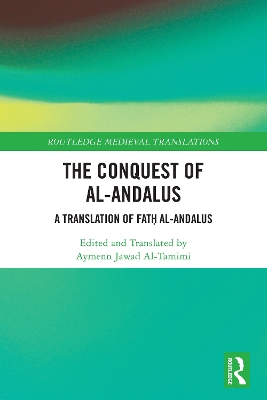
The Conquest of al-Andalus: A Translation of Fat al-Andalus provides the first English-language in-depth study and complete English translation of the work Fat al-Andalus (The Conquest of al-Andalus), which covers the history of Muslim Spain from the time of the initial conquest in 711 CE until the rise of the Almoravids and unification of the territories of Muslim Spain. The work is generally thought to be anonymous and likely dates from the early 12th century CE.

The introductory study provides a brief overview about the historical period covered by Fat al-Andalus and relevant Arabic historical sources before turning to major themes and historical topics in Fat al-Andalus, such as holy war and conquest, conflicts between Arabs and Berbers, Abd al-Ramn Is establishment of an independent Umayyad emirate in al-Andalus, and the ifa realms that emerged in al-Andalus in the 11th century and were then dismantled by the Almoravids. The translation is extensively annotated in order to aid the readers understanding of the text, and a special appendix is provided with translations of Latin and Arabic source materials for additional context and comparison.

Owing to Fat al-Andalus brevity and conciseness, the text serves as an ideal introduction to medieval Arabic historiography about al-Andalus, especially for a more general audience that may not be able to read the original Arabic text, which presents difficulties and has until now only been available in Spanish translations. This volume should also be a helpful companion for specialists who may wish to examine the traditions contained in Fat al-Andalus and compare them with other Arabic historical works about al-Andalus

Arvustused

this translation should achieve its aim of finding a new readership for the Arabic chronicles of al-Andalus, as well as persuading scholars to take another look at the Fath al-Andalus in particular - Al-Masaq.

In conclusion, al-Tamimi has done a service to medieval studies by providing an English translation of an early history of al-Andalus that can be instructively read with other contemporary narratives. The book with its introduction, notes, appendix, and bibliography makes Fat al-Andalus intelligible to the non-specialist and suggests ways in which readers may pursue their interests further - The Medieval Review.

'General readers and scholars alike will welcome the readability and the excellent scholarly apparatus of The Conquest of al-Andalus' - Middle East Quarterly.

Introduction

Translation and Commentary

Appendix: Translations of Some Comparative Arabic and Latin Source Materials

Glossary of Arabic Terms

Basic Timeline

Bibliography
Aymenn Jawad Al-Tamimi is an Arabic translator and a Milstein Writing Fellow at the Middle East Forum. He completed his PhD at Swansea University where he focused on the role of historical narratives in Islamic State propaganda, including narratives of medieval Iberia. He has published Arabic translations and studies of the medieval Latin works Historia Arabum and De Statu Sarracenorum in Jordan as well as English translations of some modern Arabic works with al-Mustafa University in Qom, the most recent being al-Fua and Kafariya: A Story of Glory and Defiance.