Muutke küpsiste eelistusi

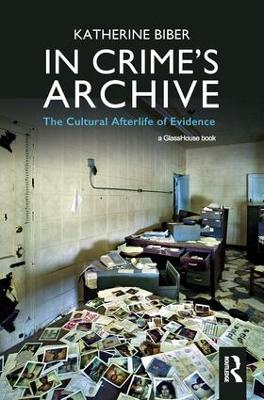
In Crime's Archive: The Cultural Afterlife of Evidence [Kõva köide]

(University of Technology, Sydney, Australia)
  • Formaat: Hardback, 205 pages, kõrgus x laius: 234x156 mm, kaal: 560 g, 25 Halftones, black and white
  • Ilmumisaeg: 26-Jul-2018
  • Kirjastus: Routledge
  • ISBN-10: 1138927112
  • ISBN-13: 9781138927117
  • Kõva köide
  • Hind: 159,19 €*
  • * hind on lõplik, st. muud allahindlused enam ei rakendu
  • Tavahind: 212,25 €
  • Säästad 25%
  • Raamatu kohalejõudmiseks kirjastusest kulub orienteeruvalt 3-4 nädalat
  • Kogus:
  • Lisa ostukorvi
  • Tasuta tarne
  • Tellimisaeg 2-4 nädalat
  • Lisa soovinimekirja
  • Formaat: Hardback, 205 pages, kõrgus x laius: 234x156 mm, kaal: 560 g, 25 Halftones, black and white
  • Ilmumisaeg: 26-Jul-2018
  • Kirjastus: Routledge
  • ISBN-10: 1138927112
  • ISBN-13: 9781138927117

This book investigates what happens to criminal evidence after the conclusion of legal proceedings. During the criminal trial, evidentiary material is tightly-regulated; it is formally regarded as part of the court record, and subject to the rules of evidence and criminal procedure. However, these rules and procedures cannot govern or control this material after proceedings have ended. In its ‘afterlife’, criminal evidence continues to proliferate in cultural contexts. It might be photographic or video evidence, private diaries and correspondence, weapons, physical objects, or forensic data, and it arouses the interest of journalists, scholars, curators, writers or artists. Building on a growing cultural interest in criminal archival materials, this book shows how in its afterlife, criminal evidence gives rise to new uses and interpretations, new concepts and questions, many of which are creative and transformative of crime and evidence, and some of which are transgressive, dangerous or insensitive. It takes the judicial principle of open justice – the assumption that justice must be seen to be done – and investigates instances in which we might see too much, too little, or from a distorted angle. It centres upon a series of case studies, including those of Lindy Chamberlain and, more recently, Oscar Pistorius, in which criminal evidence has re-appeared outside of the criminal process. Traversing museums, libraries, galleries and other repositories, and drawing on extensive interviews with cultural practitioners and legal professionals, this book probes the legal, ethical, affective and aesthetic implications of the cultural afterlife of evidence.

Arvustused

"In the course of seven wonderfully self-contained chapters, each focused upon different evidentiary afterlives in different institutional contexts, In Crimes Archive explores the ways in which criminal evidence continues to play formative and expansive roles in the cultural and popular life of society as well as the very real lives of those most directly implicated in it."

Michelle Brown, Department of Sociology, University of Tennessee, Law and Society Review

"One of the gifts this book offers is its capacity to open multiple windows onto the world of evidence, criminal justice, and culture ... This book offers a different way of thinking about the objects that the criminal justice process accumulates, organizes, and stores in its archives. It shines a light on the ways in which a wide variety of individuals and institutions are mining them. It calls for the reader to question and problematize the journey that the objects in laws archive take into wider society."

Leslie J Moran, Birkbeck College, University of London, UK, Social and Legal Studies

Acknowledgements viii
Permissions x
Introduction: afterlife, evidence, archive 1(12)
1 The afterlife of police photographs
13(26)
2 The Nutshell Studies of Unexplained Death: crime scenes as doll's houses
39(23)
3 The afterlife of criminal evidence in the news media
62(25)
4 The Oscar Pistorius trial: an afterlife in real time
87(23)
5 The museum: curating evidence
110(24)
6 The Lindy Chamberlain case: the afterlife of a miscarriage of justice
134(30)
7 International crimes: the afterlife of evidence of genocide, war crimes and crimes against humanity
164(25)
Conclusion: destroying the evidence 189(9)
Index 198
Katherine Biber is Professor of Law at the University of Technology, Sydney.