Muutke küpsiste eelistusi

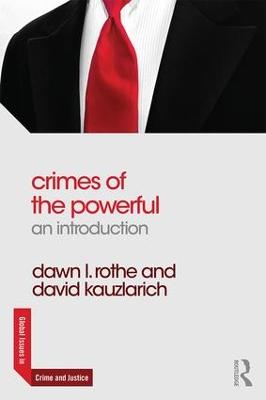
Crimes of the Powerful: An Introduction [Pehme köide]

  • Formaat: Paperback / softback, 278 pages, kõrgus x laius: 234x156 mm, kaal: 385 g, 5 Tables, black and white; 9 Line drawings, black and white; 5 Halftones, black and white; 14 Illustrations, black and white
  • Sari: Global Issues in Crime and Justice
  • Ilmumisaeg: 01-Apr-2016
  • Kirjastus: Routledge
  • ISBN-10: 1138797944
  • ISBN-13: 9781138797949
Teised raamatud teemal:
  • Pehme köide
  • Hind: 59,94 €*
  • * saadame teile pakkumise kasutatud raamatule, mille hind võib erineda kodulehel olevast hinnast
  • See raamat on trükist otsas, kuid me saadame teile pakkumise kasutatud raamatule.
  • Kogus:
  • Lisa ostukorvi
  • Tasuta tarne
  • Lisa soovinimekirja
  • Formaat: Paperback / softback, 278 pages, kõrgus x laius: 234x156 mm, kaal: 385 g, 5 Tables, black and white; 9 Line drawings, black and white; 5 Halftones, black and white; 14 Illustrations, black and white
  • Sari: Global Issues in Crime and Justice
  • Ilmumisaeg: 01-Apr-2016
  • Kirjastus: Routledge
  • ISBN-10: 1138797944
  • ISBN-13: 9781138797949
Teised raamatud teemal:
As politicians and the media perpetuate the stereotype of the ‘common criminal’, crimes committed by the powerful remain for the most part invisible or are reframed as a ‘bad decision’ or a ‘rare mistake’. This is a topic that remains marginalized within the field of criminology and criminal justice, yet crimes of the powerful cause more harm, perpetuate more inequalities, and result in more victimization than street crimes.Crimes of the Powerful: An introduction is the first textbook to bring together and to show the symbiotic relationships between the related fields of state crime, white collar crime, corporate crime, financial crime, organized crime and environmental crime. Dawn L. Rothe and David Kauzlarich introduce the vast types of crimes, methodological issues associated with research, theoretical relevance, and issues surrounding regulations and social controls for crimes of the powerful. Themes covered include:media, culture, and the Hollywoodization of crimes of the powerful; theoretical understanding and the study of the crimes of the powerful a typology of crimes of the powerful with examples and case studies; victims of the crimes of the powerful; the regulation and resistance of elite crime.This is the first textbook to bring together the related fields of state crime, corporate crime, white collar crime, financial crime, environmental crime, and organized crime. An ideal introductory text for both undergraduate and postgraduate students taking modules on the crimes of the powerful, white collar crime, state crime and green criminology, this text includes chapter summaries, activities and discussion questions, and lists of additional resources including films, websites, and additional readings.

Arvustused

"The field of criminology has always focused principally upon the crimes of the powerless. There is overwhelming evidence that far more harm is associated with the crimes of the powerful. This book is to my knowledge the very first textbook that systematically addresses the crimes of the powerful. The authors are long-standing and highly-regarded criminological students of the crimes of the powerful. They have here produced a comprehensive survey of what contemporary criminology and criminal justice students need to know about such crimes. All reputable criminology and criminal justice programs should offer a course on crimes of the powerful, if they do not already do so. Instructors of such a course make a wise choice if they choose to assign this accessible, provocative textbook. It addresses the most consequential types of crimes, and initiatives to control such crimes."

David O. Friedrichs, Distinguished Professor, Department of Sociology, Criminal Justice & Criminology, University of Scranton, USA

"Confronting the powerful is confronting especially when the crimes, harms, threats and risks produced by the powerful are seen as simply a natural part of everyday life. This book challenges this status quo by exposing the crimes of the powerful to systematic critical scrutiny, thereby demonstrating that these elite activities far outweigh conventional crimes in their damaging social, economic and ecological impacts. The entrenchment of general misery is socially constructed by the powerful, in the interests of the powerful. This book explains why this is the case, and what can be done about it. A must read."

Rob White, Professor of Criminology, University of Tasmania, Australia

"Theoretically astute, empirically rich, global in scope and always student-oriented, this passionate yet considered text is a significant contribution for those who seek to mainstream the crimes of the powerful in the teaching and learning of criminology. This is not just a superb book about power and the powerful but represents a thoroughgoing challenge to them."

Steve Tombs, Professor, Head of Social Policy & Criminology at the Open University and Director of the International Centre for Comparative Criminological Research, UK

"This outstanding book shines a bright light into the dark area of the crimes of the powerful, a darkness that too few criminology and criminal justice students ever get to explore. Rothe and Kauzlarich do an excellent job of introducing students to the study of the criminal acts of the powerful, illuminating a form of criminality that inflicts the most harm and fills the world with death and devastation, misery and want."

Ronald C. Kramer, Professor of Sociology, Western Michigan University, USA

"Rothe and Kauzlarich provide a thorough and meticulous guide to the Crimes of the Powerful. Unlike many textbooks this is an impassioned and engaging introduction. A must have text for any criminology student!"

Simon Pemberton, Birmingham Fellow, School of Social Policy, University of Birmingham, UK

"Crimes of the Powerful: An Introduction is a great resource for students who want to research white-collar crime on an entirely new level, where the most serious types of white-collar crime take place, within networks of governments, corporations and financial institutions. The myriad of examples of crimes of the powerful the authors provide throughout the book thus become a springboard for research for the novice and expert, alike. By offering new definitions of white-collar crime from the neo-liberal capitalist perspective, the authors successfully make a distinction between what is generally viewed as white-collar crime and 'crimes of the powerful."

Becky Nash, California State University Long Beach, USA, Global Crime

List of illustrations
ix
List of tables
x
A reflexive preamble xi
Preface xiii
PART I The foundations
1(74)
1 An introduction to crimes of the powerful
3(15)
2 Media, culture, and crimes of the powerful: everyday life: how we come to know about crimes of the powerful
18(15)
3 Studying the crimes of the powerful: researching crimes of the powerful
33(9)
4 Theoretical understandings of crimes of the powerful
42(23)
5 The symbiotic nature of crimes of the powerful
65(10)
PART II Types of crimes of the powerful
75(106)
6 Corporate crime
77(23)
7 State crime
100(22)
8 State-corporate crime
122(12)
9 Power, organized crime networks, and the elite
134(14)
10 Crimes of international financial institutions
148(18)
11 Victims of crimes of the powerful
166(15)
PART III The master's tools and beyond
181(65)
12 Regulating crimes of the powerful
183(31)
13 A counterview: law as violence and facilitator of crimes of the powerful
214(17)
14 Conclusion
231(15)
Index 246
Dawn L. Rothe is Professor of Criminology at Old Dominion University, USA, the Director of the International State Crime Research Center and of the PhD in Criminology Program at Old Dominion University. She is the author or co-author of eight books and over seven dozen peer reviewed articles and book chapters, some of which have been reproduced and translated into Italian, Spanish, and Chinese. She has formerly served as Chair of the American Society of Criminology Division of Critical Criminology.


David Kauzlarich is Professor of Sociology at Southern Illinois University Edwardsville, USA, and Editor-in-Chief of Critical Criminology: An International Journal. He is widely published in the areas of state crime, criminological theory, and resistance to crimes of the powerful.