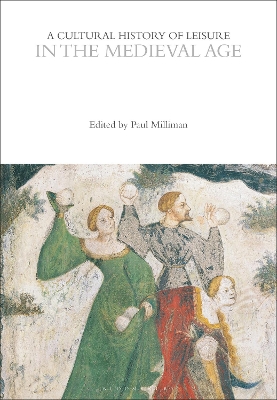
During the Middle Ages (500-1450), active leisure was considered a productive activity, distinct from work and devotional pursuits. Running, fencing, playing ball, swimming, dancing, hunting or singing all could help to keep ones humours in balance and therefore maintain ones mental and physical health. Idle leisure, however, was supposed to be avoided because it could lead to the deadly sin of sloth, corrupting both mind and body. At least this was the theory.
To what extent were medieval people weighing the risks and rewards of the leisure activities they engaged in, and to what extent were they simply interested in having fun while enjoying performances, feasting or window shopping? What do medieval texts and images tell us about the kinds of leisure activities that enriched the lives of various social groups? Do the popular dreamworlds of the Land of Cockaigne endless leisure with no time allotted for devotion or work indicate where the true medieval priorities lay?
A Cultural History of Leisure in the Middle Ages, paying particular attention to England and France, presents an overview of key themes and trends in this period, with essays on: Ideas of leisure; The performing arts and their audiences; The cerebral arts and their publics; Sports and games; Holydays, holidays and tourism; The world of conviviality; The world of goods; The world of nature; Representations of leisure.
A Cultural History of Leisure is part of The Cultural Histories Series. Titles are available as hardcover sets for libraries needing just one subject or preferring a tangible reference for their shelves or as part of a fully-searchable digital library. The digital product is available to institutions by annual subscription or on perpetual access via www.bloomsburyculturalhistory.com. Individual volumes for academics and researchers are also available in print or digitally via www.bloomsburycollections.com.
Muu info
A comprehensive examination of the history of leisure in the medieval period.
Introduction
1. Ideas of Leisure Michael A. Conrad (Johannes Gutenberg University Mainz
and Free University of Berlin, Germany)
2. The Performing Arts and Their Audiences Kyle A. Thomas (Missouri State
University, USA)
3. The Cerebral Arts and Their Publics Daniel E. O'Sullivan (University of
Mississippi, USA)
4. Sports and Games Robert Bubczyk (Maria Curie-Sklodowska University,
Poland)
5. Holydays, Holidays and Tourism John M. Theilmann (Converse University,
USA)
6. The World of Conviviality Sarah Gordon (Utah State University, USA)
7. The World of Goods Bruno Blonde, Sam Geens and Peter Stabel (all
University of Antwerp, Belgium)
8. The World of Nature Abigail P. Dowling (Mercer University, USA)
9. Representations of Leisure Malcolm Jones (Independent Scholar, UK)
Notes
Bibliography
Index
Paul Milliman is Associate Professor of History at the University of Arizona, USA. He is the author of 'The Slippery Memory of Men: The Place of Pomerania in the Medieval Kingdom of Poland (2013).