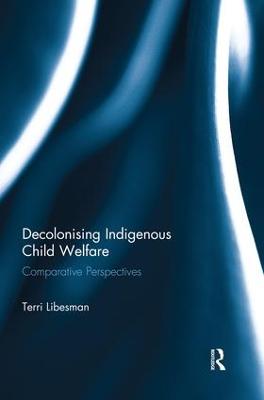
During the past decade, a remarkable transference of jurisdiction to Indigenous childrens organisation has taken place in many parts of Australia, Canada, the USA and New Zealand. It has been influenced by Indigenous peoples human rights advocacy at national and international levels, by claims to self-determination and by the globalisation of Indigenous childrens organisations. Thus far, this reform has taken place with little attention from academic and non-Indigenous communities; now, Decolonizing Indigenous Child Welfare considers these developments and, evaluating law reform with respect to Indigenous child welfare, asks whether the pluralisation of responses to their welfare and well-being, within a cross-cultural post-colonial context, can improve the lives of Indigenous children. The legislative frameworks for the delivery of child welfare services to Indigenous children are assessed in terms of the degree of self-determination which they afford Indigenous communities. The book draws upon interdisciplinary research and the authors experience collaborating with the peak Australian Indigenous childrens organisation for over a decade to provide a thorough examination of this international issue. Dr Terri Libesman is a Senior Lecturer in the LawFaculty, at the University of Technology Sydney. She has collaborated, researched and published for over a decade with the peak Australian Indigenous childrens organisation-- During the past decade, a remarkable transference of responsibility to Indigenous children’s organisation has taken place in many parts of Australia, Canada, the USA and New Zealand. It has been influenced by Indigenous peoples’ human rights advocacy at national and international levels, by claims to self-determination and by the globalisation of Indigenous children’s organisations.Thus far, this reform has taken place with little attention from academic and non-Indigenous communities; now,Decolonising Indigenous Child Welfare: Comparative Perspectives considers these developments and, evaluating law reform with respect to Indigenous child welfare, asks whether the pluralisation of responses to their welfare and well-being, within a cross-cultural post-colonial context, can improve the lives of Indigenous children. The legislative frameworks for the delivery of child welfare services to Indigenous children are assessed in terms of the degree of self-determination which they afford Indigenous communities.The book draws upon interdisciplinary research and the author’s experience collaborating with the peak Australian Indigenous children’s organisation for over a decade to provide a thorough examination of this international issue.Dr Terri Libesman is a Senior Lecturer in the Law Faculty, at the University of Technology Sydney. She has collaborated, researched and published for over a decade with the peak Australian Indigenous children’s organisation.