Muutke küpsiste eelistusi

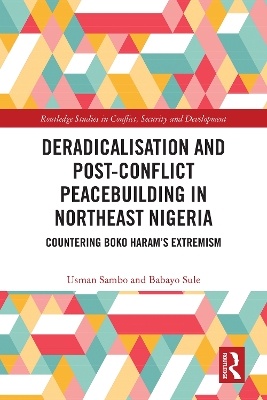
Deradicalisation and Post-Conflict Peacebuilding in Northeast Nigeria: Countering Boko Haram's Extremism [Pehme köide]

  • Formaat: Paperback / softback, 256 pages, kõrgus x laius: 234x156 mm, kaal: 453 g, 1 Tables, black and white; 7 Line drawings, black and white; 7 Illustrations, black and white
  • Sari: Routledge Studies in Conflict, Security and Development
  • Ilmumisaeg: 22-Jun-2026
  • Kirjastus: Routledge
  • ISBN-10: 1032780258
  • ISBN-13: 9781032780252
Teised raamatud teemal:
  • Pehme köide
  • Hind: 48,81 €*
  • * hind on lõplik, st. muud allahindlused enam ei rakendu
  • Tavahind: 65,09 €
  • Säästad 25%
  • See raamat ei ole veel ilmunud. Raamatu kohalejõudmiseks kulub orienteeruvalt 3-4 nädalat peale raamatu väljaandmist.
  • Kogus:
  • Lisa ostukorvi
  • Tasuta tarne
  • Tellimisaeg 2-4 nädalat
  • Lisa soovinimekirja
  • Formaat: Paperback / softback, 256 pages, kõrgus x laius: 234x156 mm, kaal: 453 g, 1 Tables, black and white; 7 Line drawings, black and white; 7 Illustrations, black and white
  • Sari: Routledge Studies in Conflict, Security and Development
  • Ilmumisaeg: 22-Jun-2026
  • Kirjastus: Routledge
  • ISBN-10: 1032780258
  • ISBN-13: 9781032780252
Teised raamatud teemal:
This book analyses the deradicalisation and peacebuilding programme undertaken in north-east Nigeria, following the Boko Haram insurgency in the region.

The intensity of the insurgents violence necessitated measures to combat fundamentalism, including military operations, amnesty, deradicalisation and other strategies. Focusing on the counter-insurgency operations and the various government responses, this work highlights the successes and failures of the approaches adopted by the government in the north-east of Nigeria. The strategies and programmes examined include both military and non-military approaches, but especially non-kinetic measures such as deradicalisation, rehabilitation, reintegration and peace-building programmes. In contrast to previous works, this book addresses neglected areas of inquiry such as the typologies of deradicalisation interventions (of which there are about five), and especially the intellectual response of the Ulama in countering Boko Haram extremism and peacebuilding. The study broadens the horizon of inquiry on insurgency, deradicalisation and peacebuilding in Nigeria, in Africa and globally, by delving deeper into the subject matter using a methodological approach that draws on primary sources from key actors and stakeholders. In addition, the book introduces a new theoretical approach, entitled the Multiple Front Reaction Model, and will challenge future works to consolidate or synthesise its assumptions.

This book will be of interest to students of deradicalisation, political violence, African politics and security studies.
Chapter 1: Introduction
Chapter 2: Perspectives on Radicalisation
Chapter 3: Deradicalisation
Chapter 4: The Reintegration Process
Chapter 5: Boko Haram Insurgency in Northeast Nigeria
Chapter 6: Strategies for Combating Boko Haram Insurgency
Chapter 7: Deradicalisation Policies of the Nigerian Government
Chapter 8: The Intellectual Response of Ulama in Countering Boko Haram
Terrorism
Chapter 9: Peacebuilding in Northeast Nigeria
Chapter 10: Conclusion
References
Usman Sambo is an Associate Professor in the Department of Public Administration, Yobe State University, Damaturu. He is the co-author of Presidential Elections in Nigerias Fourth Republic (2024).

Babayo Sule is Senior Lecturer and Head of the Department of International Relations at the Federal University of Kashere Gombe State Nigeria. He is the author of Political Party Financing and Electoral Politics in Nigerias Fourth Republic (2023) and Presidential Elections in Nigerias Fourth Republic (2024).