Muutke küpsiste eelistusi

Discovery of El Greco: The Nationalization of Culture Versus the Rise of Modern Art (1860-1914) [Pehme köide]

  • Formaat: Paperback / softback, 256 pages, kõrgus x laius: 230x155 mm, kaal: 370 g, illus
  • Ilmumisaeg: 24-May-2016
  • Kirjastus: Liverpool University Press
  • ISBN-10: 1845197445
  • ISBN-13: 9781845197445
  • Formaat: Paperback / softback, 256 pages, kõrgus x laius: 230x155 mm, kaal: 370 g, illus
  • Ilmumisaeg: 24-May-2016
  • Kirjastus: Liverpool University Press
  • ISBN-10: 1845197445
  • ISBN-13: 9781845197445
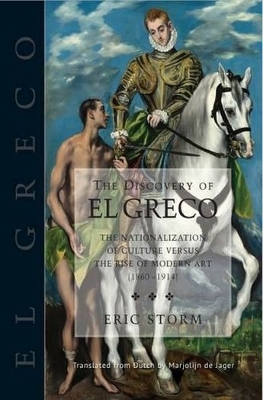
Originally published in Dutch and translated to Spanish for the fourth centenary celebration of the death of El Greco in 2014, this book is a comprehensive study of the rediscovery of El Greco – seen as one of the most important events of its kind in art history. The Nationalization of Culture versus the Rise of Modern Art analyzes how changes in artistic taste in the second half of the nineteenth century caused a profound revision of the place of El Greco in the artistic canon. As a result, El Greco was transformed from an extravagant outsider and a secondary painter into the founder of the Spanish School and one of the principle predecessors of modern art, increasingly related to that of the Impressionists – due primarily to the German critic Julius Meier-Graefe’s influential History of Modern Art (1914). This shift in artistic preference has been attributed to the rise of modern art but Eric Storm, a cultural historian, shows that in the case of El Greco nationalist motives were even more important. This study examines the work of painters, art critics, writers, scholars and philosophers from France, Germany and Spain, and the role of exhibitions, auctions, monuments and commemorations. Paintings and associated anecdotes are discussed, and historical debates such as El Greco’s supposed astigmatism are addressed in a highly readable and engaging style. This book will be of interest to both specialists and the interested art public.

Arvustused

"The book creates a great argument for the improbability of El Greco as a choice for critics to elevate as a founding father of the Spanish School, and by knowing the multiple and strong reactions to El Grecos oeuvre, it offers art lovers a chance to reencounter the art with fresh eyes". - Barragan, Maite (2017) "Review of Eric Storm, The Discovery of El Greco. The Naturalization of Culture Versus the Rise of Modern Art, 1860-1914," Bulletin for Spanish and Portuguese Historical Studies: Vol. 42 : Iss. 2 , Article 18.

Preface vii
List of Plates and Figures
ix
Introduction 1(6)
1 An Odd Outsider
7(18)
A vague recollection
8(4)
A new visibility
12(4)
Becoming acquainted with El Greco
16(4)
A first historiographer
20(5)
2 The Founder of the Spanish School
25(20)
The realism of Manet and his peers
28(6)
Historicism and nationalism
34(3)
The Velazquez mania of the art historians
37(8)
3 A National Hero
45(14)
Manuel Bartolome Cossio
47(2)
The biography
49(10)
4 The Prophet of Beauty
59(20)
The Bohemian world of Barcelona
61(3)
Rusinol's road to symbolism
64(4)
Catalan modernism
68(3)
El Greco once again
71(2)
The high priest withdraws
73(6)
5 Painter of the Soul
79(26)
Ignacio Zuloaga
79(7)
A new Madrid generation
86(7)
The old guard reacts
93(1)
Barres and the secret of Toledo
94(11)
6 The Patriarch of Modern Art
105(24)
Collectors and exhibitions
106(6)
Meier-Graefe's road to El Greco
112(6)
The Spanish journey
118(11)
7 The Example of the Avant-garde
129(24)
Allies: Rilke, Tschudi and Nemes
130(5)
The critics
135(3)
Der Blaue Reiter and other wild young artists
138(4)
The reaction of Meier-Graefe
142(4)
New syntheses
146(7)
8 Spanish Testator
153(20)
The El Greco House
153(3)
The nature of the nation
156(8)
The avant-garde: Picasso
164(9)
9 A Wise Realist
173(14)
A rearguard action
174(3)
The commemoration of 1914
177(10)
Conclusion 187(14)
Bibliography 201(9)
Index 210
Eric Storm lectures European History at Leiden University. His research interests include Spanish history and the construction of national and regional identities in Europe. He is the author of The Culture of Regionalism: Art, Architecture and International Exhibitions in France, Germany and Spain, 1890-1939 (2010) and La perspectiva del progreso: Pensamiento politico en la España del cambio de siglo (2001).