Muutke küpsiste eelistusi

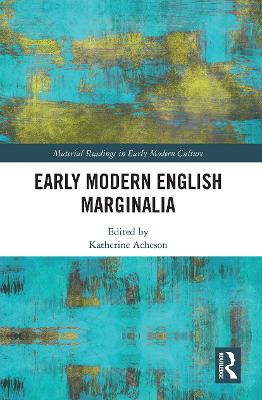
Early Modern English Marginalia [Pehme köide]

Edited by (University of Waterloo)
  • Formaat: Paperback / softback, 318 pages, kõrgus x laius: 229x152 mm, kaal: 430 g
  • Sari: Material Readings in Early Modern Culture
  • Ilmumisaeg: 13-Dec-2021
  • Kirjastus: Routledge
  • ISBN-10: 1032241624
  • ISBN-13: 9781032241623
  • Pehme köide
  • Hind: 48,81 €*
  • * hind on lõplik, st. muud allahindlused enam ei rakendu
  • Tavahind: 65,09 €
  • Säästad 25%
  • Raamatu kohalejõudmiseks kirjastusest kulub orienteeruvalt 3-4 nädalat
  • Kogus:
  • Lisa ostukorvi
  • Tasuta tarne
  • Tellimisaeg 2-4 nädalat
  • Lisa soovinimekirja
  • Formaat: Paperback / softback, 318 pages, kõrgus x laius: 229x152 mm, kaal: 430 g
  • Sari: Material Readings in Early Modern Culture
  • Ilmumisaeg: 13-Dec-2021
  • Kirjastus: Routledge
  • ISBN-10: 1032241624
  • ISBN-13: 9781032241623

Marginalia in early modern and medieval texts – printed, handwrit- ten, drawn, scratched, colored, and pasted in – offer a glimpse of how people, as individuals and in groups, interacted with books and manu- scripts over often lengthy periods of time. The chapters in this volume build on earlier scholarship that established marginalia as an intellec- tual method (Grafton and Jardine), as records of reading motivated by cultural, social, theological, and personal inclinations (Brayman [ Hackel] and Orgel), and as practices inspired by material affordances particular to the book and the pen (Fleming and Sherman). They further the study of the practices of marginalia as a mode – a set of ways in which material opportunities and practices overlap with intellectual, social, and personal motivations to make meaning in the world. They introduce us to a set of idiosyncratic examples such as the trace marks of objects left in books, deliberately or by accident; cut-and-pasted additions to printed volumes; a marriage depicted through shared book ownership. They reveal to us in case studies the unique value of mar- ginalia as evidence of phenomena as important and diverse as religious change, authorial self-invention, and the history of the literary canon. The chapters of this book go beyond the case study, however, and raise broad historical, cultural, and theoretical questions about the strange, marvelous, metamorphic thing we call the book, and the equally mul- tiplicitous, eccentric, and inscrutable beings who accompany them through history: readers and writers.


Marginalia in early modern and medieval texts – printed, handwritten, drawn, scratched, colored, and pasted in – offer a crazy quilt composed of fragments of how people, as individuals and in groups, interacted with books and manuscripts over often lengthy periods of time.

Arvustused

A wide-ranging and scholarly collection of essays, addressing early-modern marginalia from many different angles this is the best expression of where scholarship currently is in this growth area of research. William Poole, New College, Oxford

1. Introduction

2. "Cast me not away from thy face": Marginal Reflections on the English
Reformation

3. Articles of Assent: Clergymen's subscribed copies of the Thirty---Nine
Articles of the Church of England

4. Plus ça change: Renaissance Images in Medieval Books

5. Managing Animals: Sixteenth---Century Ecologies of Annotation

6. Studied for Redaction: Reading and Writing in the Works of John Higgins

7. Marginalia as Making: Robert Nicolson's Books

8. Marking Objects in Early Modern Books

9. Vide Supplementum: The Free Library of Philadelphias First Folio in
Seventeenth---Century England

10. Anne Cliffords Copy of John Seldens Titles of Honor

11. Marital Marginalia: The Library of Thomas and Isabella Hervey

12. Reading Mathematics in the Seventeenth Century: Evidence from Robert
Hookes Notes and Marginalia

13. Early Modern Marginalia and #earlymoderntwitter

14. Afterword
Katherine Acheson is a Professor of English Language and Literature and Associate Dean for Undergraduate Programs in the Faculty of Arts at the University of Waterloo