Muutke küpsiste eelistusi

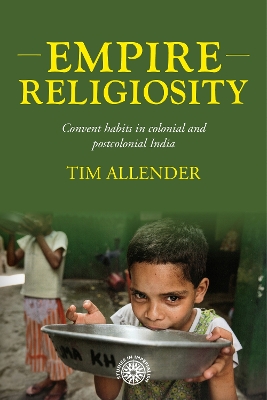
Empire religiosity: Convent habits in colonial and postcolonial India [Kõva köide]

  • Formaat: Hardback, 304 pages, kõrgus x laius: 234x156 mm
  • Sari: Studies in Imperialism
  • Ilmumisaeg: 23-Jul-2024
  • Kirjastus: Manchester University Press
  • ISBN-10: 1526159104
  • ISBN-13: 9781526159106
  • Kõva köide
  • Hind: 94,20 €*
  • * hind on lõplik, st. muud allahindlused enam ei rakendu
  • Tavahind: 117,75 €
  • Säästad 20%
  • Raamatu kohalejõudmiseks kirjastusest kulub orienteeruvalt 3-4 nädalat
  • Kogus:
  • Lisa ostukorvi
  • Tasuta tarne
  • Tellimisaeg 2-4 nädalat
  • Lisa soovinimekirja
  • Formaat: Hardback, 304 pages, kõrgus x laius: 234x156 mm
  • Sari: Studies in Imperialism
  • Ilmumisaeg: 23-Jul-2024
  • Kirjastus: Manchester University Press
  • ISBN-10: 1526159104
  • ISBN-13: 9781526159106
WINNER of the Triennial Distinguished Book Award, 2022-25, Cushwa Center for the Study of American Catholicism, Notre Dame University, South Bend, USA

This book explores Roman Catholic female missionaries and their placement in colonial and postcolonial India. It offers fascinating insights into their idiomatic activism, juxtaposed with a contrarian Protestant raj and with their own church patriarchies. During the Great Revolt of 1857, these women religious hid in church steeples. They were forced into the medical care of sexually diseased women in Lock Hospitals. They followed the Jesuits to experimental tribal village domains and catered for elites in the airy hilltop stations of the raj. Yet, they could not escape the eugenic and child rescue practices that were the flavour of the imperial day. New geographies of race and gender were also created by their social and educational outreach. This allowed them to remain on the subcontinent after the tide went out on empire in 1947. Their religious bodies remained untouched by India yet their experience in the field built awareness of the complex semiotics and visual traces engaged by the East/West interchange. After 1947, their tropes of social outreach were shaped by their direct interaction with Indians. Many new women religious were now of the same race or carried a strongly anti-British Irish ancestry. In the postcolonial world their historicity continues to underpin their negotiable Western-constructed activism - now reaching trafficked girls and those in modern-day slavery. The uncovered and multi-dimensional contours of their work are strong contributors to the current Black Lives Matter debates and how the etymology and constructs of empire find their way into current NGO philanthropy. -- .

Arvustused

'Allender modifies the critique of postcolonial thought in ways that are truly refreshing' Ana Jelnikar, Anthropological Notebooks

'Empire Religiosity builds on Tim Allenders excellent track record of detailed research into the history of education... This is a compelling story, beautifully written, conveyed with clarity and compassion towards both the women themselves and the girls who received education.' History of Education Journal

'Empire Religiosity is an important contribution to the study of Catholic missions in India, and its detailed archival work is commendable.' Journal of Religious History

'Empire Religiosity: Convent Habits in Colonial and Postcolonial India is a nuanced and insightful examination of how religion operated as a lived, embodied practice within colonial and postcolonial contexts.'

'Overall, Empire Religiosity offers a nuanced understanding of how religion, gender, and empire were lived and experienced. Allenders focus on everyday practices makes this book a valuable contribution to colonial history, gender studies, and postcolonial scholarship.' Ankit Sharma -- .

Introduction
1 Calcuttas colonial religious space and the arrival of Loreto
2 Finding Indian connections
3 New convent domains, 18481913
4 Tribal domains and imperial entanglements
5 Learning elites and cultural chasms
6 Morapai, orphans and the Sunderbunds
7 Image vistas and transition to an independent India, 190462
8 Poverty liminalities and new literacy, 193070
9 Sealdah and the outreach of Sister Cyril Mooney
Conclusion
Index -- .
Tim Allender is Professor and Chair of History and Curriculum at the University of Sydney -- .