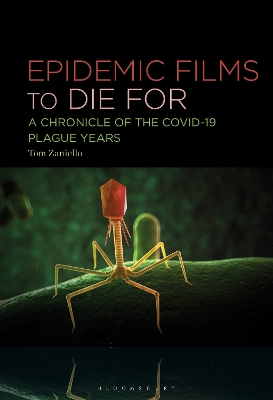
Whether it be in historical films or more futuristic, utopian idioms, the movie industry has more often than you thought responded imaginatively and dramatically to epidemics. In the wake of the Covid-I9 pandemic, brilliant researcher and writer Tom Zaniellos timely, personal and deeply original study shows how, from cholera to ebola to AIDS/HIV and beyond, makers of fiction and documentary movies have turned human sickness into entertainment and sometimes poisonous! - food for thought. * Adrian Grafe, BA Hons. (Oxon), Professor of English, Artois University, France, and author of The Ravens of Vienna (2023) * We might see popular narratives about seemingly-uncontrollable diseases as a post-COVID cultural fascination, but Tom Zaniello's review of epidemic cinema makes clear that the genre has a long and varied history. Looking across eras and genres, this book helps us see how film narratives about flu variations, AIDS, zombies, the opioid epidemic, and climate change all reveal persistent anxieties about the body, the limits of governmental control, inequality, and morality. Zaniello serves as an entertaining and knowledgeable guide to a vast catalogue of films we might miss -- but shouldn't. * Sherry Linkon, Professor of English, Writing, and American Studies, Georgetown University, USA * In Epidemic Films to Die For, Tom Zaniello delivers a refreshing contribution to the emerging genre of Epidemic Cinema. The book will become a reference in Film Studies for its impressive compendium of epidemic films and for widening the genre's scope by including non-pathogenic epidemics like drugs, toxins, and radioactivity. Zaniellos energetic and down-to-earth style makes Epidemic Films to Die For a contagiously delightful, fun-to-read experience. * Julia Echeverrķa, Assistant Professor, University of Zaragoza, Spain * Part history, part filmography, part cultural and social analysis, Tom Zaniellos Epidemic Films to Die For is a rich and varied portmanteau of a book. Capturing a wide variety of celluloid dedicated to reflecting an ongoing fascination with disease, viruses and epidemics it will be a bench mark for understanding the cultural impact of natural and human made pathogens. * Tim Strangleman, Professor of Sociology, University of Kent, UK *