Muutke küpsiste eelistusi

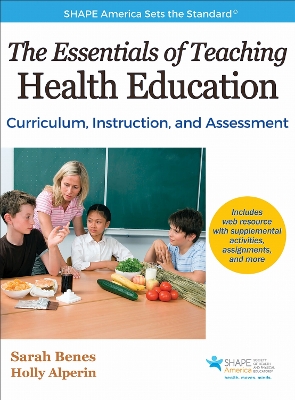
Essentials of Teaching Health Education: Curriculum, Instruction, and Assessment New edition [Kõva köide]

  • Formaat: Hardback, 320 pages, kõrgus x laius: 279x216 mm, kaal: 1361 g
  • Sari: SHAPE America Set the Standard
  • Ilmumisaeg: 18-Feb-2016
  • Kirjastus: Human Kinetics
  • ISBN-10: 1492507636
  • ISBN-13: 9781492507635
  • Kõva köide
  • Hind: 89,65 €*
  • * saadame teile pakkumise kasutatud raamatule, mille hind võib erineda kodulehel olevast hinnast
  • See raamat on trükist otsas, kuid me saadame teile pakkumise kasutatud raamatule.
  • Kogus:
  • Lisa ostukorvi
  • Tasuta tarne
  • Lisa soovinimekirja
  • Formaat: Hardback, 320 pages, kõrgus x laius: 279x216 mm, kaal: 1361 g
  • Sari: SHAPE America Set the Standard
  • Ilmumisaeg: 18-Feb-2016
  • Kirjastus: Human Kinetics
  • ISBN-10: 1492507636
  • ISBN-13: 9781492507635

The Essentials of Teaching Health Education presents a skills-based approach to teaching K-12 health education—one that will prepare your students for success in school and beyond. You’ll learn practical approaches to putting the contents in action and rely on an array of teaching and assessment strategies.


The Essentials of Teaching Health Education presents a skills-based approach to teaching K-12 health education that prepares students for success in the 21st century. This practical text is endorsed by SHAPE America and written by seasoned and highly credentialed authors with experience in both university and K-12 settings. It provides all you need in order to build, teach, and assess a health education program that will help your students become health-literate individuals, develop the 21st-century skills that they need for success in college and in their careers beyond, and maintain or improve health outcomes.

What Sets This Book Apart

This text meets the unique needs of schools, teachers, and students. It emphasizes an individualized approach to enhancing student learning and developing skills based on current research and national health education standards.

The Essentials of Teaching Health Education features the following:

• Practical strategies for curriculum design and program development with a skills-based approach—one that makes it easy to put the contents into action and make a meaningful impact on students

• Real-world examples to help readers understand and apply the content, along with summaries, key points, and review questions that aid in retaining the information

• Vocabulary words and definitions to help students keep up with the ever-changing terminology in health education

Ancillaries to Facilitate Teaching and Enhance Course Content

The text is accompanied by a test bank, a presentation package, a web resource, and an instructor guide, all designed to facilitate your preparation, teaching, and assessment of students’ knowledge. These ancillaries come with tools:

• Teaching slides and tests for each chapter

• Supplemental learning activities and web links

9 Chapter review questions and answers, teaching tips, suggested readings, and chapter objectives and summaries

Book Organization

The book is arranged in five parts. Part I delves into the skills-based approach to health education, explaining the importance of the approach and how to understand student motivation. Part II focuses on how to teach skills that are based on the National Health Education Standards: accessing valid and reliable information, products, and services; analyzing influences; interpersonal communication; decision making and goal setting; self-management; and advocacy.

Part III explores how to use data to inform your curriculum planning, outlines the eight steps for curriculum development, and shows you how to design meaningful assessments. In part IV, you learn how to create a positive learning environment, implement a skills-based approach, and meet the unique needs of elementary health education. Finally, in part V, you examine pertinent topics beyond the classroom, including professional development, advocacy, and cross-curricular connections.

A Framework for Successful Acquisition of Skills

The Essentials of Teaching Health Education offers evidence-informed strategies as it guides you through the critical process of supplying students with the tools they need for succeess in school and in life. The authors use the Partnership for 21st Century Skills framework to set the foundation for teaching the skills students need.

The text is comprehensive and flexible to meet all of your students’ needs. With all the ancillaries and tools it provides, you are set to deliver a complete, well-rounded curriculum that will prepare future teachers for success.

Muu info

European coaching and sport science websites, magazines and journals including BASES' The Sport and Exercise Scientist and international Journal of Sports Science & Coaching. Featured at various sport science events throughout the UK and Europe including UKSCA, the British Association of Sport and Exercise Sciences and the European Congress of Sports Science. Solus emails, inclusion in online newsletters and posted on Human Kinetics' Health and Fitness Blog.
Preface viii
About SHAPE America xi
Acknowledgments xii
How to Access the Web Resource xiii
Introduction: Connections to 21st-century Skills 1(4)
Part I Building the Foundation of a Skills-Based Approach
5(54)
Chapter 1 Developing Health-Literate Individuals
7(16)
Components of Health Literacy
8(4)
Continuum of Health Literacy
12(2)
Developing Health Literacy as an Asset
14(1)
Establishing Health Literacy for Life
15(5)
Summary
20(3)
Chapter 2 Understanding a Skills-Based Approach
23(16)
Components of Skills-Based Health Education
24(3)
Skills-Based Health Education in Practice
27(5)
Support for Skills-Based Health Education
32(6)
Summary
38(1)
Chapter 3 Examining Student Motivation
39(20)
Theories of Motivation
40(4)
Developmental Levels and Motivation
44(10)
General Considerations Across Age Levels
54(2)
Summary
56(3)
Part II Teaching to the National Health Education standards
59(116)
Chapter 4 Accessing Valid and Reliable Information, Products, and Services
61(18)
Step 1 Skill Introduction
63(4)
Step 2 Presenting the Steps of the Skill
67(2)
Step 3 Modeling the Skill
69(1)
Step 4 Practice
70(5)
Step 5 Feedback and Reinforcement
75(2)
Summary
77(2)
Chapter 5 Analyzing Influences
79(18)
Step 1 Skill Introduction
81(7)
Step 2 Presenting the Steps of the Skill
88(2)
Step 3 Modeling the Skill
90(2)
Step 4 Practice
92(2)
Step 5 Feedback and Reinforcement
94(2)
Summary
96(1)
Chapter 6 Interpersonal Communication
97(16)
Step 1 Skill Introduction
99(5)
Step 2 Presenting the Steps of the Skill
104(2)
Step 3 Modeling the Skill
106(1)
Step 4 Practice
107(4)
Step 5 Feedback and Reinforcement
111(1)
Summary
112(1)
Chapter 7 Decision Making
113(14)
Step 1 Skill Introduction
114(4)
Step 2 Presenting the Steps of the Skill
118(2)
Step 3 Modeling the Skill
120(2)
Step 4 Practice
122(2)
Step 5 Feedback and Reinforcement
124(1)
Summary
124(3)
Chapter 8 Goal Setting
127(18)
Step 1 Skill Introduction
129(5)
Step 2 Presenting the Steps of the Skill
134(3)
Step 3 Modeling the Skill
137(1)
Step 4 Practice
138(3)
Step 5 Feedback and Reinforcement
141(2)
Summary
143(2)
Chapter 9 Self-Management
145(16)
Step 1 Skill Introduction
148(4)
Step 2 Presenting the Steps of the Skill
152(2)
Step 3 Modeling the Skill
154(1)
Step 4 Practice
155(2)
Step 5 Feedback and Reinforcement
157(1)
Summary
158(3)
Chapter 10 Advocacy
161(14)
Step 1 Skill Introduction
162(4)
Step 2 Presenting the Steps of the Skill
166(1)
Step 3 Modeling the Skill
167(2)
Step 4 Practice
169(2)
Step 5 Feedback and Reinforcement
171(1)
Summary
172(3)
Part III Developing Curricula and Assessments
175(46)
Chapter 11 Using Data to Inform Curriculum Planning
177(1)
Compiling Functional Information
178(1)
Gathering and Understanding Data
179(5)
Interpreting Data to Make Decisions on Curriculum
184(4)
Using Data to Build Support for Health Education
188(1)
Summary
188(3)
Chapter 12 Eight Steps for Curriculum Development
191(16)
Step 1 Get to Know the Students and the Community
192(1)
Step 2 Formulate Goals
193(1)
Step 3 Develop Benchmark Assessments
194(2)
Step 4 Determine Health Topics, Functional Information, and Skills
196(3)
Step 5 Create a Scope and Sequence
199(3)
Step 6 Develop Unit Plans
202(2)
Step 7 Develop Unit Assessments
204(2)
Step 8 Create Lesson Plans
206(1)
Summary
206(1)
Chapter 13 Designing Meaningful Assessments
207(14)
Purpose of Assessment
208(1)
Types of Assessment
208(3)
Authentic Assessment
211(3)
Rubrics and Grading
214(4)
Constructive Feedback
218(1)
Summary
219(2)
Part IV Strategies for Effective Instruction
221(36)
Chapter 14 Creating a Positive Learning Environment
223(12)
Know Yourself
224(1)
Have a Plan
225(3)
Know Your Students
228(1)
Establish Classroom Norms, Consequences, and Reward Systems
228(4)
Foster Student Leadership and Involvement
232(1)
Be a Positive Role Model
233(1)
Summary
233(2)
Chapter 15 Implementing a Skills-Based Approach
235(12)
Facilitate Learning Experiences
236(1)
Format Lessons to Support Skill Development and Knowledge Acquisition
237(3)
Provide Engaging, Relevant Experiences
240(1)
Foster Participation and Active Learning
240(4)
Provide Opportunities for Self-Reflection, Internalization, and Personalization
244(1)
Provide Opportunities for Skill Development
245(1)
Summary
246(1)
Chapter 16 Meeting the Unique Needs of Teaching Elementary Health Education
247(10)
Making Time for Health Education
248(2)
Considerations for the Elementary Level
250(3)
Using Children's Literature to Support Health Education
253(2)
Engaging Families and the Community
255(1)
Summary
256(1)
Part V Beyond the Classroom
257(30)
Chapter 17 Professional Development and Advocacy
259(14)
Staying Current and Relevant
260(1)
Engaging in Professional Development Opportunities
260(4)
Developing a Personalized Professional Development Plan
264(2)
Using What You Learn
266(2)
Advocating for Health Education
268(2)
Summary
270(3)
Chapter 18 Making Cross-Curricular Connections
273(14)
A Coordinated Approach to Student Success
274(5)
Shaping Local Wellness Policies
279(4)
Making Interdisciplinary Connections for School Improvement
283(2)
Summary
285(2)
Glossary 287(4)
References 291(6)
Index 297(6)
About the Authors 303
Sarah Sparrow Benes, EdD, CHES, is a senior lecturer and program director in physical education and health education at Boston University. Sarah teaches a variety of undergraduate- and graduate-level courses in health and physical education, does service projects in local communities, and conducts research on health education and physical activity in schools. She has numerous publications in refereed journals and chapters examining health education; she has also made more than a dozen presentations on skill-based health education and related topics at state and regional conferences. Sarah serves on a variety of health education committees, including as a member of the health education steering committee for SHAPE Americathe Society of Health and Physical Educatorsand as the vice president of health education for the Massachusetts Association for Health, Physical Education, Recreation and Dance. Benes consults with school districts on health and wellness issues with a focus on skills-based curriculum development and implementation and is a member of the National Athletic Trainers' Association and SHAPE America. She is a certified and licensed athletic trainer and health education specialist. Sarah received a bachelor's degree in athletic training from the University of Connecticut, a master's degree in education, and a doctorate in curriculum and teaching from Boston University and is currently working on an MPH. She lives in Natick with her husband, two daughters, and yellow Labrador. She enjoys spending time with her family on nature walks and enjoying the sights and sounds of the Northeast.

Holly Alperin, EdM, MCHES, has worked to improve the health and academic outcomes of young people by leveraging partnerships in order to strengthen school-level policies and practices both in the health education classroom and throughout the school. She provides training and technical assistance to preK-12 educators, administrators, and staff; teaches preservice and graduate students working toward degrees in health education; and develops and implements trainings to advance the capacity of state and national stakeholders to improve the outcomes of children. Holly is a sought-after presenter, having been invited to numerous local, state, and national events. She is an advocate for ensuring that health educators receive high-quality professional development and takes this responsibility to heart through her personal development and participation in professional organizations including SHAPE America. Holly received her bachelor's degree in health education and health promotion from Central Michigan University and her master of education in policy, planning, and administration from Boston University. Holly currently lives in New Hampshire with her husband and two daughters. Together they enjoy the best of New Englandocean, mountains, cities, and countless adventures.