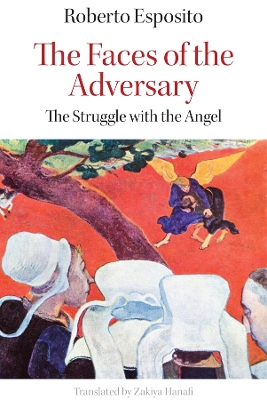
Roberto Esposito’s poetic and historically layered new book draws on a famous, and famously opaque, passage from the Old Testament to shed light on the vision of self and domination that has profoundly shaped Western identity and left its mark on Western culture.
These ten lines from Genesis tell the tale of Jacob wrestling with a mysterious adversary on a riverbank. But who exactly is Jacob wrestling with – the divine? Evil personified? Absolute otherness? Or the deepest, most subconscious self? Who, in other words, is the adversary? The angel’s identity is shrouded in mystery until we realise that the challenge it presents arrives from Jacob’s unconscious depths, repressed and projected. Interchangeable and yet never resolved, these entwined adversaries speak to our great desire to come face to face with personal truth, even if only for an instant, while coming to terms with its fleeting impermanence.
Casting a wide net, Esposito connects his reading of Jacob and the Angel to the fundamental relationship between self and adversary inherited by the modern West and explores the extraordinary influence this story has had on Western culture, from philosophy and theology to literature, politics and art.
Roberto Esposito’s poetic and historically layered new book draws on a famous, and famously opaque, passage from the Old Testament to shed light on the vision of self and domination that has profoundly shaped Western identity and left its mark on Western culture.
These ten lines from Genesis tell the tale of Jacob wrestling with a mysterious adversary on a riverbank. But who exactly is Jacob wrestling with – the divine? Evil personified? Absolute otherness? Or the deepest, most subconscious self? Who, in other words, is the adversary? The angel’s identity is shrouded in mystery until we realise that the challenge it presents arrives from Jacob’s unconscious depths, repressed and projected. Interchangeable and yet never resolved, these entwined adversaries speak to our great desire to come face to face with personal truth, even if only for an instant, while coming to terms with its fleeting impermanence.
Casting a wide net, Esposito connects his reading of Jacob and the Angel to the fundamental relationship between self and adversary inherited by the modern West and explores the extraordinary influence this story has had on Western culture, from philosophy and theology to literature, politics and art.