Muutke küpsiste eelistusi

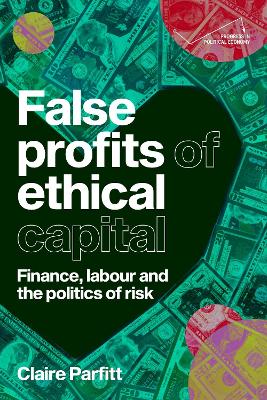
False Profits of Ethical Capital: Finance, Labour and the Politics of Risk [Kõva köide]

  • Formaat: Hardback, 208 pages, kõrgus x laius x paksus: 234x156x13 mm, kaal: 471 g
  • Sari: Progress in Political Economy
  • Ilmumisaeg: 23-Jul-2024
  • Kirjastus: Manchester University Press
  • ISBN-10: 1526174243
  • ISBN-13: 9781526174246
Teised raamatud teemal:
  • Kõva köide
  • Hind: 94,20 €*
  • * hind on lõplik, st. muud allahindlused enam ei rakendu
  • Tavahind: 117,75 €
  • Säästad 20%
  • Raamatu kohalejõudmiseks kirjastusest kulub orienteeruvalt 3-4 nädalat
  • Kogus:
  • Lisa ostukorvi
  • Tasuta tarne
  • Tellimisaeg 2-4 nädalat
  • Lisa soovinimekirja
  • Formaat: Hardback, 208 pages, kõrgus x laius x paksus: 234x156x13 mm, kaal: 471 g
  • Sari: Progress in Political Economy
  • Ilmumisaeg: 23-Jul-2024
  • Kirjastus: Manchester University Press
  • ISBN-10: 1526174243
  • ISBN-13: 9781526174246
Teised raamatud teemal:
This book is a timely study of an important political economic phenomenon: ESG investing and stakeholder capitalism. This book encourages new ways of thinking about corporate responsibility and how to contest it.

False profits of ethical capital is a thought-provoking approach to understanding stakeholder capitalism. Rather than focusing on the inadequacies of corporate responsibility, sustainable investment and consumer politics, this book grapples with the technical and rhetorical functions of ethical capital for profit and accumulation. It provides a unique and eclectic analysis of the political dynamics between finance, capital and labour, offering a refreshing perspective on struggles interlocking social, ecological and economic crises, and suggesting new ways of thinking about sustainability politics.

Arvustused

'A rich contribution to social science from the winner of the 2022 doctoral dissertation prize of the Global Network on Financial Geography (FinGeo), who incisively interrogates the prophecy that better management of environmental, social, and governance risks (ESG) can build a more equitable, stable, and sustainable capitalism. A must read for students and scholars, proponents and opponents of ethical capital.' Professor Darius Wojcik, Professor of Financial Geography, National University of Singapore -- .

Introduction: A more responsible and resilient capitalism?
Part I Moral economies
Chapter 1 A history of capitals moral economies and speculation
Chapter 2 A speculative moral economy
Part II Risk and value
Chapter 3 Ethics, risk and value: the derivative logic in action
Chapter 4 Accounting for ethics: SASB and Integrated Reporting
Part III Producing ethical capital
Chapter 5 Brands and the (re)production of ethics
Chapter 6 ESG information as an ethical capital asset
Conclusion: Risky politics: Considerations in contesting ethical capital
References -- .
Claire Parfitt is a Lecturer in Political Economy at The University of Sydney -- .