Muutke küpsiste eelistusi

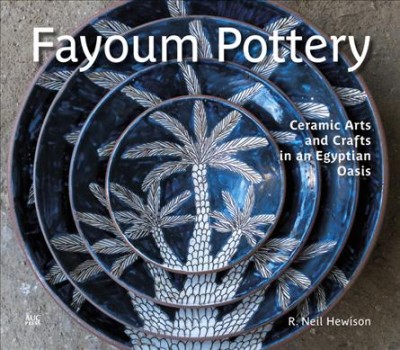
Fayoum Pottery: Ceramic Arts and Crafts in an Egyptian Oasis [Kõva köide]

  • Formaat: Hardback, 192 pages, kõrgus x laius: 210x241 mm, 258 color and 6 b&w illus.
  • Ilmumisaeg: 07-Dec-2021
  • Kirjastus: American University in Cairo Press
  • ISBN-10: 1649031327
  • ISBN-13: 9781649031327
  • Kõva köide
  • Hind: 37,50 €*
  • * hind on lõplik, st. muud allahindlused enam ei rakendu
  • Tavahind: 46,88 €
  • Säästad 20%
  • Raamatu kohalejõudmiseks kirjastusest kulub orienteeruvalt 3-4 nädalat
  • Kogus:
  • Lisa ostukorvi
  • Tasuta tarne
  • Tellimisaeg 2-4 nädalat
  • Lisa soovinimekirja
  • Formaat: Hardback, 192 pages, kõrgus x laius: 210x241 mm, 258 color and 6 b&w illus.
  • Ilmumisaeg: 07-Dec-2021
  • Kirjastus: American University in Cairo Press
  • ISBN-10: 1649031327
  • ISBN-13: 9781649031327
"The Fayoum, a broad, fertile depression in Egypt's Western Desert, known for its great salt lake, its rich green fields, and its unique pharaonic and Greco-Roman remains, is also home to three very different centers of pottery production. The potters ofKom Oshim specialize in decorated garden pots and other utilitarian ware, and guard the special secret of how to make the largest clay vessels in Egypt, up to an extraordinary two and a half meters tall. At al-Nazla, ancient traditions are kept alive, asmembers of a single extended family continue to use millennia-old techniques passed down from generation to generation, hand-forming among other things their distinctive spherical water jars with amazing dexterity and speed. In the small village of Tunis, the establishment of a pottery school by a Swiss couple in 1990 led to a complete transformation, and the village now hosts more than twenty-five pottery workshops and showrooms, whose products are sold in Cairo, London, and New York. In this lively insight into a varied and vital craft, the author reveals the stories of the three villages and the skilled potters who make their living there, looking at how they learned their trade and how they work, from the preparation of the clay to the formation of the pots on the wheel or by hand, to the decoration, the glazing, and the firing, and finally to the display or distribution and sale of the finished product. For past and future travelers to Egypt, lovers of the craft of pottery, practitioners, and collectors, this beautifully illustrated exploration of the ceramics of the Fayoum will inspire and enchant."--

NAMED A BEST NEW POTTERY BOOK TO READ IN 2022 BY THE BOOK AUTHORITY

Lavishly illustrated with over 250 full-color photographs of unique designs and rare methods, providing an in-depth look at the pottery produced in the Fayoum

The Fayoum, a broad, fertile depression in Egypt’s Western Desert, known for its great salt lake, its rich green fields, and its unique pharaonic and Greco-Roman remains, is also home to three very different centers of pottery production. The potters of Kom Oshim specialize in decorated garden pots and other utilitarian ware, and guard the special secret of how to make the largest clay vessels in Egypt, up to an extraordinary two and a half meters tall. At al-Nazla, ancient traditions are kept alive, as members of a single extended family continue to use millennia-old techniques passed down from generation to generation, hand-forming among other things their distinctive spherical water jars with amazing dexterity and speed. In the small village of Tunis, the establishment of a pottery school by a Swiss couple in 1990 led to a complete transformation, and the village now hosts more than twenty-five pottery workshops and showrooms, whose products are sold in Cairo, London, and New York.

In this lively insight into a varied and vital craft, the author reveals the stories of the three villages and the skilled potters who make their living there, looking at how they learned their trade and how they work, from the preparation of the clay to the formation of the pots on the wheel or by hand, to the decoration, the glazing, and the firing, and finally to the display or distribution and sale of the finished product.

For past and future travelers to Egypt, lovers of the craft of pottery, practitioners, and collectors, this beautifully illustrated exploration of the ceramics of the Fayoum will inspire and enchant.

Arvustused

A Best New Pottery Book To Read In 2022 (The Book Authority)

"An informative and lyrical celebration of the Fayoum, the potters, and their craft, Fayoum Pottery balances information and historical context with an almost poetic description of time and place. This is a book Ive been waiting for."Carol Sidky, Louis Farouk (London)

"The production of pottery is central to three villages in the Fayoum of Egypt. This book presents a close look at each potterys distinct techniques, wares, and business." Ceramics Monthly

"A vivid and intimate portrait of the life and work of contemporary potters in the Fayoum"AramcoWorld

"A beautifully illustrated and thoroughly researched look at pottery making in Egypt that will appeal to anyone interested in the art form."Library Journal

"This well-researched, beautifully illustrated book describes the remarkable pottery traditions that have been evolving for thousands of years in the Fayoum oasis in Egypts Western Desert . . . Recommended."CHOICE

"Inherently fascinating and impressively informative, Fayoum Pottery: Ceramic Arts and Crafts in an Egyptian Oasis will have a strong and enduring appeal to lovers of the craft of potteryboth practitioners, and collectors alike."Midwest Book Review

Muu info

Lavishly illustrated with over 250 full-color photographs of unique designs and rare methods, providing an in-depth look at the pottery produced in the Fayoum
Arabic Names and Terms vii
Acknowledgments ix
Introduction 1(1)
In the Beginning Was the Wheel
1(3)
"Mud, Mud, Glorious Mud"
4(2)
The Bud of the Lotus
6(4)
One Thousand Days
10(5)
Al-Nazla
15(30)
A Unique Setting
15(3)
An Ancient Story of Mud, Straw, and Ash
18(20)
Kilns Old and New
38(3)
A Changing Market
41(4)
Kom Oshim
45(16)
A Moving Target
45(1)
From Pigeon Bowls to Jardinieres
46(8)
Of Feet and Sausages
54(3)
Fire in the Hole
57(4)
Tunis
61(92)
Farming on the Fringe
61(1)
Tractors of Mud
62(2)
Every Child an Artist
64(20)
Teapots and Geckos
84(2)
Clay, Wheels, and Slips
86(5)
Buffalos, Donkeys, and Doves
91(2)
Glazing and Firing
93(4)
New Arrivals, New Directions
97(2)
Domes and Murals
99(21)
Celebrating the Handmade
120(2)
A Panoramic House
122(2)
The Fayoum Art Center
124(2)
Beyond Tunis
126(27)
Khnum's Children: Lives of Clay
153(22)
Hosni Ahmed, al-Nazla
154(2)
Hosni Yunis, al-Nazla
156(2)
Gum'a 'Eid, Kom Oshim
158(2)
Mohamed Nafi', Kom Oshim
160(2)
Mohamed Gum'a, Tunis
162(2)
Ahmed 'Ali, Tunis
164(2)
Rawya 'Abd al-Qader, Tunis
166(2)
Amel Hosni & Mansour Hassan, Tunis
168(2)
The Brothers Gammal, Tunis
170(2)
`Abd al-Sattar `Abd al-Sami', Tunis
172(3)
Glossary 175(2)
Notes 177(2)
Index 179
R. Neil Hewison is the author of The Fayoum: History and Guide (AUC Press, revised edition 2008) and the translator of After the Nobel Prize 19891994: The Non-Fiction Writing of Naguib Mahfouz Volume IV (2020), as well as fiction by Yusuf Idris, Yusuf Abu Rayya, and Gamal al-Ghitani. He lives in the pottery village of Tunis in the Fayoum.