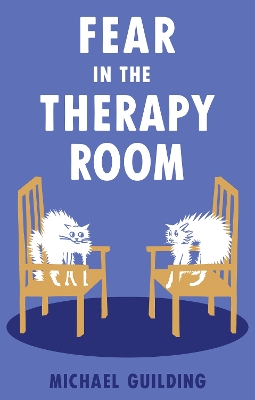
The human fear system a set of automatic biological responses to threat is essential for our survival but when activated too often or for too long, it can lose its capacity to switch off. This can have a significant impact on our energy, our physical and mental health, our behaviour and our capacity to think clearly and to relate to others. We can get stuck in fear-mode, and this lies at the heart of complex trauma, a condition that is perhaps the chief cause of human misery. Complex trauma, with its most common symptoms being anxiety and depression, is the main reason that people seek the help of counselling and psychotherapy. Fear in the Therapy Room is written for therapists to help them to better notice and understand their own fear responses and how these are constantly triggered as they work to help others. Rather than being a worry and a distraction, this awareness can inform and guide the work of therapy. Written in a simple and jargon-free style, the book explains the nature of our fear responses and of complex trauma with a clarity that will also be of great interest to a much wider audience. It is particularly relevant to those whose professional work or family responsibilities involve offering care to others, but also has much to offer to anyone wishing to lead a fuller life, less dominated by fear.
Part I: Understanding
fear and complex trauma: Defining the fear system; Two life and death
escapes;
The social engagement system; What is complex trauma? The biology of the
fear
system and how it affects us; How the fear system resets; When the fear
system
cannot reset; Making sense of anxiety and depression; The long-term impact
of
complex trauma; Fear in the therapy room; The prevalence of complex trauma
in
our society; Part II: Working
with the body: Why we need to work with the body; Regulating fear responses;
Reducing chronic tension; Strengthening the ventral vagus; Completing the
body's defensive responses;
Part III: Working with complexity: The problem of complexity; The
three stages of trauma work; Working at the speed of organic change; Working
with constant setbacks; Fear and the suicidal client; Working on many
fronts;
Working within our own competence. Part IV: The importance of safety: The
centrality of safety; The safe therapist; Internal and external safety;
Safety
and catharsis; The power of safety; Part V: Supporting the therapist:
Training
and personal development; Clinical supervision; Management of therapists;
Creating a network of friendship for professional support; Conclusion.
Appendices
Michael Guilding worked as a counsellor and psychotherapist for 30 years including for more than a decade in the NHS, where he was Head of Primary Care Counselling within the York and Selby NHS Trust. For many years he has had a deep interest in our biological fear-system responses and how these affect the way we relate to others, having been introduced to this framework of thinking by his clinical supervisor, Dr Una McCluskey, of the University of York. Michael has written a number of papers for the Complex Trauma Institutes Journal on the theory of complex trauma, and its implications for psychotherapy. This book has grown out of these papers and his Fear and the Therapist workshops which help therapists to become more aware of their fear-system responses and to use this awareness in their work. Having retired from clinical work in 2023, his focus is now on writing about the fear-system for the general public, and his 2024 York Festival of Ideas talk, Reflections on Fear, Anxiety and Depression was broadcast nationally in Australia.