Muutke küpsiste eelistusi

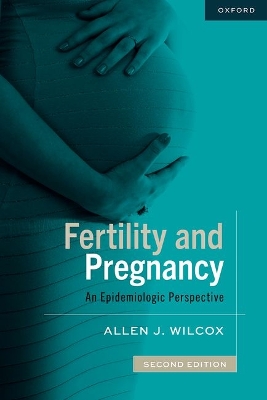
Fertility and Pregnancy: An Epidemiologic Perspective 2nd Revised edition [Pehme köide]

(Emeritus Investigator, NIEHS, US National Institutes of Health)
  • Formaat: Paperback / softback, 368 pages, kõrgus x laius x paksus: 232x155x18 mm, kaal: 602 g
  • Ilmumisaeg: 13-Jan-2026
  • Kirjastus: Oxford University Press
  • ISBN-10: 0198931891
  • ISBN-13: 9780198931898
Teised raamatud teemal:
  • Pehme köide
  • Hind: 50,99 €*
  • * hind on lõplik, st. muud allahindlused enam ei rakendu
  • Tavahind: 63,74 €
  • Säästad 20%
  • Raamatu kohalejõudmiseks kirjastusest kulub orienteeruvalt 3-4 nädalat
  • Kogus:
  • Lisa ostukorvi
  • Tasuta tarne
  • Tellimisaeg 2-4 nädalat
  • Lisa soovinimekirja
  • Formaat: Paperback / softback, 368 pages, kõrgus x laius x paksus: 232x155x18 mm, kaal: 602 g
  • Ilmumisaeg: 13-Jan-2026
  • Kirjastus: Oxford University Press
  • ISBN-10: 0198931891
  • ISBN-13: 9780198931898
Teised raamatud teemal:
Fertility and Pregnancy: An Epidemiologic Perspective offers a comprehensive and engaging exploration of human reproduction-its biological foundations, historical context, and the factors that can disrupt its processes. In this thoroughly revised edition, Allen Wilcox masterfully integrates insights from history, biology, obstetrics, paediatrics, demography, infectious diseases, molecular genetics, and evolutionary biology to present a cohesive, and accessible overview of reproductive epidemiology.

With clarity and wit, Wilcox enriches the narrative with compelling anecdotes and insightful illustrations, making complex concepts both understandable and memorable. This edition reflects the dynamic nature of the field, incorporating the latest research findings and theoretical advances. These are conveyed in over thirty new illustrations and extensively updated chapters, including the emerging role of cardiovascular disease in pregnancy complications and the often-misunderstood condition of fetal growth restriction.

The book covers a wide range of topics-from the biology of conception and fetal development to the influence of genetics and infectious diseases. It delves into key epidemiologic themes such as recurrence risk within families, the impact of selective fertility, and the methodological challenges of establishing causality. The volume concludes with a thoughtful discussion of unresolved questions and future research opportunities, offering valuable insights for scholars, clinicians, and students alike.

Fertility and Pregnancy provides a comprehensive account of human reproduction-its biological foundations, historical context, and the factors that can disrupt its processes. Incorporating the latest research with new chapters and illustrations, it gives a fresh perspective on a field that is brimming with new ideas.
Foundations 1: The Creative Biology of Human Reproduction 2: On Getting
Pregnant 3: How Humans Control Their Fertility 4: Infections and Reproduction
5: The Genetics of Reproduction 6: Evolutionary Biology and Eugenics 7:
Heterogeneity of Risk 8: Themes and Variations Outcomes 9: Fertility,
Fecundity, Fecundability 10: Very Early Pregnancy Loss 11: Miscarriage 12:
Stillbirth and Infant Mortality 13: Twins and More 14: Gestational Age and
Preterm Delivery 15: Birthweight and Fetal Growth 16: Birth Defects 17: Fetal
Exposures and Adult Disease 18: Sex Ratio 19: Maternal Mortality and
Morbidity 20: Cardiovascular Disease and Pregnancy 21: Methods: Challenges
and Opportunities 22: Future Directions
Allen J. Wilcox is an epidemiologist in Durham NC who studies the biology of human reproduction. He spent his career at NIEHS, one of the National Institutes of Health, with adjunct professorships at the University of North Carolina and Harvard University. He was the editor-in-chief of the journal EPIDEMIOLOGY for 14 years and has served as president of the Society for Epidemiologic Research and the American Epidemiological Society. He holds an MD from the University of Michigan, a PhD from the University of North Carolina, and an honorary doctoral degree from the University of Bergen (Norway).