Muutke küpsiste eelistusi

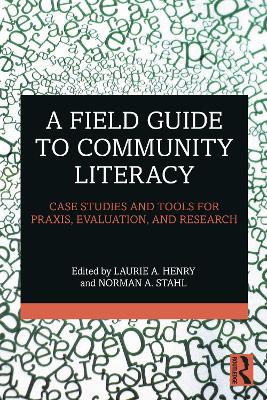
Field Guide to Community Literacy: Case Studies and Tools for Praxis, Evaluation, and Research [Pehme köide]

Edited by , Edited by
  • Formaat: Paperback / softback, 336 pages, kõrgus x laius: 229x152 mm, kaal: 1030 g, 7 Tables, black and white; 5 Line drawings, black and white; 7 Halftones, black and white; 12 Illustrations, black and white
  • Ilmumisaeg: 06-May-2022
  • Kirjastus: Routledge
  • ISBN-10: 1032118113
  • ISBN-13: 9781032118116
Teised raamatud teemal:
  • Pehme köide
  • Hind: 36,66 €*
  • * hind on lõplik, st. muud allahindlused enam ei rakendu
  • Tavahind: 48,89 €
  • Säästad 25%
  • Raamatu kohalejõudmiseks kirjastusest kulub orienteeruvalt 3-4 nädalat
  • Kogus:
  • Lisa ostukorvi
  • Tasuta tarne
  • Tellimisaeg 2-4 nädalat
  • Lisa soovinimekirja
  • Raamatukogudele
  • Formaat: Paperback / softback, 336 pages, kõrgus x laius: 229x152 mm, kaal: 1030 g, 7 Tables, black and white; 5 Line drawings, black and white; 7 Halftones, black and white; 12 Illustrations, black and white
  • Ilmumisaeg: 06-May-2022
  • Kirjastus: Routledge
  • ISBN-10: 1032118113
  • ISBN-13: 9781032118116
Teised raamatud teemal:
This practical guidebook presents trends, research-grounded strategies, and field-based solutions to challenges of working in community-based literacy initiatives. A comprehensive guide for practitioners, this book addresses best practices for implementing, maintaining, expanding, and evaluating community-based literacy initiatives. The contributors in this volume help readers shift thinking from merely considering, "How can communities support literacy?" to "How can literacy help us create, support, and strengthen communities?"

Organized into four parts on building community through literacy, program design, case studies from the field, and program evaluation chapters cover research-based and innovative practices in a diverse range of populations and settings, including family services, adult literacy initiatives, community centers, and tutoring programs. With an abundance of praxis-oriented examples and real-world strategies from top scholars and practitioners, the book serves as a roadmap for essential topics, including funding, writing grant proposals, handling audits, and conducting research within program settings. With templates, models, planning tools, and checklists ready for immediate use, this book is an invaluable field manual for individuals involved in community literacy work, researchers, and students in literacy-oriented courses either at the undergraduate or graduate levels.
Acknowledgments ix
Foreword x
Introduction 1(8)
Part One Building Community Through Literacy 9(52)
1 Adult Literacy and the Work of Community Building
11(12)
Erik Jacobson
2 The Community as Educator: Historical and Contemporary Responses by Economically, Culturally, and Linguistically Marginalized Communities to the Colonization of Literacy in Education
23(8)
Ann M. Bennett
3 Family Engagement: Results That Matter From the National Center for Families Learning
31(16)
Kim Jacobs
Joshua Cramer
Wendee Mullikin
Laura Westberg
4 Unsettling Community and University: Finding Fluidity in Community Literacies and the Academy
47(14)
Gemma Cooper-Novack
Brice Nordquist
Part Two Setting the Stage for Program Design 61(68)
5 The Community Literacy Audit: Evaluating Community Literacy Needs to Ensure Equitable Literacy Education
63(12)
Ann M. Bennett
6 Conducting a Community Literacy Audit
75(15)
Tara Wilson
7 Urban Literacy Education as a Vehicle for Social Change: A Community Audit of Charlotte, North Carolina
90(12)
Candace Chambers
Annette Teasdell
8 From Idea to Reality: Developing an Early Literacy Action Plan with Community Partners
102(11)
Terry S. Atkinson
Kimberly L. Anderson
Elizabeth A. Swaggerty
Marjorie W. Rowe
9 Understanding the Psychology of Getting Funded
113(16)
Beverly Browning
Part Three Case Studies from the Field 129(110)
10 More Than Contaminated Water: Flint, Michigan's Community-Wide Efforts for Literacy
131(12)
Chad H. Waldron
11 Leveraging Tutoring Center Literacy
143(12)
Katherine Marsh
12 The Chinatown Youth Organizing Project: Community Literacies for Social Justice
155(18)
Mary Yee
13 Health Literacy in a Diabetes Education Center
173(13)
Megan Hughes
14 Little Free Libraries: Fostering Access to Reading Materials While Developing Community Ties
186(12)
Peggy Semingson
Karabi Bezboruah
15 Indigenous-Led, Community-Based Language Reclamation and Regeneration Initiatives
198(14)
M. Kristiina Montero
Spy Denomme-Welch
Stanley R. Henry
16 Of Pirates and Superheroes: 826 National and Hybrid School- Community Writing Spaces
212(14)
Susan Gridland-Hughes
Mary-Celeste Schreuder
17 The May Literacy Center: A Child- and Community-Centered Approach to Teacher Education
226(13)
Brian M. Flores
Amber Meyer
William Tignor
Dixie Massey
Part Four Evaluating and Researching Community Literacy Programs 239(42)
18 Methods and Models for Literacy Program Evaluations
241(13)
Vincent Genareo
19 Community-Based Qualitative Approaches to Studying Literacy: Methodological Issues and Concerns
254(12)
Laura Johnson
20 Quantitative Methods for Examining Community Literacy
266(15)
Janet K. Holt
Diana J. Zaleski
Appendices 281(32)
Appendix A: Planning for a Community Literacy Program Audit
282(3)
Appendix B: Checklist for Planning and Implementing a Community-Based Literacy Program
285(2)
Appendix C: Procedural Policies Manual for Community Literacy Programs Outline
287(3)
Appendix D: Program Logic Model Example: Community Literacy Center
290(2)
Appendix E: Community Awareness Plan
292(3)
Appendix F: The Grant Readiness Assessment
295(3)
Appendix G: Key Steps in Approaching Grant-Seeking Activities for Community Literacy Programs
298(2)
Appendix H: Rights of Community-Based Literacy Volunteers
300(2)
Appendix I: Responsibilities of Literacy Volunteers
302(2)
Appendix J: Job Description: Literacy Program Coordinator
304(3)
Appendix K: Job Description: Adult Literacy Tutor
307(2)
Appendix L: Key READ ENC Community Solutions Action Plan Excerpts
309(4)
Resources 313(5)
Editor Biographies 318(1)
Contributor Biographies 319(9)
Index 328
Laurie A. Henry is Professor of Literacy at Salisbury University, USA, and Dean of the Seidel School of Education.

Norman A. Stahl is Professor Emeritus of Literacy Education at Northern Illinois University, USA, and President of the Reading Hall of Fame.