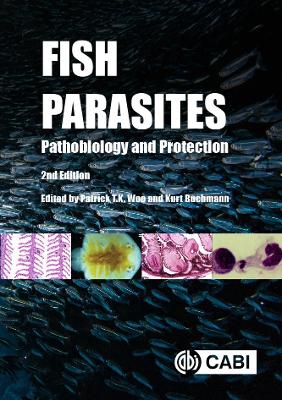
With fish considered an important component of a well-balanced human diet in many industrialized nations and the primary source of animal protein in many less-developed countries, it is increasingly necessary to ensure the health of those aquatic species on which our food security relies. Focusing on protozoan and metazoan parasites that cause disease and mortality in economically important captive and wild fish populations, this second edition of Fish Parasites: Pathobiology and Protection provides an update on the latest research in the field of fish parasitology. It concentrates on parasites that have a financial impact on the aquaculture industry, those that have been introduced to new regions through infected fish, those that are pathogenic to groups of fish and detrimental to production, those that are highly adaptable and not host-specific with worldwide distributions and those that may serve as disease models for studies on other pathogens. For each parasite, this book provides: An introduction to the species, including description, life cycle, hosts, geographical distribution and impact on fish production. A pathobiology, such as diagnosis, clinical signs, lesions, disease mechanism, pathophysiology, and factors that enhance or reduce parasite multiplication. Protection and control strategies, including vaccination and protective mechanisms, chemotherapy and immunochemotherapy, environmental modification and vector control. Synthesizing more than a decade of further research and discovery since the publication of the first book, this new edition provides a vital resource for research scientists, fish health consultants and managers of laboratories working in the aquaculture sector. It is also valuable for fish health specialists and graduate students working on the diseases of aquatic organisms and anyone interested in aquaculture, fisheries or parasitology.
Muu info
Suitable for researchers, academics and students of aquaculture, fisheries, or parasitology.
Chapter 1: Neoparamoeba perurans
Chapter 2: Amyloodinium ocellatum
Chapter 3: Cryptobia (Trypanoplasma) salmositica
Chapter 4: Ichthyophthirius
multifiliis
Chapter 5: Perkinsus marinus and Haplosporidium nelsoni
Chapter
6: Loma salmonae and related species
Chapter 7: Tetracapsuloides bryosalmonae
Chapter 8: Myxobolus cerebralis and Ceratonova shasta
(
[email protected])
Chapter 9: Enteromyxum Species
Chapter 10:
Henneguya ictaluri
Chapter 11: Gyrodactylus salaris and Gyrodactylus
derjavinoides
Chapter 12: Pseudodactylogyrus anguillae and Pseudodactlogyrus
bini
Chapter 13: Benedenia seriolae and Neobenedenia girellae
Chapter 14:
Heterobothrium okamotoi and Neoheterobothrium hirame
Chapter 15: Diplostomum
spathaceum and Related Species
Chapter 16: Freshwater Fish Blood Flukes of
Sanguinicolidae
Chapter 17: Schyzocotyle acheilognathi
Chapter 18: Anisakis
Species
Chapter 19: Lernaea cyprinacea and Related Species
Chapter 20:
Argulus and Related Species
Chapter 21: Caligus rogercresseyi, the sea lice
affecting farmed salmonids in the Southern Hemisphere
Chapter 22:
Lepeophtheirus salmonis
Patrick T K Woo (Edited By) Patrick T K Woo (ptkw) is University Professor Emeritus, University of Guelph, and has been a faculty member since 1974. His research program focused on parasitic flagellates which included those of medical and economic importance. The program had continuous NSERC support for over 40 years, until he closed his laboratory at U of G so he could, with his co-editors, focus on formulating and editing an interdisciplinary book series on 'climate change and fish health'. Patrick's research and travels, sponsored by other agencies (e.g. FAO, United Nations; NUS, Singapore; CNPq, Brazil; MEC, Spain; NEC, Cdn.; CIDA, Cdn.; IDRC, Cdn) allowed him to work with colleagues in Asia, Africa, Europe and the Americas (e.g. 'determine the toxicity of cadmium on tilapia and its effects on immune response' in Singapore; 'develop and evaluate diagnostic techniques for human trypanosomiasis' in E & W Africa; 'adapt an in vitro method to study fish innate immunity' in Spain). In addition to publishing papers and review articles in journals and books, Patrick edited a special journal issue and 14 academic books on fish health. He also founded 'The Roy C Anderson Memorial Lecture in Parasitology'; eminent scientists including a Nobel Laureate had accepted his invitations and presented lectures at the University of Guelph. He has also consulted to industry, universities and government agencies. For further details please see: https://www.uoguelph.ca/ib/woo
Kurt Buchmann (Edited By) Professor, M.Sc., Ph.D., D.V.Sc. Leader of the Research School and network of researchers SCOFDA (2001-2012). Leader of the Research Network Fishnet (www.fishnet.dk) (May 2003-January 2004). Leader of the Danish Fish Immunology Research Centre and Network DAFINET (www.dafinet.dk) from January 2009-2013. Department of Veterinary and Animal Sciences, Faculty of Health and Medical Sciences, University of Copenhagen. Research topics: Fish parasitology, Fish Pathology, Fish vaccinology, Fish Immunology. 1984-1986 Technical University of Denmark, Technological Laboratory. 1986-2007 Royal Veterinary and Agricultural University, Denmark. 2007-2012 University of Copenhagen, Faculty of Life Sciences, Denmark. 2012-2018 University of Copenhagen, Faculty of Health and Medical Sciences, Denmark. Kurt Buchmann has a formal education in teaching from 1984. Teaching and/or responsible for 18 university M.Sc. and 35 Ph.D. courses for veterinarians, biologists and animal science students. Publications: More than 340 scientific articles in international and peer-reviewed scientific journals. Seven books and 20 chapters in books. More than 550 popular scientific articles. Several research reports and a D.V. Sc. dissertation and a Ph.D. thesis. H-index at Web of Science: 53 (More than 53 papers with more than 53 citations recorded in Science citation index). International collaborators: Scientific network with more than 80 international research groups. Referee and review tasks: for 14 international research councils, referee-work for 56 scientific journals and editorial memberships of 5 scientific journals.