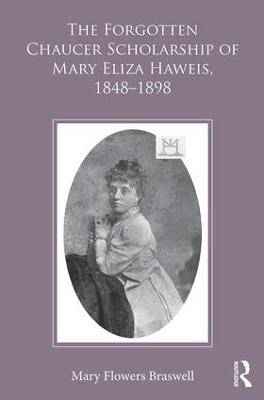
The author of numerous books on Geoffrey Chaucer, the nineteenth-century scholar, Mary Eliza Haweis, has been largely erased from general histories of Chaucer studies. In her critical biography, Mary Flowers Braswell traces Haweiss career, bringing her out of obscurity and placing her contributions to Chaucer scholarship in the context of those of influential Chaucerians of the period such as Frederick James Furnivall, Walford Dakin Selby, and Walter Rye. Braswell draws on extensive archival research from a broad range of late-Victorian newspapers, journals, and society papers to weave a fascinating picture of Haweiss own life and work, which in quantity and quality rivaled that of her contemporaries. Haweis, we discover, corrected assumptions related to the Chaucer seal and texts, bringing her findings to the attention of the public in works such as Chaucer for Schools, the first textbook on the poet. Braswell also sheds light on the ways in which fashion, society, culture, art, and leisure activities intermingled with scholarship, archival recovery, museum work, editing, writing, and publishing in the late-Victorian middle and upper classes. Concluding with a discussion of Haweiss forgotten role as head of the Chaucer section for the National Home Reading Union, Braswells book makes a strong case both for Haweiss influence as a Chaucer scholar and her importance as an educator in nineteenth-century Britain and the United States.