Muutke küpsiste eelistusi

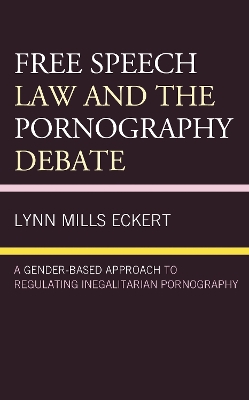
Free Speech Law and the Pornography Debate: A Gender-Based Approach to Regulating Inegalitarian Pornography [Kõva köide]

  • Formaat: Hardback, 244 pages, kõrgus x laius x paksus: 229x160x25 mm, kaal: 558 g
  • Ilmumisaeg: 26-Jun-2020
  • Kirjastus: Lexington Books
  • ISBN-10: 149857260X
  • ISBN-13: 9781498572606
  • Formaat: Hardback, 244 pages, kõrgus x laius x paksus: 229x160x25 mm, kaal: 558 g
  • Ilmumisaeg: 26-Jun-2020
  • Kirjastus: Lexington Books
  • ISBN-10: 149857260X
  • ISBN-13: 9781498572606
By examining the highly contested legal debate about the regulation of pornography through an epistemic lens, this book analyzes competing claims about the proper role of speech in our society, pornographys harm, the relationship between speech and equality, and whether law should regulate and, if so, upon what grounds. In maintaining that inegalitarian pornography generates discursive effects, the book contends that law cannot simply adopt a libertarian approach to free speech. While inegalitarian pornography may not be determinative of gender inequality, it does contribute, reinforce, reflect and help maintain such unfairness. As a result, we can place reasonable gender-based regulations on inegalitarian pornography while upholding our most treasured commitments to dissident speech just as other liberal democracies with strong free speech traditions have done.

Arvustused

An original and deeply insightful analysis of indirect strategies employed by American law to regulate pornography and the sex industry. Building on a wide range of feminist and critical race scholarship, Eckerts book displays the historically and culturally biased systems of knowledge production that shape what counts as harms, and offers a new theory of discursive harm. By rejecting simplistic accounts of objectivity, evidence, and neutrality, Eckert challenges us to deepen the liberal and egalitarian aspirations that underlie our constitution. A terrific book! -- Stephen Macedo, Princeton University

Introduction 1(14)
I Sociology of Knowledge: "We Already Regulate Pornography for Gender-Based Reasons without Acknowledging It"
15(50)
1 Regulating Pornography Comparing the Zoning and Nude Dancing Cases to Hudnut
17(24)
2 Language Games and the Zoning and Nude Dancing Cases
41(24)
II The Legal Landscape that Acts to Exclude Knowledge Claims about Pornography
65(88)
3 Categories and Epistemic Gatekeeping in Free Speech Jurisprudence
67(26)
4 A Critique of the Content-Neutrality Principle
93(26)
5 Pornography Harms: Where Speech Act Theory, Causality, and the Performative Fall Short
119(18)
6 Discursive Effects: A Different Framework to Understand the Harm from Speech
137(16)
III Liberal Law and a New Theory of Harm
153(50)
7 Discursive Effects and Liberal Law
155(24)
8 Reconsidering the Tension between Liberty and Equality
179(24)
Conclusion 203(2)
Bibliography 205(18)
Index 223(12)
About the Author 235
Lynn Mills Eckert is associate professor of political science at Marist College.