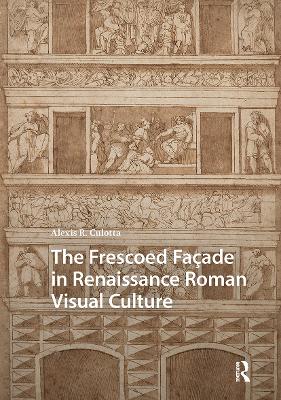
This book examines Roman faēades decorated with fresco and sgraffito between the fifteenth and sixteenth centuries that once enveloped the central rioni of Rome within a web of symbolic social, political, and familial allegiances that transformed a street-side stroll into a visually engaging experience. Today, many of these faces are lost, and our understanding of what they comprised is frighteningly incomplete. This book offers a refreshed look at this often-forgotten facet of Renaissance visual culture to reignite interest in the tradition before its last remnants disappear. In addition to offering a new compilation of these documented faēades, this book also places new emphasis on the making and meaning of these painted faces to provide new insights into the place of the decorated faēade at the intersections of patron identity and painterly innovation in a city working tirelessly to reinvent itself.
Acknowledgements, Introduction,
Chapter One: Foundations: First Style
(Structural),
Chapter Two: Theoretical Implications: Second Style (Framed),
Chapter Three: Increasing Innovation: Third Style (Illusory),
Chapter Four:
Total Translation: Fourth Style (Theatrical),
Chapter Five: Contextual
Conversations, Conclusion: Beyond Renaissance Rome,APPENDIX: Faēade
Inventory, List of Illustrations, List of Works Cited.
Alexis Culotta specializes in sixteenth-century Roman art and architecture with a particular focus on the working relationships between the creative protagonists of the era. This fueled her first book (Tracing the Visual Language of Raphaels Circle to 1527; Brill 2020), which framed the foundation for this second project.