Muutke küpsiste eelistusi

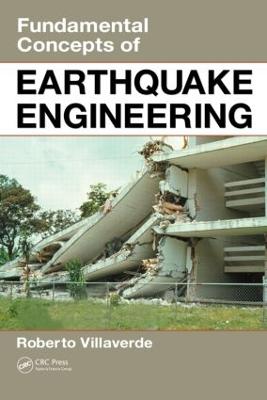
Fundamental Concepts of Earthquake Engineering [Kõva köide]

(University of California, Irvine, USA)
  • Formaat: Hardback, 974 pages, kõrgus x laius: 254x178 mm, kaal: 1837 g, 123 Tables, black and white; 509 Illustrations, black and white
  • Ilmumisaeg: 16-Jan-2009
  • Kirjastus: CRC Press Inc
  • ISBN-10: 1420064959
  • ISBN-13: 9781420064957
Teised raamatud teemal:
  • Kõva köide
  • Hind: 199,69 €*
  • * hind on lõplik, st. muud allahindlused enam ei rakendu
  • Tavahind: 266,25 €
  • Säästad 25%
  • Raamatu kohalejõudmiseks kirjastusest kulub orienteeruvalt 3-4 nädalat
  • Kogus:
  • Lisa ostukorvi
  • Tasuta tarne
  • Tellimisaeg 2-4 nädalat
  • Lisa soovinimekirja
  • Raamatukogudele
  • Formaat: Hardback, 974 pages, kõrgus x laius: 254x178 mm, kaal: 1837 g, 123 Tables, black and white; 509 Illustrations, black and white
  • Ilmumisaeg: 16-Jan-2009
  • Kirjastus: CRC Press Inc
  • ISBN-10: 1420064959
  • ISBN-13: 9781420064957
Teised raamatud teemal:
While successfully preventing earthquakes may still be beyond the capacity of modern engineering, the ability to mitigate damages with strong structural designs and other mitigation measures are well within the purview of science. Fundamental Concepts of Earthquake Engineering presents the concepts, procedures, and code provisions that are currently being used to make structures as earthquake-resistant as is presently feasible.

The book begins by describing the purpose, main aspects, and historical development of earthquake engineering and provides an overview of the type and extent of damage an earthquake can produce. It then introduces the concepts of seismology, the mechanisms of earthquake generation and propagation, and the difference between the various scales used to quantify the size of an earthquake and its potential to cause damage. The book also discusses the response spectrum and the different ways earthquake ground motions may be characterized and how local soil conditions may affect ground motion characteristics. Later chapters examine the design spectrum, conventional methods used to calculate the response of structures, soil-structure systems, and nonstructural components to earthquake ground motions.

This comprehensive resource is certain to advance the knowledge of those tasked with taking preemptive action against the devastating effects of major, catastrophic earthquakes.
Introduction. Seismic Regions of the World.

Earthquake Genesis. Earthquake Propagation. Measurement of Earthquakes.
Characterization of Strong Ground Motions. Seismic Hazard Assessment.
Influence of Local Site Conditions. Design Response Spectrum. Structural
Response by Response Spectrum Method. Structural Response by Step-by-Step
Integration Methods. Structural Response by Equivalent Lateral Force
Procedure. Structural Response Considering SoilStructure Interaction.

Seismic Response of Nonstructural Elements. Seismic Protection with Base
Isolation. Seismic Protection with Energy Dissipating Devices. Seismic Code
Provisions.

Appendix.
University of California, Irvine, California, USA