Muutke küpsiste eelistusi

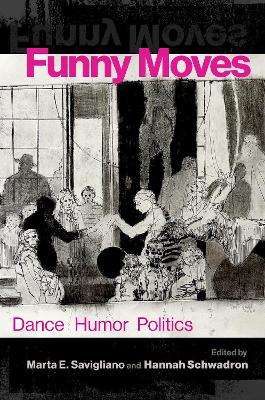
Funny Moves: Dance Humor Politics [Kõva köide]

Edited by (Associate Professor of Dance), Edited by (Professor Emerita of Critical Dance Studies, Dance Department, University of California, Riverside and of Culture and Performance, World Arts and Cultures Department, University of California, Los Angeles)
  • Formaat: Hardback, 296 pages, kõrgus x laius x paksus: 20x156x235 mm, kaal: 518 g, 24
  • Ilmumisaeg: 26-May-2025
  • Kirjastus: Oxford University Press Inc
  • ISBN-10: 0197765769
  • ISBN-13: 9780197765760
Teised raamatud teemal:
  • Kõva köide
  • Hind: 79,08 €*
  • * hind on lõplik, st. muud allahindlused enam ei rakendu
  • Tavahind: 98,85 €
  • Säästad 20%
  • Raamatu kohalejõudmiseks kirjastusest kulub orienteeruvalt 3-4 nädalat
  • Kogus:
  • Lisa ostukorvi
  • Tasuta tarne
  • Tellimisaeg 2-4 nädalat
  • Lisa soovinimekirja
  • Formaat: Hardback, 296 pages, kõrgus x laius x paksus: 20x156x235 mm, kaal: 518 g, 24
  • Ilmumisaeg: 26-May-2025
  • Kirjastus: Oxford University Press Inc
  • ISBN-10: 0197765769
  • ISBN-13: 9780197765760
Teised raamatud teemal:
"Funny Moves explores the politics of dance humor in ten case studies found on stages, screens and streets of Latin America, the Caribbean, South Asia, Europe, and the United States. Moves found funny are the Other to dance because funniness emerges whenever bodies move otherwise and outside of discipline. Furthermore, the same skillfulness needed to make a dance "serious" can also make it seem funny to the "wrong" spectators. These essays examine who laughs at whose moves, and who doesn't, and they ponder the situated cultural politics of laughter. Funniness, whether gleeful, surprising, or odd, intentionally so or not, is shown to arise from social disruptions, which may be progressive or conservative, or both, and which are always contested"-- Provided by publisher.

Funny Moves: Dance Humor Politics explores the intersection of dance and humor and the political stakes that bodies incur when they dare to be both aestheticized and funny. The editors posit that funny moves are dance's Other--the missteps or oversteps that don't fit a particular dance form. Funniness in dance, whether gleeful, surprising, or odd, causes disruptions which may be progressive or conservative, inciting pleasures that counterbalance the artform's often serious codes.

Writing from Latin America, the Caribbean, South Asia, Europe, and the United States, the book's ten authors provide diverse observational techniques and creative vocabularies for finding, analyzing, and theorizing funny moves across dance forms, dance scenes, and dance screens. Some of the authors find hope in the laughter of their artist subjects and their audiences, and some linger in the ambiguity and confusion so created. Each essay takes on a single surprise factor or a choreographic comic rupture, relishing in the amassed effects or affects across an absurdist cinematic, staged, or quotidian sequence. What is "funny" in each case pops up as a wildcard that evokes recognizable shared experiences, sometimes pushing back against dominant or mainstream logic and its supremacist laughter.

Funny Moves explores the intersection of dance and humor and the political stakes of that intersection. Writing from Latin America, the Caribbean, South Asia, Europe, and the United States, ten authors discuss instances of dance humor from the mid-twentieth century to the present. Funny Moves articulates dance scholarship with theories of laughter, feminist theory, gender/sexuality studies, de/postcolonial studies, film studies, and critical race studies. Insisting that humor adds more than accessory or faulty moves to dance, it invites readers to consider funny moves as dance's Other--the exclusions that define dance and ensure that dance always skirts the ridiculous.

Arvustused

Throughout, the writers identify, analyze, and theorize some of what can be considered funny dance movement in different genres and circumstances. Dance humor is claimed as both disruptive and pleasurable- a mechanism for freeing both performers and observers to experience new forms of awareness. * S. E. Friedler, CHOICE *

1: "Now is the time. Come, come!": Gender, Caste, and Erotic Humor in
Bharatanatyam 2: Burla y Bulla : Humor and Critique in Flamenco 3: Insolent
Tangos 4: StoryTAILS of a Wounded Sister 5: Gendering Angry Fun: Sensual
Improprieties in Shamin Ara's Urdu Action Film 6: Chaplin's Border Moves and
My Own: Dance and Humor in the Tijuana-San Diego Region 7: Un/funny Business
in On the Town (1949) 8: Sincerely Funny or Funny Sincerity: Avatar: The Last
Airbender and Cosplay Choreographies 9: ShiJokes, Ugly Dancing: Funny Moves
in Al-Hakawati's Anticolonial Museum 10: Transfeminine Joking on Argentina's
Bailando por un sueño
Marta E. Savigliano is Professor Emerita of Critical Dance Studies, Dance Department, University of California, Riverside and of Culture and Performance, World Arts and Cultures Department, University of California Los Angeles. She is the author of Tango and the Political Economy of Passion, Angora Matta: Fatal Acts of North-South Translation and of numerous articles. She received the Dance Studies Association Outstanding Scholarly Research in Dance Award (2024).

Hannah Schwadron is Associate Professor of Dance, School of Dance, Florida State University. She is the author of The Case of the Sexy Jewess: Dance, Gender, and Jewish Joke-Work in US Pop Culture and various published essays. She received the de la Torre Bueno Prize for Best First Book (2018).