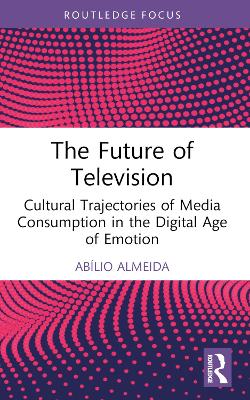
The book is divided into two sections: one focusing on the phenomenon of television and the other on audiences. It argues that television is changing from a singular object, fixed in a particular place, to a social phenomenon distributed across many devices and platforms.
The book is divided into two sections: one focusing on the phenomenon of television and the other on audiences. It argues that television is changing from a singular object, fixed in a particular place, to a social phenomenon distributed across many devices and platforms. It also argues that audiences are increasingly demanding an ‘open relationship’ with television, as their attention is often distributed across multiple devices and platforms simultaneously. In addition to these aspects, we analyse the evolution of television since its inception, the need for a renewed public service 2.0 in tune with our times, the increasing dominance of talk shows and infotainment, and the new power of television combined with artificial intelligence. These and many other topics are covered in this book, which will be of interest to television professionals, academics in sociology, media studies, and various other fields.
New Television, New Questions: An Introduction
Part I. Television
1. The Evolution of Television: Past, Present, and Future
2. The New Television: Old Ideas in a New World
Part II. Audiences
3. A New Era of Television: An Old Role for the Viewer
4. The Future of Television: What Awaits Us?
The Television of Tomorrow: A (Non) Conclusion
Supplemental Topics: Methodology
What Future Do We Want for Television? by Dominique Wolton
Index
Abķlio Almeida is Integrated Researcher at the Center for Communication and Society Studies, University of Minho, Portugal.