Muutke küpsiste eelistusi

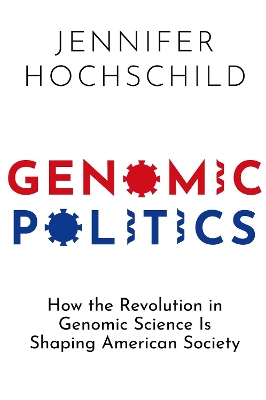
Genomic Politics: How the Revolution in Genomic Science Is Shaping American Society [Pehme köide]

(Henry LaBarre Jayne Professor of Government, Harvard University)
  • Formaat: Paperback / softback, 336 pages, kõrgus x laius x paksus: 232x161x24 mm, kaal: 417 g, 10
  • Ilmumisaeg: 22-May-2025
  • Kirjastus: Oxford University Press Inc
  • ISBN-10: 0197699456
  • ISBN-13: 9780197699454
  • Pehme köide
  • Hind: 18,59 €*
  • * hind on lõplik, st. muud allahindlused enam ei rakendu
  • Tavahind: 23,24 €
  • Säästad 20%
  • Raamatu kohalejõudmiseks kirjastusest kulub orienteeruvalt 3-4 nädalat
  • Kogus:
  • Lisa ostukorvi
  • Tasuta tarne
  • Tellimisaeg 2-4 nädalat
  • Lisa soovinimekirja
  • Formaat: Paperback / softback, 336 pages, kõrgus x laius x paksus: 232x161x24 mm, kaal: 417 g, 10
  • Ilmumisaeg: 22-May-2025
  • Kirjastus: Oxford University Press Inc
  • ISBN-10: 0197699456
  • ISBN-13: 9780197699454
A groundbreaking analysis of how the genomic revolution is transforming American society and creating new social divisions-some along racial lines-that promise to fundamentally shape American politics for years to come.

The emergence of genomic science in the last quarter century has revolutionized medicine, the justice system, and our understanding of who we are. We use genomics to determine guilt and exonerate the falsely convicted; devise new medicines; test embryos; and discover our ethnic and national roots. One might think that, given these advances, most would favor the availability of genomic tools. Yet as Jennifer Hochschild explains in Genomic Politics, the uses of genomic science are both politically charged and hotly contested. After all, genomics might result in bioterrorism, a demand for "designer babies," or a revival of racial biology.

Political divisions around genomics do not follow the usual left-right ideological divides that dominate most of American politics. Through four controversial innovations resulting from genomic science—medicines for heart disease approved for use by only African-Americans, on the grounds of genetic distinctiveness; use of DNA evidence in the criminal justice system; the search for one's roots through genetic ancestry; and the use of genetic tests in prenatal exams—Hochschild reveals how the phenomenon is polarizing America in novel ways. Advocates of genomic science argue that these applications will make life better, while opponents point out the potential for misuse—from racial profiling to "selecting out" fetuses that gene tests show to have conditions like Down syndrome. Hochschild's central message is that the divide hinges on answers to two questions: How significant are genetic factors in explaining human traits and behaviors? And what is the right balance between risk acceptance and risk avoidance for a society grappling with innovations arising from genomic science? Experts differ among themselves about who should make decisions about governing genomics' uses, and Americans as a whole trust almost no one to do so. A deeply researched and original analysis of the politics surrounding one of the signal issues of our times, this is essential reading for anyone interested in how the genetics revolution is shaping society.

In Genomic Politics, Jennifer Hochschild shows how the fraught politics of genomics is unfolding in American life. She focuses on genetically modified medicines that target African Americans, DNA evidence in the criminal justice system, the ancestry craze, and genetic tests in prenatal exams. She finds that contending camps differ in how they answer two questions: How significant are genetic factors in explaining human traits and behaviors? And, what is the right balance between risk acceptance and risk avoidance? Hochschild develops solutions that can reduce the ideological heat and more closely align the use of genomics with democracy.

Arvustused

The Genomics Revolution is all around us, and it is wise to watch carefully for both positives and negatives, both personal and global. This book is a superbly balanced and comprehensive guide to enable all of us to understand and engage with that watching, working together to prevent mishaps and ensure equitable access to benefits. * George Church, Professor of Genetics, Harvard Medical School * The issues that genomics poses are too important, new, and complex to afford the luxury of one-sided or partial viewpoints,' Jennifer Hochschild writes is this pathbreaking book about a new scientific revolution that inspires hope, awe and wonder as well as anxiety, uneasiness and even alarm. She lives up to her own standard by painstakingly, empathetically and engagingly explaining the arguments we are likely to have with each other while being upfront about her own nuanced views. Genomic Politics is an important achievement, a model of careful research, honest reflection and political savvy. * E. J. Dionne Jr., author of Code Red and Our Divided Political Heart * Nobody is talking about the science-fictionesque reality of gene editing and genetic prediction that has arrived. Nobody, that is, except Jennifer Hochschild in her wonderful book, Genomic Politics. Unlike most issues, currently genetic policy is not highly polarizedthough that's sure to change soon enough as charges of eugenics or 'playing god' start flying. Hochschild offers advice on how we might have a fruitful public dialogue as we approach this transformative technology. A must read for anyone concerned with science and society. * Dalton Conley, Henry Putnam University Professor of Sociology, Princeton University * In this brilliant multi-method exploration, Hochschild shows how citizens and experts form beliefs about genomics and determine whether to oppose or support it. The answer lies not in political ideology or partisanshipthe fallback explanation that many may presumebut rather in attitudes about genetics and risk. The book provides a remarkable portrait of what people think of genomics. Even more important is that Hochschild reveals how people form their impressions on new issues with huge public policy consequences. A must read for those interested in genomics and for anyone who cares about the public, preferences, and democratic governance. * James N. Druckman, Payson S. Wild Professor of Political Science, Northwestern University *

Preface and Acknowledgments
1: Political puzzles: BiDil, ancestry testing, forensic biobanks, and prenatal gene editing
2: The basic framework: nature and nurture, risks and gains
3. Disputes over genomic science are not partisan
4. Enthusiasm and skepticism
5. Hope and rejection
6. Experts
7. Locating the public in the basic framework
8. Why are Americans enthusiastic, skeptical, hopeful, or rejecting?
9. Who should govern?
10. Governing genomics
Appendix
Endnotes
Jennifer Hochschild is Henry LaBarre Jayne Professor of Government as well as African and African American Studies at Harvard University and a former President of the American Political Science Association. Hochschild is the author or co-author of numerous books, including recently, Do Facts Matter? (co-authored with Katherine Levine Einstein), Creating a New Racial Order (co-authored with Vesla Weaver and Traci Burch), and Bringing Outsiders In (co-edited with John Mollenkopf). She is also the author of The American Dream and the Public Schools (co-authored with Nathan Scovronick), and other books.