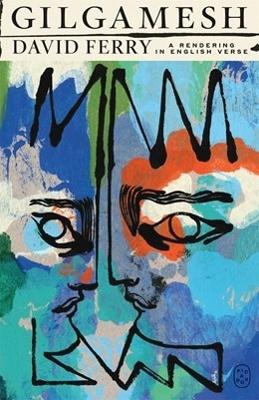
The classic verse rendering of the great epic of ancient Mesopotamia, now with an introduction by the poet Yusef Komunyakaa.
Gilgamesh is the story of the godlike ruler of the ancient Mesopotamian city Uruk. The start of the poem finds Gilgamesh as a brutal tyrant, whose potency is unmatched and unchecked. The god Aruru fashions him a match, a wild man called Enkidu, who fights the ruler but soon becomes Gilgamesh’s beloved companion and friend. The story of their shared heroism, the pain of Enkidu’s untimely death, and of Gilgamesh’s quest for immortality was told across a series of cuneiform clay tablets. It is said to be the oldest recorded literary work.
David Ferry’s elegant verse rendering transmutes the ancient epic into the language of our time. Much like Robert Fitzgerald’s Odyssey or Seamus Heaney’s Beowulf, Ferry’s Gilgamesh is a work whose poetic invention and lyrical rendering makes new that which is ancient, and draws forth the antique echoes that persist in our moment.
Muu info
The classic verse rendering of the great epic of ancient Mesopotamia, now with an introduction by the poet Yusef Komunyakaa.
David Ferry (1924-2023) was a poet and translator. His translation of Gilgamesh was a finalist for the National Book Critics Circle Award in Poetry, and he was honored with the Lenore Marshall Poetry Prize, given by the Academy of American Poets; the Rebekah Johnson Bobbitt National Prize for Poetry, given by the Library of Congress; and an Award in Literature from the American Academy of Arts and Letters. He translated, among other works, the Epistles of Horace, and both Virgil's Georgics and Eclogues. Ferry was the Sophie Chantal Hart Professor of English Emeritus at Wellesley College.