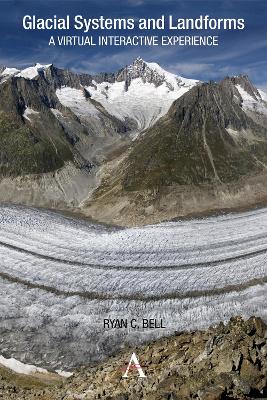
This interactive guide serves to make glacial systems and landforms more accessible, as students use Google Earth and other satellite imagery to understand the patterns and processes found within glacial environments. Guided inquiry activities range from calculating the Mendenhall Glacier’s rate of melting to identifying erosional landforms in the Swiss Alps. In this way, the guide offers a virtual interactive experience in which students can visit and explore glacial systems and landforms in 3D. Through studying these images the student will not only start to recognize the forms commonly found within glacial landscapes, but also develop skills in map analysis and interpretation.
Using Google Earth, this guide offers a virtual interactive experience in which students can visit and explore glacier environments and landforms in 3D. As students develop skills in map analysis and interpretation, the patterns and processes found within glacial environments are revealed to great effect.
Muu info
An interactive guide to the glacial world, including detailed instructions on how to create your own Google Earth virtual tour of glacial landforms.
Acknowledgments; List of Figures; How to Use This Book: A Note to the
Student and Teacher;
Chapter 1: Introduction;
Chapter 2: What is a Glacier?;
Chapter 3: Types and Locations of Glaciers;
Chapter 4: How Do Glaciers Move?;
Chapter 5: Ice Structures;
Chapter 6: Glacial Erosion;
Chapter 7: Landforms
of Glacial Erosion;
Chapter 8: Glacial Deposition;
Chapter 9: Landforms of
Glacial Deposition;
Chapter 10: Ice Ages and Interglacial Periods;
Chapter
11: Periglacial Environments;
Chapter 12: Glaciers and Global Warming;
Chapter 13: Final Project; Bibliography; Index
Ryan C. Bell teaches Earth Science and AP Environmental Science at Sutherland High School in Pittsford, New York.