Muutke küpsiste eelistusi

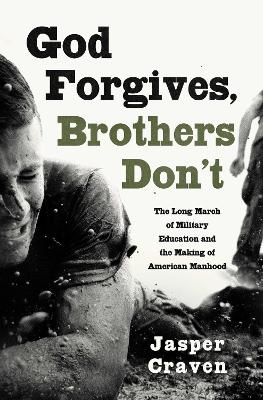
God Forgives, Brothers Don't: The Long March of Military Education and the Making of American Manhood [Kõva köide]

  • Formaat: Hardback, 352 pages, kõrgus x laius x paksus: 229x152x30 mm, kaal: 499 g
  • Ilmumisaeg: 18-Jun-2026
  • Kirjastus: Atria Books
  • ISBN-10: 1668087197
  • ISBN-13: 9781668087190
  • Kõva köide
  • Hind: 30,00 €
  • See raamat ei ole veel ilmunud. Raamatu kohalejõudmiseks kulub orienteeruvalt 3-4 nädalat peale raamatu väljaandmist.
  • Kogus:
  • Lisa ostukorvi
  • Tasuta tarne
  • Tellimisaeg 2-4 nädalat
  • Lisa soovinimekirja
  • Formaat: Hardback, 352 pages, kõrgus x laius x paksus: 229x152x30 mm, kaal: 499 g
  • Ilmumisaeg: 18-Jun-2026
  • Kirjastus: Atria Books
  • ISBN-10: 1668087197
  • ISBN-13: 9781668087190
In the tradition of Sebastian Junger’s Tribe and Chris Hedges’s classic War Is a Force that Gives Us Meaning, a powerful investigation into the fraught history and ominous future of military education in the United States, and how it formed and fuels increasingly volatile strains of American masculinity.

“Send us your boy and we will return to you a man.”

Since the dawn of America, the military has articulated some version of this pledge, solidly staking its claim on the monumental work of building the American man.

When investigative reporter Jasper Craven first dug into Valley Forge Military Academy five years ago, he uncovered an acrid strain of masculinity that was raw, violent, fiercely hierarchical, and quickly mutating out of control. Initially, he had assumed that military education was a dying, outmoded brand. But as he looked deeper, he found a sprawling, well-funded network featuring dozens of military schools, like Valley Forge and West Point, plus thousands of ROTC programs in public colleges and high schools that allowed the Pentagon to wield outsized power on education.

In an unflinching narrative, Craven explores how the military has come to define American masculinity and how it often fosters its most toxic traits. Beginning with the American Revolution, Craven shows how the birth of our nation required a new masculine ideal, crafted in the image of George Washington. During the brutality of the Civil War, Craven traces the parallel violence in military hazing culture and the deeply prejudicial culture at places like West Point, which reared Jefferson Davis, Robert E. Lee, and other famed Confederates.

The first and second World Wars escalated the need for battle-ready youth, and briefly resulted in a relatively noble male archetype, while the Cold War precipitated backlash, resentment, and trauma. This era also marked the beginning of the Christian right’s growing interest in military schools as upholding a patriarchal and fatalistic version of manhood. Vietnam and the antiwar movement fueled the rise of the “troubled teen” and the lying, lawless “operator,” embodied by graduates such as William Westmoreland and Oliver North.

As he chronicles the forever wars, Craven brings us up to today, where the military has further burrowed into civilian education. Meanwhile, policies like “don’t ask, don’t tell” and a campaign of Islamophobia, misogyny, and homophobia have crafted a new manhood that is defined by its ability to both diminish and dehumanize “the other” while also being self-destructive. Its exemplars include such military school graduates as Donald Trump and Pete Hegseth.

Part sweeping military history, part gripping journalistic investigation, God Forgives, Brothers Don’t lifts the veil on the harmful world of military schools and provides essential context and nuance to the ongoing debate on American masculinity.

Arvustused

Expansive. Serves as a counterweight to blind obedience to authority and hierarchy. Craven also offers an illuminating and useful examination of masculinity and traditional military training in a nation that gets embroiled in many conflicts abroad. Booklist

A searing deep dive [ and a] unique and vital perspective on Americas masculinity crisis. Publishers Weekly   "I could not put down Craven's unique take on modern American masculinity and its birth on our military drill fields and foreign battlefields. If you are interested in the lives of men and boys and how they now operate in the world, read this book." Anthony Swofford, author of Jarhead

"Jasper Craven demonstrates how our national cult of toxic masculinity was made, not born--at America's military service academies, from their gestation in 1802 in a country whose founders supposedly despised the idea of standing armies, all the way through a notorious military academy's role in shaping the dark heart of Donald J. Trump. And, unfortunately, beyond." Rick Perlstein, New York Times bestselling author of Nixonland and The Invisible Bridge

Jasper Craven has produced a fascinating and barbed look at military education and American notions of manhood from the founding to the present day. God Forgives, Brothers Dont doesnt simply decry the long-running conflation of strength and cruelty, it makes a sharp argument for what true strength actually looks like. Phil Klay, bestselling author of Redeployment

"Put Jasper Cravens book on the shelf by John Steinbeck, Michael Herr and Sebastian Junger, the only civilians of the last century whove written as well or convincingly about the military. Craven is one of the few who can capture the foreign culture of the military without being captured by it."

Matt Farwell, former Army infantryman and author of American Cipher: Bowe Bergdahl and the U.S. Tragedy in Afghanistan   A lucid and fluent examination of how militaristic educational institutions like West Point, the Citadel, Valley Forge, ROTC, JROTC, and even the Boy Scouts warp and distort the psyches of men and boys, stamping out truly manly qualities like optimism, warmth, amity, honesty, and independence of mind, to create for the benefit of an immoral government obedient legions of servile and emotionally stunted hollow men afflicted by anger, shame, loneliness, and despair. Seth Harp, NYT best-selling author of The Fort Bragg Cartel

Jasper Craven is a freelance reporter covering the military and veterans issues. His work has appeared in The New York Times, Harpers Magazine, Politico magazine, and The Baffler, among others. He is the author of God Forgives, Brothers Dont and he is also the coauthor, with Suzanne Gordon and Steve Early, of the academic book Our Veterans. Follow him on X @Jasper_Craven.