Muutke küpsiste eelistusi

Gothic Ideology: Religious Hysteria and anti-Catholicism in British Popular Fiction, 1780-1880 [Kõva köide]

  • Formaat: Hardback, 352 pages, kõrgus x laius: 216x138 mm, Not illustrated
  • Sari: Gothic Literary Studies
  • Ilmumisaeg: 15-May-2014
  • Kirjastus: University of Wales Press
  • ISBN-10: 1783160489
  • ISBN-13: 9781783160488
  • Kõva köide
  • Hind: 83,40 €*
  • * hind on lõplik, st. muud allahindlused enam ei rakendu
  • Tavahind: 104,25 €
  • Säästad 20%
  • Raamatu kohalejõudmiseks kirjastusest kulub orienteeruvalt 3-4 nädalat
  • Kogus:
  • Lisa ostukorvi
  • Tasuta tarne
  • Tellimisaeg 2-4 nädalat
  • Lisa soovinimekirja
  • Formaat: Hardback, 352 pages, kõrgus x laius: 216x138 mm, Not illustrated
  • Sari: Gothic Literary Studies
  • Ilmumisaeg: 15-May-2014
  • Kirjastus: University of Wales Press
  • ISBN-10: 1783160489
  • ISBN-13: 9781783160488
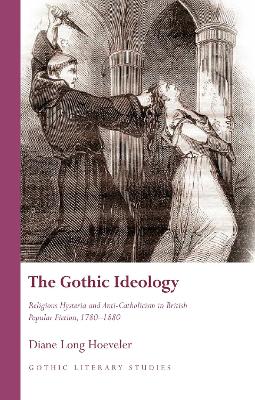
The Gothic Ideology argues that in order to modernize and secularize, the British Protestant imaginary needed an 'other' against which it could define itself as a culture and a nation with distinct boundaries. The 'Gothic ideology' is identified as an intense religious anxiety, produced by the aftershocks of the Protestant reformation, the Catholic Counter-Reformation, and the dynastic upheavals produced by both events in England, Germany, and France, and was played out in hundreds of Gothic texts published throughout Europe between the mid-eighteenth century and 1880. This book is the first to read the Gothic ideology through the historical context of both King Henry VIII's dissolution of the monasteries and the extensive French anti-clerical and pornographic works that were well-known to Horace Walpole and Matthew Lewis. The book argues that Gothic was thoroughly invested in a crude form of anti-Catholicism that fed lower class prejudices against the passage of a variety of Catholic Relief Acts that had been pending in Parliament since 1788 and finally passed in 1829.
List of Illustrations
vii
Acknowledgements ix
Introduction 1(14)
1 Anti-Catholicism and the Gothic Ideology: Interlocking Discourse Networks
15(36)
2 The Construction of the Gothic Nun: Fantasies and the Religious Imaginary
51(47)
3 The Spectre of Theocracy: Mysterious Monks and `Priestcraft'
98(49)
4 The Foreign Threat: Inquisitions, Autos-da-Fe and Bloody Tribunals
147(50)
5 Ruined Abbeys: Justifying Stolen Property and the Crusade against Superstition
197(50)
Epilogue: The Penny Dreadful and the (Almost) Last Gasp of the Gothic Ideology 247(18)
Notes 265(28)
Bibliography 293(28)
Appendix: Anti-Catholic/Gothic Titles 321(22)
Index 343
Diane Long Hoeveler is Professor of English at Marquette University, Milwaukee, Wisconsin, where she has taught since 1987. She is author of Gothic Riffs: Secularizing the Uncanny in the European Imaginary, 1780-1820 (2010), which won the Allan Lloyd Smith memorial award from the International Gothic Association; Gothic Feminism (1998); and Romantic Androgyny (1990).